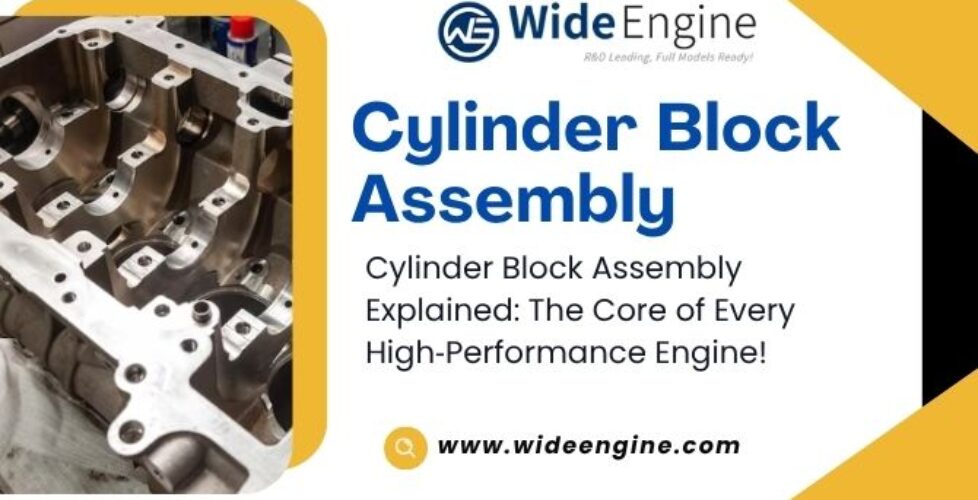
Cylinder Block Assembly Explained: The Core of Every High‑Performance Engine!
When it comes to building a high-performance engine, every component plays a crucial role. However, at the very heart of any powerful, reliable, and efficient engine lies the Cylinder Block Assembly. This foundational structure is not only the main support for all other engine parts but also the critical element that determines the engine’s strength, durability, and ultimate performance potential. At WideEngine Industries Co., Ltd., we believe that understanding the Cylinder Block Assembly is essential for anyone involved in engine design, assembly, or performance upgrades.
What is a Cylinder Block Assembly?
In the context of internal combustion engines, the cylinder block is the main structure that houses the cylinders, where the pistons move up and down. The assembly refers to the complete unit, which includes not only the block itself but also the integrated components such as cylinder liners, main bearing caps, oil passages, coolant channels, and sometimes even the crankshaft and bearings.
The Cylinder Block Assembly serves as the backbone of the engine, providing the mounting points for the cylinder head, crankshaft, and other essential parts. It must withstand immense forces generated during combustion, manage heat dissipation, and ensure precise alignment of all moving components. In high-performance engines, the quality and design of the Cylinder Block Assembly are even more critical, as they directly influence the engine’s ability to handle increased power, higher RPMs, and greater thermal loads.
Key Components of a Cylinder Block Assembly
Understanding the individual components that make up a Cylinder Block Assembly is essential for appreciating its complexity and importance. Let’s break down the main elements:
1. Cylinder Block
The main body of the assembly, typically made from cast iron or aluminum alloy, houses the cylinders and provides structural support for the entire engine.
2. Cylinder Liners (or Sleeves)
These are inserted into the cylinder bores to provide a hard, wear-resistant surface for the pistons. They can be either wet (in direct contact with coolant) or dry (not in contact with coolant).
3. Main Bearing Caps
These secure the crankshaft in place and ensure it rotates smoothly within the block. High-performance engines often use reinforced or four-bolt main caps for added strength.
4. Oil Passages
Integrated channels within the block deliver oil to critical areas, ensuring proper lubrication of moving parts.
5. Coolant Passages
These channels allow coolant to flow around the cylinders, helping to dissipate heat and maintain optimal operating temperatures.
6. Deck Surface
The top surface of the block where the cylinder head is mounted. It must be perfectly flat to ensure a proper seal with the head gasket.
7. Crankshaft (in some assemblies)
In certain cases, the Cylinder Block Assembly may come with the crankshaft and bearings pre-installed, simplifying the assembly process.
The Role of Cylinder Block Assembly in High-Performance Engines
The Cylinder Block Assembly is not just a passive structure; it actively shapes the engine’s performance, durability, and efficiency. Here’s how:
1. Structural Integrity
A high-quality Cylinder Block Assembly provides the rigidity needed to withstand the extreme pressures and forces generated during combustion, especially in high-performance applications where power outputs are significantly increased.
2. Precision Alignment
The assembly ensures that all moving parts—pistons, crankshaft, and connecting rods—are perfectly aligned. This reduces friction, minimizes wear, and allows the engine to operate smoothly at high RPMs.
3. Heat Management
Efficient coolant passages and the use of advanced materials help dissipate heat quickly, preventing overheating and allowing the engine to maintain optimal performance even under demanding conditions.
4. Oil Control
Properly designed oil passages ensure that all critical components receive adequate lubrication, reducing the risk of premature wear or catastrophic failure.
5. Adaptability
Modern Cylinder Block Assemblies are designed to accommodate a variety of performance upgrades, such as forced induction (turbocharging or supercharging), increased displacement, or high-compression pistons.
Materials and Manufacturing: Building for Strength and Performance
The choice of materials and manufacturing techniques for the Cylinder Block Assembly has a profound impact on engine performance and longevity.
1. Cast Iron vs. Aluminum
- Cast Iron: Known for its strength and durability, cast iron is often used in heavy-duty and high-performance applications. It offers excellent wear resistance but is heavier than aluminum.
- Aluminum Alloy: Lighter than cast iron, aluminum is favored for its weight savings and superior heat dissipation. However, it may require additional reinforcement for high-power engines.
2. Advanced Alloys and Reinforcements
Some high-performance Cylinder Block Assemblies use advanced materials such as compacted graphite iron (CGI) or incorporate steel cylinder liners and main bearing girdles for added strength.
3. Precision Machining
Modern manufacturing processes use CNC machining to achieve tight tolerances and perfect surface finishes, ensuring optimal fit and function of all components.
4. Quality Control
Each Cylinder Block Assembly undergoes rigorous inspection, including pressure testing, dimensional checks, and sometimes even X-ray analysis to detect internal flaws.
Assembly Process: From Components to Complete Engine Core
The assembly of a Cylinder Block is a meticulous process that requires attention to detail and adherence to strict specifications. Here’s an overview of the typical steps involved:
1. Cleaning and Preparation
All components are thoroughly cleaned to remove any debris or contaminants that could cause premature wear or failure.
2. Installation of Cylinder Liners
If used, liners are pressed or cast into the block and machined to precise dimensions.
3. Machining of Deck and Bore
The deck surface is machined flat, and the cylinder bores are honed to ensure a perfect fit for the pistons.
4. Main Bearing Installation
Bearings are installed, and clearances are checked to ensure smooth crankshaft rotation.
5. Crankshaft and Main Cap Installation
The crankshaft is carefully placed into the block, and main caps are torqued to specification.
6. Oil and Coolant Passage Verification
All passages are checked for blockages or leaks to ensure proper fluid flow.
7. Final Inspection
The completed Cylinder Block Assembly undergoes a final inspection to verify all dimensions, tolerances, and surface finishes.
Performance Upgrades and Customization
One of the key advantages of a high-quality Cylinder Block Assembly is its adaptability to performance upgrades. Here are some common modifications:
1. Increased Displacement
Boring out the cylinders or using a stroker crankshaft can increase engine displacement, resulting in more power and torque.
2. Reinforced Main Caps and Girdles
Upgrading to four-bolt main caps or adding a main bearing girdle increases the block’s strength, allowing it to handle higher power levels.
3. High-Performance Liners
Installing ductile iron or steel liners improves wear resistance and allows for higher boost or compression ratios.
4. Improved Cooling
Adding extra coolant passages or using advanced materials helps manage heat in high-stress applications.
Maintenance and Longevity: Protecting Your Investment
Proper maintenance of the Cylinder Block Assembly is essential for ensuring long-term performance and reliability. Here are some best practices:
1. Regular Oil Changes
Use high-quality oil and change it at recommended intervals to prevent sludge buildup and reduce wear.
2. Coolant System Maintenance
Flush and replace coolant as specified by the manufacturer to prevent corrosion and overheating.
3. Inspection for Leaks or Cracks
Regularly check for signs of oil or coolant leaks, which could indicate a problem with the block or gaskets.
4. Professional Assembly and Installation
Always have your Cylinder Block Assembly installed by experienced professionals using the correct tools and procedures.
Why Choose WideEngine Industries Co., Ltd. for Your Cylinder Block Assembly?
At WideEngine Industries Co., Ltd., we are committed to delivering Cylinder Block Assemblies that set the standard for quality, performance, and reliability. Here’s what sets us apart:
1. Superior Materials
We use only premium-grade cast iron, aluminum, and advanced alloys to ensure every Cylinder Block Assembly meets or exceeds OEM and performance specifications.
2. Precision Engineering
Our state-of-the-art manufacturing facilities employ the latest CNC machining and quality control technologies for flawless results.
3. Comprehensive Range
We offer Cylinder Block Assemblies for a wide variety of vehicles, from passenger cars to commercial trucks and high-performance racing engines.
4. Expert Support
Our team of engineers and technical specialists is always available to assist with selection, installation, and troubleshooting.
5. Global Reach
With efficient logistics and international shipping, we serve customers worldwide—delivering the parts you need, when you need them.
The Cylinder Block Assembly—The Core of Every High‑Performance Engine
In summary, the Cylinder Block Assembly is far more than just a collection of metal parts—it is the core structure that determines the strength, efficiency, and ultimate potential of every high-performance engine. By understanding its components, materials, and assembly process, you can make informed decisions that enhance reliability and power. At WideEngine Industries Co., Ltd., we are dedicated to providing Cylinder Block Assemblies that meet the highest standards, backed by expert support and global service.

Frequently Asked Questions (FAQ)
1. What is included in a Cylinder Block Assembly?
A Cylinder Block Assembly typically includes the cylinder block, cylinder liners, main bearing caps, oil and coolant passages, and sometimes the crankshaft and bearings.
2. How does the Cylinder Block Assembly affect engine performance?
It provides the structural integrity, alignment, and fluid management necessary for efficient combustion, high power output, and long-term durability.
3. What materials are used in high-performance Cylinder Block Assemblies?
Common materials include cast iron, aluminum alloys, and compacted graphite iron, often with steel or ductile iron liners for added strength.
4. Can I upgrade my existing engine with a new Cylinder Block Assembly?
Yes, upgrading to a high-quality Cylinder Block Assembly can improve strength, reliability, and performance, especially if you plan to increase power output.
5. How do I maintain my Cylinder Block Assembly?
Regular oil and coolant changes, inspections for leaks or cracks, and professional installation are key to long-term reliability.
6. What are the signs of a failing Cylinder Block Assembly?
Symptoms include oil or coolant leaks, loss of compression, overheating, and unusual engine noises.
7. Do you offer custom or performance Cylinder Block Assemblies?
Yes, WideEngine Industries Co., Ltd. offers both standard and custom Cylinder Block Assemblies for a variety of applications.
8. How quickly can I receive a Cylinder Block Assembly from WideEngine Industries Co., Ltd.?
We maintain a large inventory and efficient logistics, enabling fast order fulfillment and delivery worldwide.
9. What warranty do you provide on your Cylinder Block Assemblies?
All our Cylinder Block Assemblies come with comprehensive warranties. Please contact us for specific terms and coverage details.
10. Can you assist with installation or technical support?
Absolutely. Our technical team is available to provide guidance on installation, troubleshooting, and best practices for optimal results.