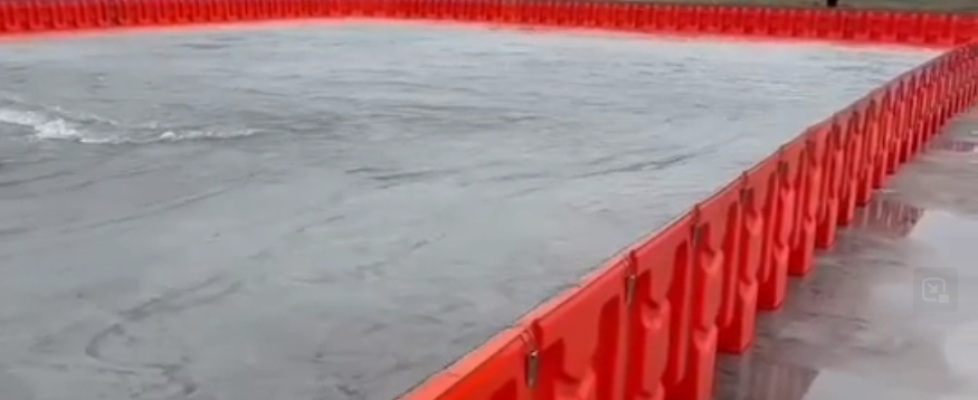
Why L Shaped Flood Barriers Are Gaining Popularity Worldwide!
Flood events are becoming more frequent and destructive across the world’s cities, coastal zones, and vital infrastructure sites. As communities face the costly impacts of flash floods, river overflows, and rising sea levels, engineers and decision-makers urgently seek innovative flood protection strategies that are effective, adaptable, and cost-efficient. Among the latest breakthroughs in the field of flood prevention, L Shaped Flood Barriers stand out as a robust solution that is rapidly gaining favor from municipal planners, facility managers, and property owners in diverse settings.
At Newflag Technology Co., Ltd., we have closely monitored global trends in flood defense and collaborated with clients across continents to deliver next-generation flood solutions. Our focus on L Shaped Flood Barriers stems from their remarkable versatility, proven effectiveness under real flood conditions, and unique design features that address some of the most pressing limitations of traditional flood protection systems.
Understanding the Flood Threat: The Evolution of Barriers
Cities and communities worldwide are up against the increasing risks of water inundation due to climate change, urban development, and infrastructure challenges. Each flood event puts more stress on levees, drains, and outdated sandbag defenses. Sandbags are labor-intensive, temporary, and environmentally unsound; while concrete flood walls, though sturdy, are costly, visually disruptive, and often inflexible.

Enter the new generation of modular and smart flooding defenses: deployable flood barriers, among which the L Shaped Flood Barrier stands out for its design ingenuity—a solution that can protect critical spots without requiring deep foundations or massive labor forces.
What Are L Shaped Flood Barriers?
An L Shaped Flood Barriers are pre-fabricated, freestanding flood wall named for its distinctive side profile. When deployed, the barrier forms an “L” with the vertical side deflecting or holding back water, and the horizontal foot (the “base” of the L) lying flat on the ground, facing the dry side. This configuration is both simple and brilliant for several reasons.
Unlike traditional walls—which require foundations sunk deep into the ground—L Shaped Flood Barriers use water’s own force to stabilize themselves. As floodwaters push against the upright panel, the downward pressure on the footplate increases, preventing movement and enhancing resistance to toppling. Depending on the site, these barriers can be secured with anchors, weights, or simply rely on the floodwater load itself.
The result? L Shaped Flood Barriers can be quickly deployed on hard pavements, grass, or concrete; removed and stored after the danger passes; and easily relocated or extended as needed. Their rapid installation and removability offer unmatched flexibility and cost savings.
Key Features and Advantages of L Shaped Flood Barriers
1. Freestanding and Foundation-Free
Because of their self-supporting design, no deep excavation is needed—ideal for urban deployments, historical sites, or locations where ground disturbance is impractical or undesirable. This dramatically lowers installation time and cost.
2. Rapid Deployment and Removal
L Shaped Flood Barriers are designed for fast setup by small teams with light equipment or even by hand. When a flood threat is over, they can be demounted, relocated, or stored for future use.
3. Modularity and Scalability
Individual modules connect seamlessly to form barriers of varying length and height. Systems can be adapted to protect single doorways, parking garages, riverside promenades, or entire industrial complexes with ease.
Also Read: How L Shaped Flood Barriers Are Revolutionizing Urban Flood Protection!
4. High-Strength, Durable Construction
Manufactured from reinforced steel, aluminum, or advanced composites, these barriers are tested to withstand extreme hydrostatic pressures and debris impacts. Corrosion-resistant coatings ensure multi-year or even multi-decade performance, even in harsh weather conditions.
5. Minimal Visual and Physical Impact
Permanent concrete walls can be unsightly and restrict movement. L Shaped Flood Barriers are only present when needed—leaving public or private spaces unencumbered the rest of the year.
6. Adaptability in Complex Sites
Because they do not require continuous foundations, L Shaped Flood Barriers work on uneven ground, over pipes, pavements, or across roadways. This is crucial in urban zones, facilities, and landscapes diverse in layout.
7. Cost-Effectiveness
With reduced labor, rapid deployment, and the avoidance of costly, disruptive civil works, the total cost of ownership is significantly lower than traditional, permanent defenses—especially when barriers can be reused for multiple threats or at different sites.
8. Sustainability and Reduced Waste
L Shaped Flood Barriers are reusable, create less construction waste than concrete, and avoid the environmental mess and disposal challenges of sandbags.
How L Shaped Flood Barriers Work: Principles and Practice
The genius of the L Shaped Flood Barrier lies in its clever use of simple physical principles:
- Hydrostatic Pressure Support: As the water level rises and pushes against the vertical wall, the force is transferred into downward pressure against the horizontal base. This stabilizes the barrier, especially when floodwaters increase.
- Frictional Resistance: The broader the barrier’s foot and the heavier the module, the more friction holds it in place—even without anchors.
- Optional Anchoring: For extreme loads or where local regulations require it, anchoring points or additional ballast can be added.
This design versatility means that a single L shaped barrier type can address dozens of real-world scenarios—from curbside protection to mid-river temporary dams during construction.
Real World Applications of L Shaped Flood Barriers
Urban Infrastructure Protection
Municipalities deploy these barriers to shield roads, subway entrances, or public plazas. Because they are not permanent, public life and traffic flow are not hindered outside of flood events.
Commercial and Industrial Facilities
Warehouses, distribution centers, shopping malls, and power stations secure entrances, loading docks, or entire perimeters during floods—restoring normal operations rapidly when the danger recedes.
Critical Utilities
Water plants, substations, and data centers find L Shaped Flood Barriers particularly valuable for sealing critical points—including manholes, cable vaults, and service entrances.
Residential and Community Zones
Homeowners’ associations and apartment complexes use these systems to create flood rings or quickly isolate driveways, garages, and basements.
Temporary and Emergency Response
First responders and disaster agencies pre-position L Shaped Flood Barriers for immediate deployment during weather emergencies, minimizing water ingress and property damage in minutes.
Why L Shaped Flood Barriers Are Gaining Global Attention
Innovation Leads Adoption
As more cities face unpredictable flood events that permanent barriers can’t address in time, the flexibility and mobility of L Shaped Flood Barriers have brought acclaim from engineers and government agencies in Europe, North America, Asia, and other high-risk zones.
Proven Effectiveness
Field tests and actual deployments—such as in recent flooding across the UK, Germany, Japan, and the United States—have shown these barriers can stop water up to 1.5 meters high (and even more with proper engineering). Debris impact, overtopping, and backwater tests have validated their reliability.
Rapid Urbanization Demands Adaptability
Urban expansion means city layouts, property lines, and risk maps are always evolving. L Shaped Flood Barriers can be added, moved, or repurposed as new vulnerabilities arise—something fixed concrete structures cannot match.
Regulatory and Insurance Support
Many government authorities and insurance providers now recognize and recommend temporary or demountable flood barriers as part of best practice flood risk management.
Newflag Technology Co., Ltd.: Leading the L Shaped Flood Barrier Revolution
At Newflag Technology Co., Ltd., our L Shaped Flood Barriers are engineered for:
- Rapid deployment with minimal labor
- Long-term durability (using corrosion-proof materials)
- Flexible adaptation for custom site needs and variable heights
- Integrated leak-proofing and anchoring options
- Comprehensive support (site assessment, training, ongoing aftercare)
Our design team leverages advanced modeling and global field experience to ensure every barrier performs under the world’s toughest flood scenarios.
Champions for a Flood-Resilient Future
L Shaped Flood Barriers by Newflag Technology Co., Ltd. represent a leap forward in the ongoing fight against flooding. By combining engineering intelligence, rapid deployment, and versatility, they empower communities, property owners, and infrastructure managers to adapt quickly and effectively to today’s unpredictable water threats.
All over the world, these barriers are seeing real use and delivering tangible results—minimizing losses, speeding recovery, and making sustainable, cost-effective resilience possible.
Frequently Asked Questions (FAQ)
1. How do L Shaped Flood Barriers differ from traditional flood walls?
Traditional flood walls are permanent, require deep foundations, and are costly to build and maintain. L Shaped Flood Barriers are modular, require little or no ground anchoring, are quickly deployable, and removable after use.
2. Do L Shaped Flood Barriers require professional installation?
They are designed for ease of use—municipal workers, facilities staff, or even homeowners can install most models with short training. For complex or long-term projects, initial guidance from Newflag Technology is advised.
3. What ground surfaces do these barriers work on?
Almost any—concrete, asphalt, grass, compact gravel, or paved surfacing. Additional recommendations may apply for extremely soft or uneven terrain.
4. Can barriers be anchored for extra stability?
Absolutely. While the basic L shape is self-supporting, anchor points, ballast tanks, or weights can be added when specified by risk analysis or local regulations.
5. How high can an L Shaped Flood Barrier reliably defend against water?
Standard models defend against water up to 1.2–1.5 meters. Custom solutions can protect even higher, subject to engineering and testing.
6. Are L Shaped Flood Barriers reusable? What is their life expectancy?
Yes, they are designed for repeated use and have a typical lifespan of 10–20 years or more, depending on environment and maintenance.
7. Do they require maintenance?
Only basic cleaning, inspection for damage, and periodic checks of seals or connecting hardware.
8. Can L Shaped Flood Barriers be used temporarily—for construction or special events?
Yes, they are often used for temporary river diversions during works, event protection, and other short-term applications.
9. How are barriers stored when not in use?
Modules are modular and stackable—stored in warehouses, on-site cabins, or trailers for ready deployment.
10. Are they certified or tested?
Newflag Technology’s L Shaped Flood Barriers are tested against international standards for water tightness, impact, and load resistance.