How to Choose the Right Prediction Market Platform Development Company
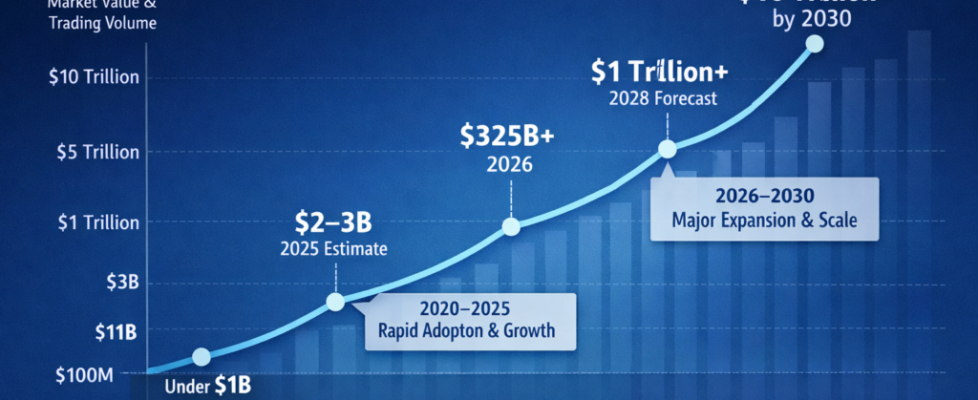
Prediction markets have moved from a niche experiment to one of the fastest-growing corners of fintech. Combined monthly trading volume across the largest platforms has surged into the tens of billions of dollars, and analysts project the global market could expand from roughly $20 billion to nearly $95 billion within the next decade. For founders, fintech operators, and sports-and-events entrepreneurs, the opportunity is obvious. The harder question is execution: who actually builds your platform?
The company you hire to develop your opinion trading platform will shape everything that follows — your time to market, your compliance posture, your user experience, and your ability to scale when volume spikes. Pick the wrong partner and you inherit buggy order-matching, weak security, and a codebase nobody wants to maintain. Pick the right prediction market platform development company and you can go live in as little as 60 days with a product that stands up to real traffic.
This guide breaks down exactly what to look for, the questions to ask, and the red flags that should make you walk away.
Why Your Development Partner Decides the Outcome
A prediction market is not a standard app. Beneath the clean interface sits a surprisingly complex engine: a real-time order-matching system, a wallet and payments layer, market-resolution logic, fraud and risk controls, and an analytics pipeline that updates prices the instant sentiment shifts. Each of these must work flawlessly under load, because users are trading on live events where seconds matter.
Generic app development shops can build you a nice-looking front end. Very few understand the market microstructure that makes an opinion trading platform trustworthy and profitable. That gap is the single biggest reason early-stage platforms fail — not design, but the plumbing underneath. This is why specialist experience, not just technical competence, should drive your decision.
The Key Factors to Evaluate
1. Proven Domain Expertise in Prediction Markets
Start here. Ask prospective vendors how many prediction or opinion trading platforms they have actually shipped. A company that has already built working systems — whether a Polymarket clone, a Kalshi clone, or a Probo-style opinion trading app — brings hard-won knowledge about liquidity, market creation, and settlement that no amount of general coding talent can replace.
Domain specialists have already solved the problems you don’t yet know you have: how to seed liquidity in a new market, how to price binary and scalar outcomes, how to handle disputes when an event’s result is ambiguous. A team like OpiniosLabs, which focuses exclusively on prediction and opinion trading platforms, has repeatable playbooks for each of these, which is why their delivery timelines are measured in weeks rather than quarters.
2. Technical Capability and a Modern Stack
Prediction platforms live and die on performance. Confirm that your vendor works with a stack built for low latency and high concurrency — typically Node.js, React or Next.js, and mobile-native frameworks on the front end, with MongoDB, MySQL, Redis, and message-queue infrastructure handling data in real time. Containerized deployment (Docker, AWS, Jenkins) matters too, because it lets the platform scale horizontally as your user base grows.
Equally important is whether the team can integrate the pieces that make the product commercially viable: multiple payment gateways, wallet systems, KYC providers, and live sports or market-data feeds. A partner who has wired these integrations before will save you months of trial and error.
3. A Portfolio You Can Verify
Marketing claims are cheap. Ask to see live products, case studies, and references. A credible opinion trading platform development company will happily walk you through platforms it has launched — including clones of established products like Augur, Manifold, PredictIt, or Metaculus — and explain the specific decisions made for each client.
While reviewing the portfolio, look past the visuals. Ask what the team did when an event resolved unexpectedly, how they handled a traffic surge, or how they reduced transaction costs. The quality of those answers tells you far more than a polished demo reel.
4. Regulatory and Compliance Awareness
Prediction markets sit in a sensitive legal space that varies dramatically by jurisdiction. In some regions these platforms are regulated as financial exchanges; in others, features resembling real-money gaming are restricted or banned outright. India’s Online Gaming regulations, for example, draw a hard line around real-money gaming features, and a serious development partner will build with those boundaries in mind.
Your development company does not replace a lawyer, but it should understand the compliance landscape well enough to architect the right controls — age and identity verification, geo-fencing, responsible-use limits, and transparent market-resolution rules. A vendor that shrugs off compliance questions is a liability. One that raises them proactively is protecting your business.
5. Customization Versus Off-the-Shelf Clones
Clone-based development is a legitimate and efficient route to market. Rebuilding the proven mechanics of a Polymarket or Kalshi lets you launch quickly and affordably. But a clone should be a starting point, not a straitjacket. The best partners treat a clone as a foundation they then tailor to your brand, your target market, and your monetization model.
Ask how much customization is possible on top of a base build: Can you add your own market categories, your own fee structure, your own loyalty mechanics? OpiniosLabs, for instance, positions its clone solutions as fully customizable platforms rather than rigid templates — which means you own a product that reflects your vision instead of a carbon copy of someone else’s.
6. Security and Scalability by Design
Because money and reputation are on the line, security cannot be an afterthought. Confirm that security tooling and testing are built into the development process — OWASP-aligned practices, penetration testing, SonarQube-style code analysis, and encrypted payment handling. A single breach can end a prediction platform before it gains traction.
Scalability deserves the same scrutiny. Your platform may be quiet most of the week and then see a 50x spike around a major election, match, or market event. The architecture must absorb that without degrading. Ask specifically how the proposed design handles concurrency, caching, and database load during peak trading.
7. Post-Launch Support and Maintenance
Launch day is the beginning, not the end. Markets need to be created and resolved, bugs need fixing, and the product needs continuous updates to stay competitive. Clarify what happens after go-live. Does the company offer a defined support and maintenance arrangement? Who resolves a production issue at 2 a.m. during a live event?
A partner that offers end-to-end support — from research and design through deployment and ongoing updates — is worth far more than a cheaper shop that disappears once the invoice is paid.
8. Transparent Pricing and Realistic Timelines
Prediction platform development typically ranges from around $10,000 for a straightforward clone to $200,000 or more for a feature-rich, blockchain-integrated exchange. Wide ranges are normal, but vague ones are not. A trustworthy vendor ties price to a clear scope and gives you an honest timeline rather than an impossibly optimistic one.
Be wary of quotes that seem far below market — they usually signal missing scope, hidden change-request fees, or inexperience that will surface later as delays. Reasonable transparency about cost and schedule is one of the clearest signs of a mature partner.
9. Communication and Project Management
Finally, assess how the team actually works with you. Is there a dedicated project manager? Are updates regular and specific, or sporadic and generic? Prediction platforms involve dozens of decisions about market logic, UX, and compliance, and you want a partner who explains trade-offs clearly and brings you into the process rather than disappearing for weeks at a time.
Red Flags to Avoid
A few warning signs should give you pause regardless of how strong the sales pitch sounds:
- No verifiable prediction-market portfolio. General app experience is not the same as opinion trading experience.
- Silence on compliance. If they never mention regulation, they haven’t thought about it.
- One-size-fits-all clones with no customization path. You’ll be stuck with someone else’s product.
- Prices that look too good to be true. They almost always are.
- Weak answers on security and scaling. These are the first things that break under real traffic.
- Poor communication during the sales stage. It only gets worse once the contract is signed.
Questions Worth Asking Every Vendor
Before you commit, put these directly to each shortlisted company:
- How many prediction or opinion trading platforms have you launched, and can I see them?
- What is your typical timeline to a live MVP, and what drives it longer?
- How do you handle market creation, pricing, and dispute resolution?
- What security testing is part of your standard process?
- How will the platform scale during a major traffic spike?
- What does your post-launch support cover, and for how long?
- How much of the clone can be customized to my brand and model?
The confidence and specificity of the answers will separate genuine specialists from generalists hoping to learn on your budget.
Why OpiniosLabs Fits the Brief
Measured against every criterion above, OpiniosLabs is purpose-built for this work. It is a dedicated prediction market platform development company — not a generalist agency dabbling in the space — with a portfolio spanning Polymarket, Kalshi, Probo, Augur, Hedgehog, Manifold, PredictIt, and Metaculus-style builds. Backed by the engineering depth of its parent company, Yudiz Solutions, the team pairs deep domain knowledge with a production-grade stack, security-first development, and genuinely customizable clone solutions.
Just as importantly, OpiniosLabs offers end-to-end delivery — research, UI/UX, backend and frontend development, QA, deployment, and ongoing support — and can take a well-defined platform live in roughly 60 days. For founders who want to ride the current wave rather than watch it pass, that combination of speed, specialization, and support is exactly what the market rewards. Their library of prediction-market build guides is a useful place to start if you want to see how they approach platforms modeled on names like ProphetX, Onyx Odds, and Coinbase.
Final Thoughts
Choosing a prediction market platform development company is the most consequential decision you’ll make on this journey. Prioritize demonstrable domain expertise, a modern and scalable architecture, real compliance awareness, true customization, and dependable post-launch support — and insist on transparency about cost and timelines. Do that, and you won’t just launch a platform; you’ll launch one built to compete and to last.
If prediction markets are your opportunity, partner with a specialist that has already mapped the terrain. OpiniosLabs has — and that head start could be the difference between launching in two months and struggling for a year.