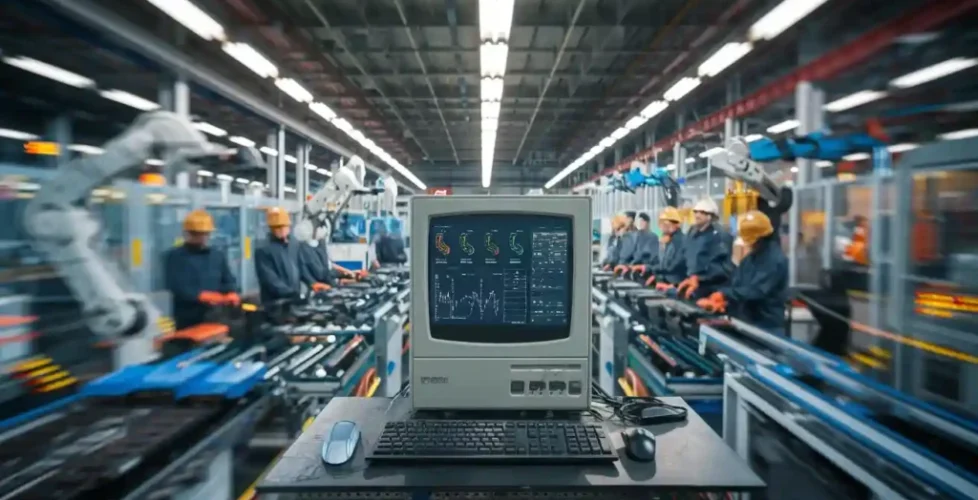
Why Industrial Computers Are Revolutionizing Modern Manufacturing!
Manufacturing is undergoing a fundamental transformation, spurred by the relentless advancement of digital technologies. Traditional processes, once dependent on manual oversight and generic commercial computers, are now giving way to highly intelligent and automated systems. At the core of this metamorphosis lies one pivotal technology: Industrial Computers. Purpose-built for challenging environments and complex tasks, Industrial Computers are empowering manufacturers to move faster, smarter, and with unparalleled reliability.
What Are Industrial Computers?
Industrial Computers are specialized computing systems engineered for tasks in environments where standard consumer computers would risk failure. While commercial PCs are designed for offices and homes, Industrial Computers excel in factories, warehouses, fields, and transportation hubs—places routinely subject to dust, moisture, vibrations, and temperature extremes.
At their core, Industrial Computers integrate:
- Heavy-duty hardware capable of withstanding harsh conditions
- Extended operation cycles, supporting 24/7 uptime
- Flexible configurations tailored for specific industrial applications
- Robust I/O ports for legacy and modern equipment
- Enhanced security and long lifecycle management
From operating production lines to running real-time control and monitoring applications, Industrial Computers are the nerve center of smart manufacturing.
Differences Between Industrial and Commercial Computers
Understanding the distinction between industrial and commercial computers is critical when planning for your manufacturing operation’s future.
Commercial Computers:
- Built for general-purpose business or personal use
- Often prioritize aesthetics, portability, and cost
- Limited environmental resistance (humidity, temperature, vibration)
- Standard lifecycles—3 to 5 years
- Minimal customization, fewer legacy ports
- Designed for controlled, clean environments
Industrial Computers:
- Engineered for ruggedness and high reliability
- Feature robust chassis (metal or specially coated to resist corrosion)
- Extended operating temperature ranges (-40°C to +85°C possible)
- Shock and vibration resistance per industry standards
- Long lifecycle with component stability—often 7-10 years
- Wide range of expansion, I/O, and mounting options
- Certified for hazardous or hygienic locations (ATEX, IP65, etc.)
In manufacturing, where downtime costs can be monumental and reliable connectivity with legacy machines is vital, only purpose-built Industrial Computers can deliver the requisite performance and longevity.
Key Features of Industrial Computers
Let’s explore what sets Industrial Computers apart from their commercial counterparts and why these features matter for manufacturing.
1. Rugged Construction
Industrial Computers from ValanoIPC are encased in tough shells—often aluminum or stainless steel—making them impervious to impacts, shocks, or corrosive chemicals. Tight gasketing and solid-state drives (SSDs) further enhance durability, eliminating moving parts vulnerable to wear.
2. Environmental Resistance
In the real world, conditions are rarely perfect. ValanoIPC’s Industrial Computers function reliably in extreme heat or cold, high humidity, or even direct water jets, meeting ingress protection standards (like IP65/IP67). This stability opens the door for deployment anywhere—from outdoor refineries to cleanrooms.
3. Longevity and Lifecycle Support
Manufacturers typically operate equipment for a decade or more. Industrial Computers are developed with long-term longevity in mind, offering extended product availability, consistent firmware support, and guaranteed replacement parts—ensuring no disruptions to your production continuity.
4. Flexible I/O and Expandability
Connecting with existing infrastructure is critical. Industrial Computers support a vast array of ports: multiple Ethernet, legacy RS-232/RS-485 serial, CANbus, USB, GPIO, display ports, and PCIe or PCI slots for expansion. This facilitates seamless integration with sensors, PLCs, controllers, and operator interfaces.
5. Vibration and Shock Endurance
Industrial settings commonly feature heavy machinery generating significant vibrations and shocks. ValanoIPC designs its systems to survive MIL-STD-810G vibration and shock standards, ensuring stable operation even when mounted on moving equipment.
6. Passive Cooling and Fanless Operation
Many models use convection cooling (no fans), vastly reducing maintenance needs and failure points. Fanless Industrial Computers can be deployed in dusty or sterile environments where airflow is a liability.
7. Wide Power Input Range
With the potential for voltage fluctuations, especially in remote or mobile operations, industrial-grade systems are designed to handle a wide range of DC power inputs and include surge protection.
8. Industrial-Grade Components
All internal components, from processors to capacitors, are selected for endurance and performance under stress, outlasting consumer equivalents.
Read More: Top Trends Shaping the Future of Industrial Computers in 2026!
How Industrial Computers Enable Smart Manufacturing
Industry 4.0—the convergence of digital, physical, and cyber systems—places enormous demands on production infrastructure. Industrial Computers make this transformation possible through:
- Real-Time Data Acquisition & Analytics : Data is the lifeblood of modern manufacturing. Industrial Computers gather vast truckloads of operational data—temperatures, vibrations, throughput, machine status—delivering insights in real time. They support high-speed sensors, industrial cameras, and data acquisition devices, enabling predictive analytics and process optimization.
- Edge Computing : With the proliferation of IoT devices, sending all data to the cloud is inefficient and often impractical due to latency, bandwidth, or security. Industrial Computers serve as edge nodes: processing sensor and machine data locally, filtering and forwarding only what matters. This dramatically reduces delays, bandwidth, and decision-cycle times.
- Seamless Integration : Industrial Computers bridge legacy machinery with the digital world. Supporting classic protocols like Modbus, CAN, and Profibus, along with modern OPC UA, MQTT, and Ethernet/IP, they enable manufacturers to interconnect entire factories, regardless of equipment age or origin.
- Predictive Maintenance : Machine failure is the bane of factories everywhere. With AI and analytics running directly on Industrial Computers, manufacturers can predict when a motor, conveyor, or pump will fail, allowing for targeted preventive maintenance and vastly reducing unplanned downtime.
- Human-Machine Interfaces (HMI) : Modern Industrial Panel PCs are the visual front-end for operators, displaying critical information, alarms, and controls. With touchscreens and rugged displays, they withstand daily interaction and harsh cleaning protocols, optimizing human oversight and interaction with automation systems.
- Process Automation : Industrial Computers run real-time control software (such as SCADA, PLC control, or MES solutions), orchestrating everything from robotic arms to packaging lines, ensuring consistent, high-quality output.

Benefits of Using Industrial Computers in Manufacturing
The advantages are vast and tangible:
- Dramatic Productivity Increases: With smart automation, manufacturers can boost output per worker, reduce defects, and accelerate cycle times. Real-time data and analytics mean processes can be optimized continuously—not just during planned audits.
- Reduced Downtime and Maintenance Costs: Industrial Computers’ robustness minimizes failure rates. Coupled with predictive maintenance, they cut down on unscheduled stoppages, saving valuable hours and substantial costs.
- Enhanced Quality Control: By integrating vision systems and sensors running on Industrial Computers, every product can be instantly checked for defect, size, color, or weight—ensuring only the highest-quality goods leave the facility.
- Increased Worker Safety: With automatic monitoring and control of hazardous equipment, Industrial Computers keep operators out of harm’s way, instantly flagging any out-of-spec or unsafe conditions.
- Improved Traceability and Compliance: Food, pharma, and automotive sectors must prove compliance with rigorous standards. Industrial Computers keep detailed logs, batch records, and sensor data, making regulatory reporting a breeze.
- Energy Efficiency: Industrial Computers enable fine-tuned control of energy-intensive equipment, helping identify waste and automate shutdowns, resulting in considerable energy and cost savings.
- Easy Upgradability and Scalability: Whether adding new production lines or migrating to the latest protocols, Industrial Computers’ modular designs make it straightforward to expand or update your infrastructure with minimal disruption.
Choosing the Right Industrial Computers: Key Considerations
Selecting the ideal Industrial Computer means thinking beyond simple processing power:
1. Assess Environmental Factors
- Will the computer face dust, moisture, vibration, or temperature extremes?
- Is ingress protection (IP65/67) or explosion protection required?
2. Review Required Performance
- What are the demands of your control software? Do you need high-performance CPUs/GPU for vision tasks?
- How much RAM and storage are needed for local analytics?
3. Examine I/O and Expansion Needs
- Which legacy ports (RS232, CANbus, PCI) or modern interfaces (USB 3.0, HDMI, LAN) are essential for current and future devices?
4. Compatibility with Software Ecosystem
- Will your chosen Industrial Computer run required OSes—Windows, Linux, RTOS?
- Are software drivers and update support available long-term?
5. Vendor Support
- Does the provider offer extended warranties, rapid service, or in-field support?
- Can they customize systems to your unique needs (form factor, components, certifications)?
6. Total Cost of Ownership
- Factor in expected operational life, maintenance, power draw, and downtime costs—not just the upfront purchase price.
ValanoIPC collaborates closely with manufacturers to ensure their Industrial Computers are a perfect operational fit, both now and as production needs scale.
The Future of Industrial Computers in Manufacturing
Manufacturing innovation is accelerating:
- Artificial Intelligence at the Edge: Advanced Industrial Computers will soon run powerful AI algorithms on-device, enabling true autonomous production, complex defect recognition, and real-time decision making.
- 5G & Wireless Connectivity: As plants upgrade to private 5G networks or Wi-Fi 6, Industrial Computers will feature integrated wireless for ultra-low-latency device-to-device communication.
- Cybersecurity as Priority: With networked factories, robust hardware encryption, secure boot, and remote management are now essential features in any new system.
- Sustainability and Efficiency: Next-gen Industrial Computers will drive even greater gains in energy management, materials optimization, and green manufacturing initiatives.
By choosing a trusted partner such as ValanoIPC, manufacturers can future-proof their operations and confidently evolve at the pace of global technology.
The digital transformation sweeping the global manufacturing sector is impossible without the rock-solid foundation provided by Industrial Computers. With unmatched durability, expansive connectivity, and the ability to power sophisticated automation, they have become indispensable partners in every modern plant.
Manufacturers investing in Industrial Computers are future-proofing their businesses—gaining agility to embrace new technologies, greater resilience to handle operational disruptions, and the data-driven insights needed for world-class productivity.
Frequently Asked Questions (FAQ)
Q1: Why should I choose Industrial Computers for my manufacturing plant instead of standard PCs?
A1: Industrial Computers are designed for hostile environments, long lifespans, and specific industrial applications. They offer far greater reliability under dust, vibration, moisture, or extreme temperatures—significantly reducing downtime and maintenance versus standard PCs.
Q2: How long can I expect an Industrial Computer to last?
A2: Most well-manufactured Industrial Computers operate reliably for 7 to 10 years or longer, compared to just 3 to 5 years for typical consumer PCs.
Q3: Are Industrial Computers difficult to integrate with older machinery?
A3: Not at all. Industrial Computers typically provide a broad range of ports and support multiple industrial communication protocols, making them easy to connect to legacy equipment and software.
Q4: Can Industrial Computers support AI and machine learning at the edge?
A4: Yes. Many modern Industrial Computers feature powerful CPUs and GPUs, allowing them to run AI/ML workloads for tasks such as predictive maintenance, real-time quality control, and advanced robotics.
Q5: Is fanless operation possible with Industrial Computers?
A5: Absolutely! Many models—including those from ValanoIPC—offer fanless, sealed designs using passive cooling. This greatly reduces maintenance and makes the systems extremely durable.
Q6: How do Industrial Computers contribute to energy savings?
A6: By enabling precise, sensor-based control of machinery, they optimize run times, reduce waste, and automate shutdown of idle equipment—translating into significant energy reductions.
Q7: What industries use Industrial Computers?
A7: Virtually all, but especially: automotive, electronics, food & beverage, pharmaceutical, oil & gas, logistics, mining, and energy.
Q8: What certifications should I look for in Industrial Computers?
A8: Depending on your industry, look for relevant ingress protection (IP65/IP67), UL listing, CE, FCC, Class I Div 2 (hazardous), ATEX, and more.
Q9: Does ValanoIPC offer customization and technical support?
A9: Yes, ValanoIPC specializes in tailored solutions for unique applications, and provides comprehensive technical support, integration, and training.
Q10: Can I remotely manage and update my Industrial Computers?
A10: Certainly. Industrial Computers often feature advanced remote management tools for software updates, monitoring, and troubleshooting—minimizing the need for costly on-site service.