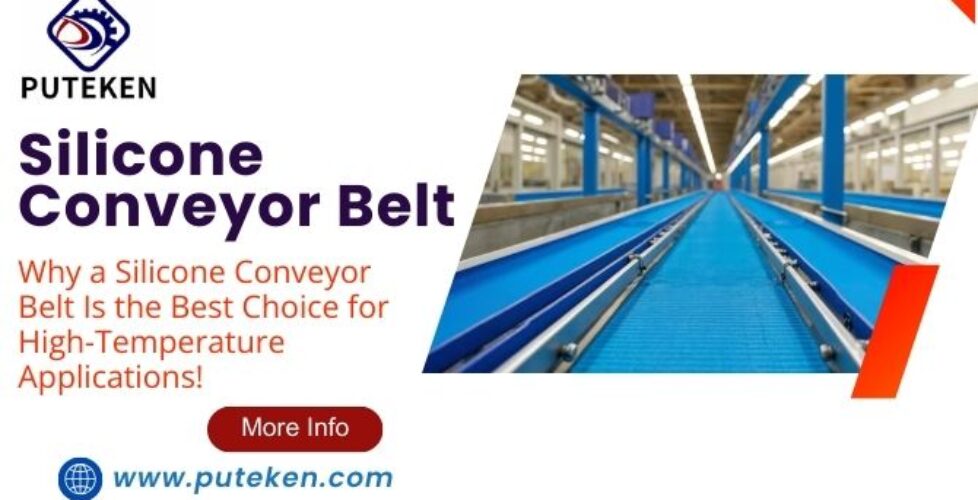
Why a Silicone Conveyor Belt Is the Best Choice for High-Temperature Applications!
In the demanding world of modern manufacturing, food processing, pharmaceuticals, and high-tech industries, one often overlooked yet crucial component in maintaining efficiency, safety, and product integrity is the conveyor system. Among the variety of conveyor belts available today, the Silicone Conveyor Belt has emerged as the gold standard for applications that require resistance to extreme temperatures, chemical exposure, and hygienic conditions.
Whether it’s moving hot products straight out of the oven in a commercial bakery or handling sensitive electronics through heat-intensive processing stages, standard rubber or PVC conveyor belts just don’t cut it. That’s where the Silicone Conveyor Belt shines—offering unparalleled thermal stability, non-stick properties, chemical resistance, and hygiene compliance.
As a recognized leader in conveyor belt solutions, Shanghai Puteken Transmission System Co., Ltd. is proud to manufacture and supply high-performance silicone conveyor belts tailored for demanding industrial applications. With decades of experience and a strong focus on innovation, we understand the wide-ranging needs of industries that operate under high-heat conditions. Our silicone belts are designed to meet the most rigorous requirements, ensuring durability, precision handling, and minimal downtime.
What Is a Silicone Conveyor Belt?
A Silicone Conveyor Belt is a type of conveyor belt that uses silicone—a synthetic elastomer known for its exceptional heat tolerance, flexibility, and non-reactive properties—as the main surface material. It is typically reinforced with a fabric layer (such as fiberglass or polyester) for strength and stability, while the outer silicone layer serves as the contact surface for conveying items.
Silicone belts are commonly used in environments where temperatures can surpass the capabilities of traditional rubber, PVC, or polyurethane belts. They maintain performance in continuous temperature ranges from -70°C to +230°C (or -94°F to +446°F), with some belts rated even higher for short-duration exposure.
Because silicone resists deformation, chemical degradation, and microbial growth, silicone conveyor belts are a top choice for industries requiring chemical resistance, cleanroom performance, non-stick surfaces, and high-heat tolerance.
Engineering and Material Composition
The performance of a Silicone Conveyor Belt starts with its design and construction. At Shanghai Puteken Transmission System Co., Ltd., we engineer belts with layered configurations to suit specific industrial requirements.
Typical Layer Construction:
- Top Layer: High-purity silicone compound (FDA/food-safe grades available)
- Reinforcement Layer: Fabrics such as polyester, fiberglass, or aramid fibers provide tensile strength
- Bottom Layer (Optional): Depending on the structure, a non-stick or low-friction compound may be added to reduce drag
Properties of Industrial-Grade Silicone:
- High thermal resistance (up to 230°C+)
- Excellent non-stick properties
- UV, ozone, and oxidation resistance
- Inert and non-toxic (suitable for food and pharma)
- Flexible even at sub-zero temperatures
- Long-term dimensional stability
Through proprietary manufacturing processes, Shanghai Puteken offers belts with customized surfaces—glossy, matte, textured, or high-grip—to best suit your product handling needs.
Why Silicone Excels in High-Temperature Applications?
Unlike many other synthetic polymers and rubbers, silicone maintains its physical integrity under high heat. Its unique molecular structure allows it to perform in thermal conditions that would otherwise cause warping, melting, or degradation in conventional belts.
Top Reasons Silicone Belts Are Ideal for High Heat:
- Consistent Performance from -70°C to +230°C
- Minimal expansion or shrinkage under heat load
- No release of toxic or harmful gases under thermal stress
- Maintains grip and elasticity at extreme temperatures
- Resists hardening, cracking, and brittleness over time
These properties make silicone belts ideal for industries such as food baking, heat sealing, electronics manufacturing, lamination, thermal curing, and more.
Benefits of Choosing a Silicone Conveyor Belt
The benefits of choosing a Silicone Conveyor Belt go far beyond just temperature resistance. This advanced conveyor solution offers a wide range of performance advantages for modern production environments:
- High Heat Tolerance
Retains flexibility and functionality at extreme temperatures—ideal for ovens, furnaces, dryers, and hot presses. - Non-Stick Surface
Perfect for conveying sticky or delicate products without damaging or contaminating them. - Easy to Clean
Smooth, non-porous surfaces make cleaning simple, reducing downtime and enhancing hygiene. - Chemically Resistant
Withstands oils, greases, acids, bases, and even some solvents commonly found in industrial settings. - Food & Pharma Safe
FDA- and EC-compliant food-grade silicone is ideal for direct food contact or pharmaceutical manufacturing. - Low Compression Set
Retains tension and shape over time, reducing slack and the need for frequent retensioning. - Flame Resistance
Naturally flame-retardant, silicone does not ignite easily, a valuable trait in heat-intensive settings.
Common Industry Applications
The utility of Silicone Conveyor Belts is evident across a wide range of industries where extreme temperatures or sensitive products must be handled with care:
- Food Processing & Baking
Bread and biscuit baking lines
Heat tunnels and cooking ovens
Chocolate enrobing, cooling, and demolding - Pharmaceuticals
Tablet drying and coating lines
Cleanroom assembly systems
Conveyor transport between sterilization stages - Textile & Printing
Heat-activated printing processes
Fusing, laminating, and dye sublimation lines - Electronics & Plastic Manufacturing
Reflow soldering conveyors
PCB drying chambers
Thermoforming transport systems - Rubber, Foam & Composite Processing
Conveying compounds through heating, molding, or curing processes
Anywhere heat is involved, a silicone conveyor solution is likely the optimal choice for long-term operational efficiency.
Customization Options for Silicone Belts
At Shanghai Puteken Transmission System Co., Ltd., we don’t believe in one-size-fits-all. Our team offers a wide range of custom conveyor belt options, including:
- Thickness Options: 0.5mm to 6mm and beyond, depending on layer options
- Reinforced Cords or Special Tension Members
- Double-Sided Silicone Coating
- Anti-static or conductive variants
- Perforated or textured surface profiles
- Sidewalls or tracking guides
- Custom belt widths, joints (endless or mechanical), and lengths
We also offer endless erections, splicing, and field-service support globally so that your operations never have to hit pause.
Installation and Maintenance Best Practices
To maximize durability and performance, it is essential to follow proper installation and maintenance techniques:
Installation Tips:
- Avoid excessive tension to retain elasticity over time
- Align pulleys and support systems precisely
- Maintain adequate tracking systems to prevent edge damage
Maintenance Tips:
- Clean with pH-neutral agents; avoid aggressive abrasives
- Inspect for damage or surface wear due to sharp or hot objects
- Store belts in a cool, dry, and dust-free environment
Regular monitoring and preventive maintenance ensure a lower total cost of ownership and fewer unplanned shutdowns.
Environmental and Regulatory Compliance
All Silicone Conveyor Belts at Shanghai Puteken are manufactured to meet multiple international guidelines and safety standards:
- FDA 21 CFR 177.2600 Compliant
- EU 1935/2004 Food Contact Safe
- ROHS & REACH Certified
- ISO 9001: Quality Management
- Low outgassing for cleanroom environments
This means you can safely use our belts in food, chemical, and pharmaceutical facilities with absolute confidence.
Why Choose Shanghai Puteken Transmission System Co., Ltd.?
With an in-depth understanding of conveyor systems and a commitment to quality, Shanghai Puteken Transmission System Co., Ltd. has become a trusted conveyor belt manufacturer to industries worldwide.
Why Clients Trust Us:
- 30+ Countries Served Globally
- Own In-House Manufacturing Facilities
- Custom Engineering for OEM Operations
- Fast Turnaround & Global Logistics
- 24/7 Customer & Technical Support
- R&D Capabilities for New Material Technologies
When it comes to Silicone Conveyor Belts, our experience ensures your line runs smoothly, regardless of the temperature.
The Silicone Conveyor Belt is more than just a heat-resistant material—it’s a high-performance solution tailored for industries that demand durability, hygiene, and efficiency in extreme environments. Whether you’re baking, sealing, soldering, or transporting delicate goods through fluctuating heat zones, silicone belts offer the performance, longevity, and safety standards your business depends on.

10. Frequently Asked Questions (FAQ)
Q1: What maximum temperature can your silicone conveyor belts withstand?
Our standard belts handle up to +230°C, while custom-engineered variants can briefly endure up to +280°C for short cycles.
Q2: Are silicone belts food-safe?
Yes. We offer FDA and EU-approved food-grade silicone belts suitable for direct contact with edible goods.
Q3: How do silicone belts perform in cold conditions?
Very well. Silicone remains flexible and operational at temperatures as low as -70°C.
Q4: Can I use a silicone belt in a cleanroom environment?
Absolutely. Silicone belts are low-outgassing and non-shedding, perfect for semiconductor or medical device manufacturing environments.
Q5: What are your lead times for custom orders?
Standard products are shipped within 3–5 days, while customized solutions typically require 7–10 business days, depending on complexity.
Q6: Can the belts be customized for different textures or grip levels?
Yes. We offer smooth, matte, rough-top, and high-friction surface finishes for specific application needs.