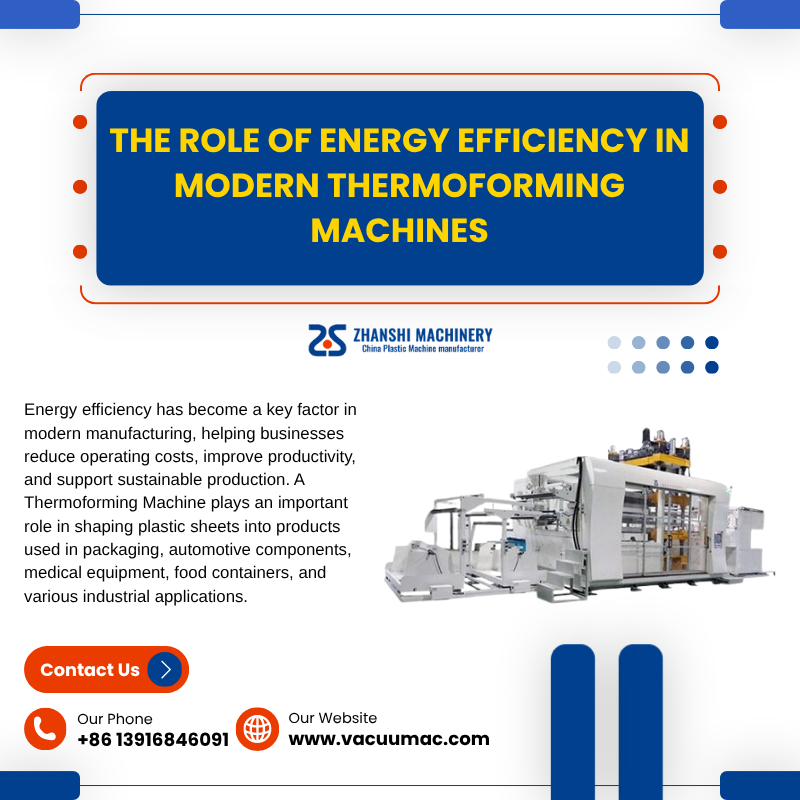
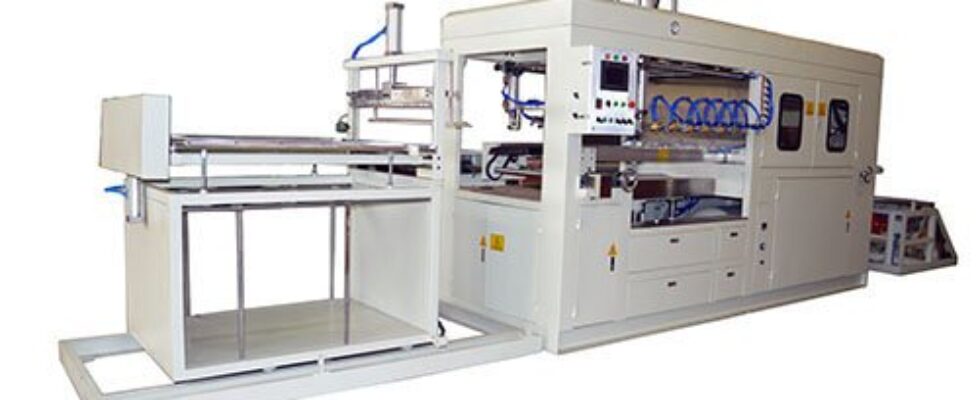
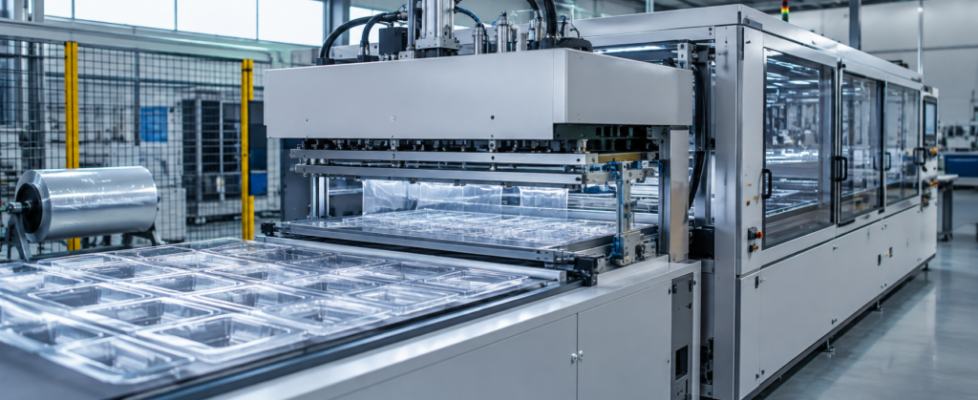
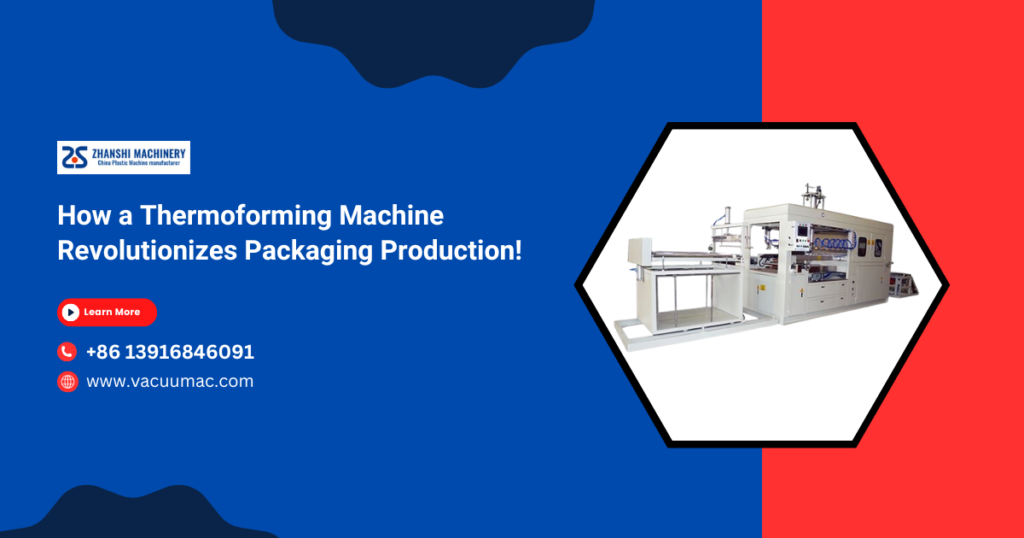
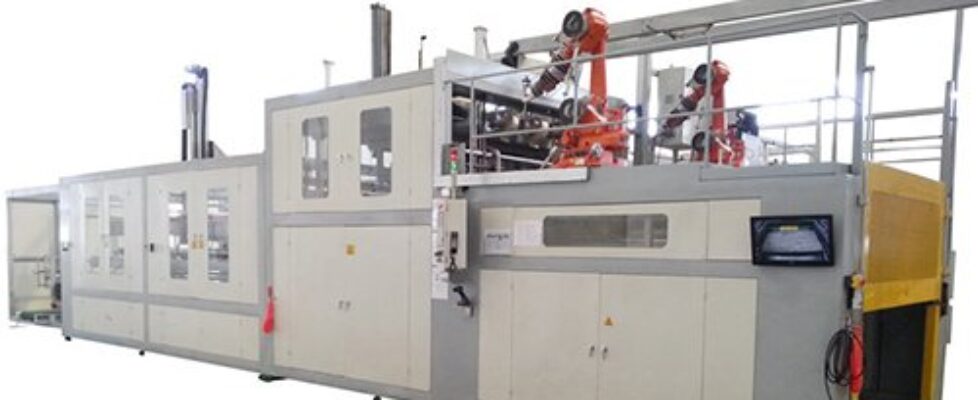
Energy efficiency has become a key factor in modern manufacturing, helping businesses reduce operating costs, improve productivity, and support sustainable production. A Thermoforming Machine plays an important role in shaping plastic sheets into products used in packaging, automotive components, medical equipment, food containers, and various industrial applications. By adopting energy-efficient thermoforming technology, manufacturers can achieve consistent product quality while minimizing energy consumption and material waste.
Key Benefits of Energy Efficiency in Thermoforming Machines
1. Reduced Energy Consumption
Modern Thermoforming Machine is designed with advanced heating systems, optimized temperature controls, and energy-saving components. These technologies help reduce unnecessary power consumption during the heating and forming processes. Efficient energy management allows manufacturers to lower electricity expenses while maintaining reliable production performance.
2. Improved Production Efficiency
Energy-efficient equipment can support faster heating cycles, stable forming temperatures, and optimized production processes. Advanced automation and intelligent control systems help minimize downtime and improve operational consistency. As a result, manufacturers can increase production output while making better use of available resources.
3. Lower Operating Costs
Energy expenses represent a significant part of manufacturing costs. Investing in an efficient Thermoforming Machine helps businesses manage long-term operating expenses and improve overall production economics. Reduced energy consumption, less material waste, and improved process stability can contribute to better manufacturing profitability.
Precise temperature regulation and uniform heating are essential for producing high-quality thermoformed plastic products. Modern machines use improved heating configurations and control technologies to maintain suitable processing conditions. This helps reduce defects, material deformation, and rejected products, supporting consistent quality across production batches.
5. Environmentally Responsible Manufacturing
Energy-efficient thermoforming technology helps reduce electricity consumption and associated greenhouse gas emissions, depending on the energy source. When combined with recyclable materials, efficient production planning, and waste-reduction strategies, these machines can support more sustainable manufacturing practices.
Choosing an Energy-Efficient Thermoforming Machine
When selecting a Thermoforming Machine, manufacturers should evaluate heating efficiency, automation capabilities, temperature control accuracy, production speed, maintenance requirements, and compatibility with different plastic materials. Considering total operating costs rather than the initial purchase price can help businesses make informed investment decisions.
Shanghai Zhanshi Mechanical Equipment Co., Ltd. specializes in thermoforming equipment designed to meet diverse industrial production requirements. By focusing on engineering innovation, reliable performance, and advanced manufacturing technology, the company supports businesses seeking practical thermoforming solutions.
In conclusion, energy efficiency is an essential consideration in modern thermoforming operations. Choosing the right Thermoforming Machine can help manufacturers improve productivity, control operating costs, maintain product quality, and move toward more resource-efficient production. Learn more at https://tinyurl.com/299j6hbkor call now at +86 13916846091 today!
Shanghai, China, 08.10.2026 – As the global demand for eco-friendly packaging reaches record highs, Shanghai Zhanshi Mechanical Equipment Co., Ltd., one of the leading thermoforming machine manufacturers, is proud to announce the launch of its latest breakthrough in sustainable packaging production: a cutting-edge series of advanced thermoforming machine manufacturers solutions. Designed to empower manufacturers and brands worldwide, these new machines deliver robust productivity while championing the next generation of sustainable packaging innovation.
Sustainability at the Forefront of Innovation
In response to mounting pressures from consumers, governments, and environmental organizations, packaging producers must dramatically rethink the materials, energy, and processes they use. Thermoforming—one of the world’s most widely used techniques for creating plastic trays, cups, lids, and bespoke packaging—has proven especially adaptable to these demands.
Thermoforming machine manufacturers now face a dual challenge: how to lower the environmental footprint of every package, while still delivering the cost, performance, and design versatility brands and consumers expect.
Shanghai Zhanshi Mechanical Equipment Co., Ltd. has answered this critical industry question through intensive research and development. Their new products enable rapid production of recyclable, compostable, and reduced-weight packaging—all while minimizing waste and energy consumption.
Key Features of Shanghai Zhanshi’s New Thermoforming Machine Manufacturer Solutions
The company’s new series—marketed collectively as the “thermoforming machine manufacturers” line—embodies the latest in sustainable manufacturing technology:
100% Recyclable and Biodegradable Material Support: These machines are engineered to process the newest biodegradable polymers, PLA-based sheets, and recycled PET with no compromise in product quality.
Precision Material Optimization: Proprietary software and advanced sheet feeding controls minimize material thickness, reducing plastic usage by 10–30% versus conventional systems.
Energy-Efficient Heating and Cooling: Smart infrared and convection heating modules, coupled with adaptive cooling, cut total energy consumption per product cycle by up to 40%.
In-Line Recycling Capabilities: Scrap edge trimmings and offcuts are automatically collected, re-ground, and fed back into the process, creating a closed-loop production system.
Reduced Tool Change-Over Times: Fast-change mold systems empower rapid adaption to new product SKUs, supporting short production runs and lowering machine idling times.
Data-Driven Process Management: Integrated IoT and real-time monitoring allow remote diagnostics, predictive maintenance, and detailed sustainability reports for every run.
Compliance with International Green Standards: All machines in the line are certified to meet or exceed EU, US, and Asia-Pacific eco-production guidelines.
Transforming Global Packaging, One Machine at a Time
The influence of thermoforming machine manufacturers extends to nearly every packaged good consumers touch daily—from food containers and medical devices, to electronic trays and plantable seed pots. The industry has a unique opportunity—and responsibility—to reduce waste and carbon emissions at scale.
Shanghai Zhanshi Mechanical Equipment Co., Ltd. is partnering with global packaging companies to implement its new thermoforming machine manufacturers series in high-volume facilities across Europe, North America, Southeast Asia, and the Middle East. Early adopters are already reporting significant reductions in raw material usage, energy costs, and landfill impact—all while enhancing production speed and end-product quality.
How the New Thermoforming Machine Manufacturers Series is Pushing Boundaries
1. Advancing Circular Economy Design
Shanghai Zhanshi’s new machines are supporting closed-loop manufacturing. Factories can now reuse offcuts and post-consumer material, feeding them into new packaging production, slashing both waste and raw material costs.
2. Supporting New Biomaterial Adoption
Many “bioplastics” and compostable materials behave differently from traditional plastics. The new thermoforming machine manufacturers systems feature adaptive heating, pressure control, and sensing to run new polymers efficiently—without loss in cycle speed or product consistency.
By optimizing heater activation, airflow, and multi-stage cooling, the solution’s energy-efficient features designed by Shanghai Zhanshi can significantly lower a facility’s greenhouse gas emissions.
4. Guaranteeing Product Integrity
With in-line quality control cameras and automated thickness measurement, every tray, lid, or cup produced meets tight tolerances with less variation and fewer rejects.
A Commitment to Education and Industry Collaboration
To accelerate the adoption of sustainable manufacturing practices, Shanghai Zhanshi will roll out a series of free webinars and white papers over the coming months. Topics will cover:
Best practices for running bio-based materials
Achieving ISO and EU eco-certification for packaging lines
Planning ROI and real-world case studies of factories who made the leap
About Shanghai Zhanshi Mechanical Equipment Co., Ltd.
Shanghai Zhanshi Mechanical Equipment Co., Ltd. is a pioneer in sustainable packaging technology and one of the world’s leading thermoforming machine manufacturers. With a full suite of innovative solutions serving food, medical, consumer, and industrial packaging markets, the company empowers manufacturers to scale production, cut costs, and achieve sustainability goals.
From its R&D labs in Shanghai to its global service and distribution centers, Shanghai Zhanshi leverages three decades of engineering excellence, customer partnership, and forward-thinking design to help customers succeed in a changing world.
By launching the newest line of thermoforming machine manufacturers solutions, Shanghai Zhanshi Mechanical Equipment Co., Ltd. is not just shaping the next generation of packaging machinery—it’s enabling the industries of tomorrow to deliver on the promise of true sustainability, without compromise.
Media Contact:
Company Name: Shanghai Zhanshi Mechanical Equipment Co., Ltd. Contact Name: Lewis Contact Phone: +86 13916846091 Address: No.26 Kangyuan Road, Zhujiajiao Industrial Zone, Qingpu District, Shanghai, China Email: Daisy@smktek.com Website: https://www.vacuumac.com/
In today’s fast-paced manufacturing environment, staying ahead requires more than just keeping your machinery up and running—it demands next-level efficiency, flexibility, and consistency. As factories across the globe strive to optimize their workflows and streamline their processes, the adoption of advanced equipment has become more crucial than ever. One standout solution that continues to gain traction for its transformative potential is the thermoforming machine.
For manufacturers seeking to produce high volumes of quality plastic products with minimal waste and maximum repeatability, a modern thermoforming machine offers undeniable benefits. From packaging and automotive components to medical devices and consumer goods, these versatile machines have revolutionized how businesses approach production, enabling quicker turnaround times, lower costs, and greater customization.
Understanding the Thermoforming Machine
To fully appreciate the impact that a thermoforming machine can have on your production line, it’s important to understand what it is and how it works. In essence, a thermoforming machine is equipped to heat a sheet of thermoplastic material until it reaches just the right pliability. Subsequently, the sheet is stretched onto or into a mold and held in place as it cools to form a desired shape. The finished part is then trimmed to specification. This seemingly simple process underpins the production of an incredibly broad range of items.
Types of Thermoforming Machines
Thermoforming machines come in several variations:
Manual Thermoforming Machines: Best suited for low-volume or prototyping environments.
Semi-Automatic Thermoforming Machines: Combine operator input with automated features for medium-volume production.
Fully Automatic Thermoforming Machines: Deliver the greatest speeds and precision for high-volume manufacturing, suitable for global-scale operations.
Furthermore, you’ll find differences such as:
Vacuum Forming Machines: Use vacuum pressure to shape the heated plastic sheet.
Pressure Forming Machines: Employ additional air pressure for sharper details and complex shapes.
Twin-Sheet Thermoforming Machines: Fuse two sheets together for hollow items and added strength.
Shanghai Zhanshi Mechanical Equipment Co., Ltd. supplies and supports all these formats, catering to every scale and specialization.
The Core Advantages: Why Add a Thermoforming Machine to Your Production Line?
1. Enhanced Production Efficiency and Throughput
Transitioning to an automated thermoforming machine often results in:
Significantly Reduced Cycle Times: Thanks to rapid heating and forming processes.
Fewer Manual Steps: Automation takes over from loading to forming to trimming, resulting in less downtime and human error.
24/7 Operation Viability: Machines can run continuous shifts, boosting output exponentially.
2. Cost Reduction and Resource Optimization
With a modern thermoforming machine, manufacturers can expect:
Lower Material Wastage: Thinner, more precisely controlled sheets reduce offcuts and scrap.
Energy-Efficient Operation: Latest machines use advanced heating elements that minimize power consumption.
Reduced Labor Costs: Fewer operators are needed per shift.
3. Versatility and Product Customization
Thermoforming machines accommodate a wide array of plastic materials (PET, PVC, PP, ABS, and more) and can be reconfigured quickly for different shapes or product lines. This versatility leads to:
Rapid Prototyping and Design Changes: Easily switch molds and sheet thicknesses for new projects.
Shorter Time-to-Market: Faster cycle times and easier prototyping allow you to respond more promptly to customer demands.
4. Consistent Quality and Repeatability
By automating key steps and using programmable logic controllers, a robust thermoforming machine ensures:
Uniform Wall Thickness: Resulting in predictable, reliable parts.
Precise Detailing: Short cycle times don’t compromise quality; pressure forming can even mimic injection-molded finishes.
Reduced Human Error: Quality is managed by calibrated, computerized controls.
5. Eco-Friendly Possibilities
Reduced Material Consumption: Produce lightweight yet strong components.
Recyclable Materials: Use eco-friendly thermoplastics with modern machinery.
Smart Scrap Handling: Integrate recycling and regrinding options for a greener footprint.
Practical Applications: Where Does Thermoforming Make a Difference?
A thermoforming machine can be a game-changer in multiple industries. Here are some of the top applications:
Packaging Industry
The demand for custom clamshells, trays, and protective packaging grows daily. With a thermoforming machine:
-Large packaging runs can be completed swiftly. -Design updates can be trialed with minimal lead time. -Lightweight packaging reduces shipping and storage costs.
Automotive Sector
Dashboards, door panels, protective covers, and interior trim pieces are all made efficiently with thermoforming technology:
Thermoforming is essential for sterile, safe medical packaging:
Blister packs, trays, and component housings are made to stringent hygiene standards.
Machines with easy-clean features and medical-grade mold compatibility help meet regulatory demands.
Consumer Products
From toys to appliance liners, manufacturers can produce custom, high-quality products quickly and at scale.
Food Industry
Thermoforming machines are at the heart of packaging for yogurt cups, meat trays, and ready-meal containers—guaranteeing hygiene and product preservation.
Electronics
Protective housings, inserts, and enclosures are easily customized with thermoforming for electronics, giving devices tailored protection and branding.
A Step-by-Step Transformation: Introducing a Thermoforming Machine to Your Production Line
Making the leap to thermoforming is not just about installing a new piece of equipment. It’s about a holistic transformation of your production environment.
Step 1: Needs Assessment and Compatibility Check
Analyze your current workflow: Identify pain points, bottlenecks, and waste sources.
Determine product requirements: Material choices, thicknesses, volumes, and finish expectations.
Select machine type: Shanghai Zhanshi offers expert consultation on choosing the right format.
Step 2: Space Planning and Infrastructure
Machine footprint: Assess space for the machine, raw material storage, and finished goods handling.
Utilities check: Ensure sufficient electrical, pneumatic, and extraction capacity.
Step 3: Installation and Integration
Professional installation: Our technicians ensure all safety and performance parameters are met.
Production line integration: Connect the machine to conveyors, stackers, or robotics if needed.
Fine-tuning: Initial production runs are optimized for cycle time, quality, and material usage.
Step 5: Continuous Improvement
Data-driven insights: Our machines can log performance, highlighting potential improvements.
Regular maintenance schedules: Preventative care ensures longevity and minimal unscheduled downtime.
Thoughtful Considerations Before Upgrading
Transitioning to a new thermoforming machine is a significant step. To maximize your investment, consider:
Scalability: Will your choice accommodate business growth?
Customization: Can it be adapted for new materials and future projects?
Support Network: Does your manufacturer offer prompt, expert technical support?
Total Cost of Ownership: Account for energy, maintenance, consumables, and operator costs—not just purchase price.
Sustainability: Can the machine use recycled or bio-based plastics to meet future regulations?
The Digital Edge: Industry 4.0 and Smart Thermoforming Machines
As digital transformation sweeps across manufacturing, Shanghai Zhanshi Mechanical Equipment Co., Ltd. leads the way with smart, connected thermoforming machine solutions:
Remote Monitoring and Control: Track productivity and troubleshoot from anywhere.
Predictive Maintenance: Advanced sensors “see” wear and tear before breakdowns occur.
Integration with MES/ERP: Automated data flow keeps management systems up to date with live production metrics.
Embracing Industry 4.0 turns your production line into a flexible, responsive system that anticipates change rather than reacts to it.
The addition of a thermoforming machine to your production line is more than a technological upgrade—it’s a strategic investment in agility, quality, and profitability. From enabling greater customization to slashing cycle times and materials waste, modern thermoforming lies at the heart of manufacturing innovation.
Frequently Asked Questions (FAQ)
Q1: What types of products can I manufacture with a thermoforming machine?
A: From food packaging and disposable trays to automotive interiors, appliance housings, medical packaging, and electronic enclosures—a thermoforming machine is incredibly versatile.
Q2: How long does it take to switch production from one product to another?
A: With fast-change features and modular molds, most changeovers take just 10–30 minutes on modern Shanghai Zhanshi thermoforming machines.
Q3: Is it expensive to maintain a thermoforming machine?
A: Routine maintenance is simple and cost-effective. Our machines are engineered for accessibility, and spare parts are readily available. Predictive maintenance features further minimize downtime and unexpected costs.
Q4: Can I use recycled plastic with a thermoforming machine?
A: Yes! Our machines are compatible with many types of recycled and bio-based plastics, supporting your sustainability goals while meeting growing eco-conscious demand.
Q5: How does a thermoforming machine improve product quality?
A: Automated controls ensure consistent heat distribution, precise forming pressures, and accurate trimming—meaning every product meets exacting specifications with minimal defects.
Q6: What training is included with purchase?
A: Shanghai Zhanshi provides comprehensive operator and technical training, both at installation and through ongoing support, ensuring your staff is fully equipped to operate and maintain your new machine.
Q7: How fast can I expect ROI after upgrading?
A: Most clients see noticeable ROI within 12–18 months through reduced labor costs, less waste, increased throughput, and access to new markets/products.
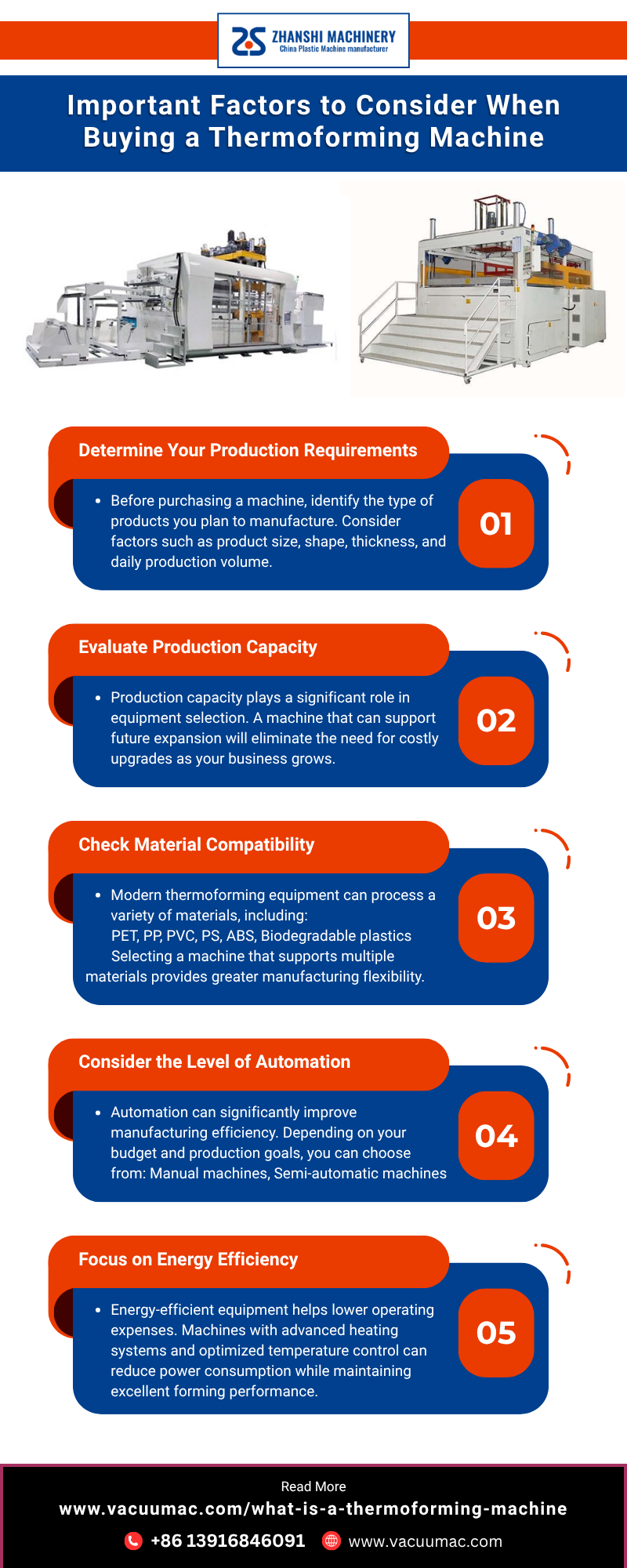
Selecting the right Thermoforming Machine is essential for manufacturers seeking to improve production efficiency, reduce operating costs, and maintain consistent product quality. With numerous models available, businesses should carefully evaluate their requirements before making an investment.
One of the most important factors to consider is production capacity. The machine should be capable of meeting current manufacturing demands while providing enough flexibility to support future growth. Choosing equipment with the right output capacity can improve productivity and reduce unnecessary expenses.
Material compatibility is another key consideration. A modern Thermoforming Machine should support a variety of materials, including PET, PP, PVC, PS, and other plastic sheets. This flexibility allows manufacturers to expand their product range and adapt to changing market demands.
Automation features also play a significant role in improving efficiency. Advanced machines with automated feeding, heating, forming, and cutting systems can reduce labor requirements while increasing production speed.
Shanghai Zhanshi Mechanical Equipment Co., Ltd. provides reliable thermoforming solutions designed to meet the needs of modern manufacturing businesses. By evaluating production requirements, machine specifications, energy efficiency, and technical support, companies can select the ideal Thermoforming Machine to achieve long-term success and sustainable growth.
The global packaging industry stands at the crossroads of innovation and necessity. As consumer demands evolve and the world shifts towards more sustainable and efficient production processes, manufacturers are challenged to keep pace with new packaging requirements, environmental standards, and tight delivery timelines. Amid these challenges, a groundbreaking technology has emerged as an industry game-changer: the plastic thermoforming machine.
A modern plastic thermoforming machine goes far beyond traditional molding and packaging production methods. By utilizing advanced heating, forming, and automation technologies, these machines empower manufacturers to create precise, lightweight, and customizable packaging solutions faster, cheaper, and more sustainably than ever before. Shanghai Zhanshi Mechanical Equipment Co., Ltd. stands at the forefront of this revolution, delivering cutting-edge plastic thermoforming machines designed for today’s dynamic market.
1. The Evolution of Packaging Manufacturing
In the past, packaging was little more than a functional necessity—a way to protect goods during shipping or display them in stores. Today, packaging is a critical part of a product’s branding, user experience, and environmental footprint. As a result, packaging manufacturers must respond swiftly to new trends:
Personalization: Custom, eye-catching designs are more in demand than ever.
Sustainability: Consumers and regulators are pushing for packaging that’s recyclable, compostable, or reusable.
Operational Efficiency: Speed and accuracy are non-negotiable in today’s market.
To meet these needs, new technology is essential. This is where the plastic thermoforming machine is playing a pivotal role.
2. Understanding Plastic Thermoforming Technology
At its core, a plastic thermoforming machine takes flat plastic sheets and heats them to a suitable temperature before forming them into specific shapes using a mold, followed by trimming and finishing. Unlike injection molding or blow molding, thermoforming is more adaptable and requires lower tooling costs, making it ideal for diverse packaging needs and shorter production runs.
There are two major types:
Vacuum Thermoforming Machines: Utilize vacuum suction to pull the heated plastic sheet onto the mold.
Pressure Thermoforming Machines: Apply positive air pressure for finer details and enhanced consistency.
Shanghai Zhanshi Mechanical Equipment Co., Ltd. uses the latest innovations in both approaches, giving clients unprecedented control, speed, and customization.
3. Key Advantages of a Plastic Thermoforming Machine
a. Unmatched Flexibility
Modern plastic thermoforming machines can produce a wide range of packaging products—trays, blisters, clamshells, cups, lids, containers, inserts, and more. Tooling and form changes can happen rapidly, allowing for easy experimentation with designs and faster adaptation to market feedback.
b. Speed and Efficiency
With advanced heating systems and automation, production lines can churn out thousands of units per hour. Quick mold changes and automated stacking or counting minimize labor needs and maximize uptime.
c. Lower Tooling and Entry Costs
Compared to injection molding, plastic thermoforming machines require less costly molds and die sets. This drastically lowers the entry barrier for small and medium businesses, making it feasible to launch or iterate new packaging lines with minimal upfront investment.
Thanks to CNC machining and computer-controlled settings, thermoforming is not just fast but incredibly precise. Brands enjoy consistent wall thickness, crisp details, and reliable repeatability across production runs.
e. Reduced Material Waste
Thermoforming allows manufacturers to use just enough material for each package, trimming excess and recycling it back into the process—yielding both environmental and economic gains.
4. The Role of Plastic Thermoforming Machines in Customization
In the modern market, one-size-fits-all solutions rarely win consumer loyalty. Custom-shaped packaging—tailored to the product’s unique features and brand identity—stands out on the shelves. A plastic thermoforming machine enables unparalleled customization:
Complex 3D Shapes: Easily formed with affordable, quick-change molds.
Branding Elements: Company logos, textures, or intricate patterns can be embossed directly onto packaging.
Functional Add-ons: Features such as resealable tabs, stacking designs, and secure locking mechanisms are simple to integrate.
With traditional processes, adding such features would be costly and time-consuming; with a plastic thermoforming machine from Shanghai Zhanshi Mechanical Equipment Co., Ltd., it becomes a competitive advantage.
5. Plastic Thermoforming and Sustainable Packaging
Global awareness of plastic pollution has forced the packaging industry to rethink its materials and methods. A plastic thermoforming machine is at the heart of this transformation for several reasons:
Material Efficiency: Thinner gauge substrates can be used without compromising strength, reducing overall plastic use.
Compatibility with Eco-friendly Plastics: Thermoforming machines, especially those from Shanghai Zhanshi, readily process recycled PET, PLA, and other biodegradable materials.
In-plant Recycling: Trim scrap from each run can be reground and reused for further production, closing the loop and cutting waste.
Lower Carbon Footprint: Lightweight packaging means less fuel used in shipping and logistics.
6. How Plastic Thermoforming Machines Support Business Scalability
One of the standout features of the modern plastic thermoforming machine is its scalability:
Start Small, Grow Fast: New businesses can start with compact tabletop models, then upgrade to fully automated, high-output lines as demand grows.
Integrate with Existing Processes: Easily paired with labeling, printing, or filling systems for seamless packaging production.
Modular Expansion: Additional forming or trimming stations can be added as needed, avoiding the need for entirely new lines.
For startups and SMEs, this means less risk and more opportunities for adaptation—key to surviving and thriving in turbulent markets.
Continuous Innovation: R&D teams invest in faster heaters, smarter controls, and safer operations.
Customization: Machines can be tailored to your material mix, speed, and finish requirements.
Reliability: Designed for 24/7 industry operation, with robust technical support.
Sustainability Leadership: Compatibility with eco-friendly plastics and minimal energy use.
Clients benefit from in-depth consultation, full installation, on-site training, and ongoing maintenance—ensuring your investment delivers for years to come.
8. Applications Across Different Industries
A plastic thermoforming machine from Shanghai Zhanshi is used in:
Food and Beverage: Trays, blister packs, cup lids, take-away containers
Medical and Pharma: Sterile packs, pill trays, device holders
Consumer Goods: Electronics packaging, toy shells, storage inserts
This versatility underscores why more industries depend on thermoforming to meet their packaging demands.
9. What to Consider When Choosing a Plastic Thermoforming Machine
When investing in this game-changing technology, ask:
What type and volume of packaging will I produce?
Which materials do I intend to use?
Do I need standalone or inline automation features?
What is my available space and power supply?
How many mold changes will I make each month?
Do I need basic machines or advanced CNC controls with IoT integration?
The experts at Shanghai Zhanshi Mechanical Equipment Co., Ltd. walk clients through this process to ensure a perfect match for business needs today—and into the future.
10. The Future of Packaging with Thermoforming Technology
As technologies like digital printing, 3D scanning, and smart sensors further evolve, the plastic thermoforming machine only grows in capability. Artificial intelligence may soon optimize process parameters, while machine learning tracks minor defects for even greater consistency.
Meanwhile, growing global pressure to eliminate single-use plastics is spurring new research into biodegradable polymers and recyclable materials—all of which are compatible with tomorrow’s advanced thermoforming machines.
For brands and manufacturers, now is the time to invest in scalable, flexible, and sustainable production lines that will keep up with future trends. There is no better place to begin than with a plastic thermoforming machine from Shanghai Zhanshi Mechanical Equipment Co., Ltd.
Embracing the Thermoforming Revolution
The packaging world is changing, and businesses that adapt with the best technology will lead the market. From custom shapes and rapid prototyping to eco-friendly solutions and mass production, the plastic thermoforming machine is at the heart of this revolution. When you partner with Shanghai Zhanshi Mechanical Equipment Co., Ltd., you don’t just buy a machine—you invest in a future of innovation, resilience, and market leadership.
Frequently Asked Questions (FAQ)
Q: What types of packaging can be produced with a plastic thermoforming machine?
A: Almost anything that can be shaped from a thin thermoplastic sheet—food trays, blister packs, retail clamshells, cup lids, industrial trays, seedling pots, and more.
Q: Can a plastic thermoforming machine use recycled or bio-based plastics?
A: Absolutely. Most machines from Shanghai Zhanshi are compatible with a wide range of polymers including rPET, PLA, and starch-based plastics.
Q: How quickly can a new product prototype be produced?
A: With in-house molds and digital controls, it’s possible to go from CAD design to finished prototype in a matter of hours or days.
Q: Is thermoforming only suitable for large factories?
A: Not at all—there are compact and mid-size machines tailored to startups and small operations, as well as industrial lines for high-volume manufacturers.
Q: How does a plastic thermoforming machine reduce overall costs?
A: Lower tooling costs, rapid changeover, reduced material waste, energy efficiency, and automation all combine to greatly decrease cost per unit.
Q: What maintenance is required?
A: Regular inspections, cleaning of forming and heating elements, routine calibration, and prompt replacement of worn parts—Shanghai Zhanshi offers robust support and training.
Q: Can packaging be customized for seasonal or promotional runs?
A: Yes! The low cost and rapid changeover of molds make it easy to produce short runs for holidays, promotions, or market testing.
Q: How sustainable is the process?
A: Thermoforming is among the most sustainable plastic packaging techniques, due to high material yields, compatibility with recyclable plastics, and opportunities for in-plant recycling.
In today’s fast-paced industrial world, the packaging industry faces unprecedented demands for customization, speed, cost-effectiveness, and sustainability. As global commerce and e-commerce continue to accelerate, businesses require not only innovative materials but also advanced manufacturing processes that can keep up with dynamic market trends. Among the latest technological breakthroughs, the thermoforming machine has emerged as a game-changer—offering manufacturers and packaging companies the competitive edge they need to produce high-quality packaging solutions at scale.
Understanding Thermoforming Machines
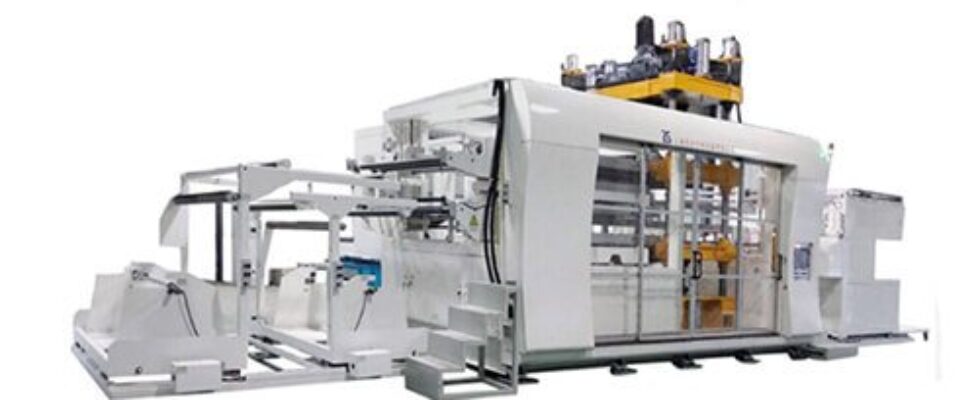
A thermoforming machine is a specialized piece of industrial equipment designed to heat plastic sheets to a pliable forming temperature. Once softened, the sheet is stretched over a mold and formed into a desired shape using vacuum, pressure, or mechanical force. After cooling, the newly-formed packaging item (such as containers, trays, or blister packs) is trimmed and prepared for distribution. This approach contrasts with other plastic shaping methods like injection molding or blow molding, each with its unique advantages and applications.
The key to thermoforming’s popularity lies in its versatility. Unlike rigid, one-size-fits-all systems, the thermoforming machine is adaptable to a wide range of materials—such as PET, PVC, PS, and PLA—as well as limitless shapes and sizes. With these capabilities, companies can swiftly respond to shifting consumer needs, seasonal promotions, branding changes, and emerging sustainability standards.
The Evolution of Packaging Production
Transitioning from traditional packaging solutions to advanced manufacturing systems has never been more critical. In the past, packaging production was labor-intensive, time-consuming, and often inflexible when it came to design alterations. Traditional processes relied heavily on manual labor and multiple steps, leading to increased error rates, greater waste, and higher production costs. Moreover, the ever-growing focus on sustainable packaging and stringent regulatory frameworks requires manufacturers to continually upgrade their operations.
This is where thermoforming machines have revolutionized the entire workflow. By automating the heating, forming, and trimming processes, these machines offer unmatched efficiency, precision, and reliability. The result? Significantly reduced lead times, lower operational costs, and a dramatic increase in both product quality and consistency.
Why the Thermoforming Machine Stands Out
It is important to understand that not all packaging equipment delivers the same results. Here at Shanghai Zhanshi Mechanical Equipment Co., Ltd., we have invested in state-of-the-art thermoforming machines that are engineered for peak performance. Whether producing food-grade packaging trays, electronic device blisters, or medical product enclosures, our machines provide several key advantages:
Flexibility: Rapid changeovers enable manufacturers to shift between products with minimal downtime.
Material Efficiency: Optimize material use to reduce scrap rates and promote sustainability.
Customization: Cater to unique client specifications, regardless of the complexity or design.
Capacity & Speed: Deliver high-volume production runs while maintaining stringent quality standards.
Lower Costs: Reduce labor and material costs, providing better value for both manufacturers and end users.
Given these benefits, it is no surprise that leading industries—including food & beverage, consumer goods, electronics, and pharmaceuticals—are increasingly integrating thermoforming machines into their production lines.
The Thermoforming Machine: A Deep Dive Into Its Function and Advantages
To fully appreciate how a thermoforming machine can revolutionize packaging production, it is helpful to understand the process in detail.
How Does a Thermoforming Machine Work?
Essentially, the thermoforming process takes place through several core stages:
Heating
A flat plastic sheet (often coiled on a roll) is automatically fed into the machine and heated, typically using precisely controlled infrared heaters. The goal here is to soften the material uniformly without causing it to degrade or sag excessively.
Forming
Once the plastic reaches the proper temperature, it is quickly conveyed into the forming station. Here, the machine stretches the plastic sheet over a mold using one or more forming methods:
Vacuum forming: A vacuum pulls the hot plastic down onto the mold.
Pressure forming: Additional air pressure is applied to achieve greater detail or deeper draws.
Mechanical forming: A plug or tool presses the material into the mold cavity.
Cooling
The formed plastic, now in the shape of the desired packaging product, is allowed to cool and solidify. Cooling may involve fans, water, or specialized temperature control systems.
Trimming and Finishing
Once cooled, the item is automatically trimmed to remove excess material—a step critical for precision and to avoid sharp edges or inconsistencies.
Stacking and Packing
The finished products are stacked and counted for easy packing before being delivered to the next production step.
Types of Thermoforming Machines
There are two main categories of thermoforming machines:
Roll-fed Thermoforming Machines: Ideal for high-volume production, roll-fed models feed the plastic sheet from a continuous roll, maximizing efficiency.
Sheet-fed Thermoforming Machines: Used for shorter runs and thicker materials, these machines load individual sheets for each cycle.
Benefits of Using Thermoforming Machines in Packaging
The thermoforming machine provides a multitude of advantages over traditional molding and forming technologies, including:
1. Unmatched Design Versatility
Thermoforming enables the creation of complex, innovative packaging designs that cater precisely to product specifications. Whether you require custom blister packs for delicate electronics or partitioned trays for food service, this technology can deliver.
2. Reduced Lead Times and Faster Prototyping
Tooling for thermoforming is typically faster and less costly than that of injection molding or stamping. This allows businesses to refine designs quickly, respond to market demands, and introduce new packaging formats with minimal delay.
3. Enhanced Sustainability
Thermoforming supports the use of recyclable and biodegradable plastics such as PLA (polylactic acid). Additionally, the precision of the process means less material waste, supporting both environmental initiatives and cost efficiency.
4. Improved Quality Control
Modern machines—like those from Shanghai Zhanshi Mechanical Equipment Co., Ltd.—are equipped with digital controls and sensors that monitor each stage of production. This ensures consistency, minimizes defects, and maintains high aesthetic and structural standards.
5. Lower Costs per Unit
With automation and optimized cycle times, thermoforming machines reduce both direct and indirect costs. In high-volume operations, these savings compound, allowing companies to stay competitive in price-sensitive markets.
Real-World Impact: Case Studies of Thermoforming Machine Adoption
Let’s look at how customers from diverse sectors have leveraged thermoforming machines for packaging success:
-Food & Beverage Industry
A leading snack manufacturer in Asia adopted a roll-fed thermoforming machine to produce multi-cavity trays for their new product line. The results included a 30% reduction in time-to-market, improved freshness through airtight packaging, and significant waste reduction.
-Electronics Packaging
A global electronics supplier needed to redesign its protective packaging for fragile components. By switching to custom blister packs from a thermoforming system, the company reduced shipping damages by 50% and simplified its logistics workflow.
-Medical Device Sterilization
Hospitals and suppliers require stringent sterile barriers for medical components. The Thermoforming machine produces consistent, high-quality medical trays that comply with strict regulatory guidelines.
Partnering with Shanghai Zhanshi Mechanical Equipment Co., Ltd. for Your Packaging Revolution
The thermoforming machine stands as a pillar of modern packaging production. Its unique blend of speed, flexibility, cost-effectiveness, and environmental stewardship makes it indispensable for any business seeking to thrive in a competitive marketplace. At Shanghai Zhanshi Mechanical Equipment Co., Ltd., we are committed to delivering cutting-edge thermoforming solutions tailored to your exact needs—backed by comprehensive support and decades of expertise.
Frequently Asked Questions (FAQ)
1. What is the difference between thermoforming and injection molding?
Thermoforming heats plastic sheets and forms them over a mold, ideal for lightweight, thin-walled packaging. Injection molding injects molten plastic into a closed mold for more complex, thicker-walled products. Thermoforming is typically faster and more economical for packaging applications.
2. Which materials are suitable for thermoforming machines?
Common materials include PET, PVC, PS, PP, and PLA. The choice depends on required properties such as clarity, durability, food safety, and biodegradability.
3. How fast can a thermoforming machine produce packaging?
Output varies depending on machine size, complexity of design, and material, with high-speed models reaching several thousand pieces per hour.
4. How does tooling work in thermoforming?
Tooling (molds) is designed based on product requirements. Tooling costs are generally lower compared to injection molding, and changes can be made quickly for new product launches.
5. Are thermoforming machines suitable for food packaging?
Absolutely! Thermoforming is widely used for food trays, meat packaging, dairy containers, etc., with machines meeting strict hygienic standards.
6. Is the process eco-friendly?
Yes, especially if using recyclable or bio-based plastics. Material optimization ensures minimal waste, and scrap is often reprocessed.
7. What maintenance does a thermoforming machine require?
Routine maintenance includes cleaning, replacing heating elements, lubricating moving parts, and periodic mold calibration.
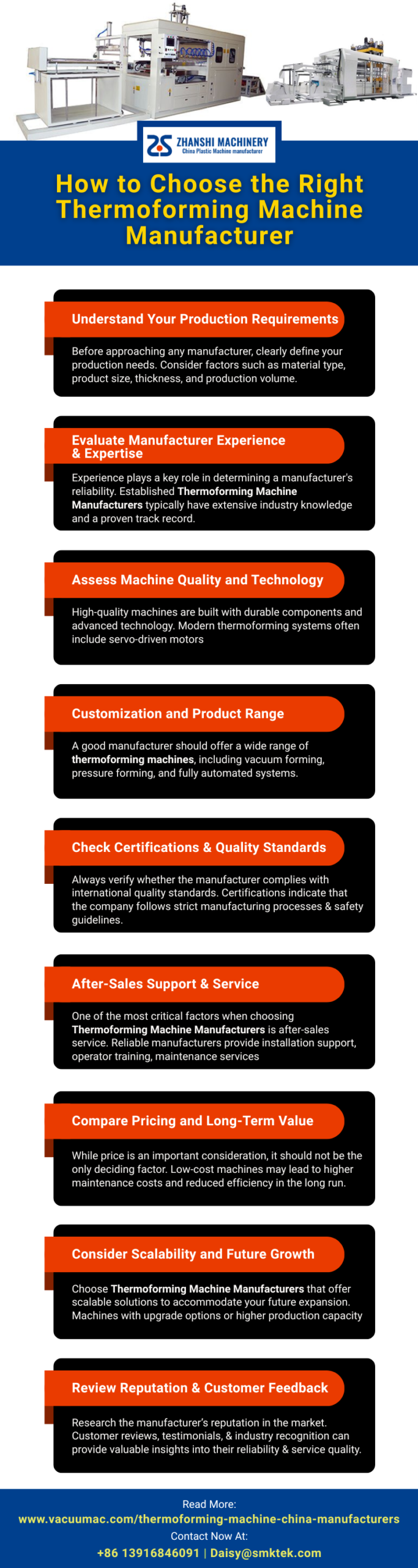
Choosing the right Thermoforming Machine Manufacturers is essential for achieving consistent product quality and maximizing production efficiency. With numerous suppliers in the market, businesses must focus on more than just pricing to make the best decision. Evaluating a manufacturer’s experience, technical expertise, and industry reputation helps ensure you are partnering with a reliable provider.
Start by identifying your specific production requirements, including material type, product size, and output capacity. This allows you to select manufacturers that offer machines suited to your applications, whether for packaging, automotive, or industrial use. Leading Thermoforming Machine Manufacturers also provide advanced features such as automated controls, energy-efficient heating systems, and customizable designs to improve productivity.
Equally important is the level of after-sales support. A dependable manufacturer should offer installation guidance, operator training, and quick access to spare parts to minimize downtime. Additionally, ensure the machines meet international quality standards for long-term durability and safety.
By prioritizing quality, innovation, and service support, businesses can confidently choose Thermoforming Machine Manufacturers that deliver long-term value, helping streamline operations and support sustainable growth.
Click https://tinyurl.com/2s438t77 to learn more about Thermoforming Machine Manufacturers, give us a call at +86 13916846091, or send us an email at Daisy@smktek.com right now!