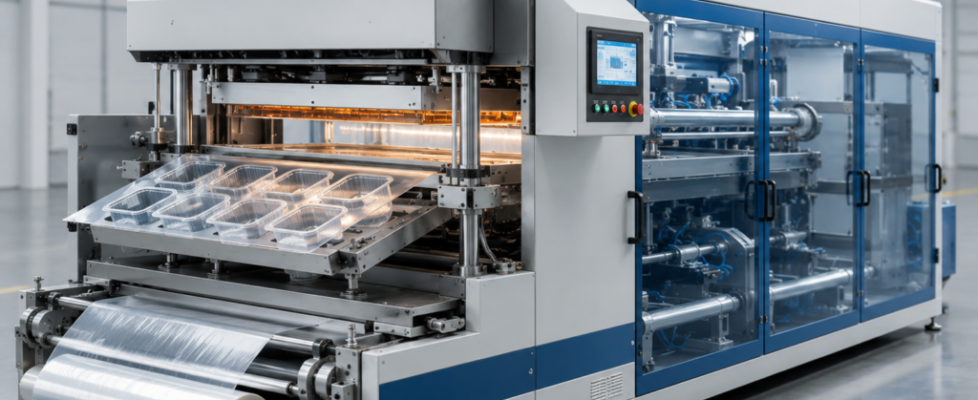
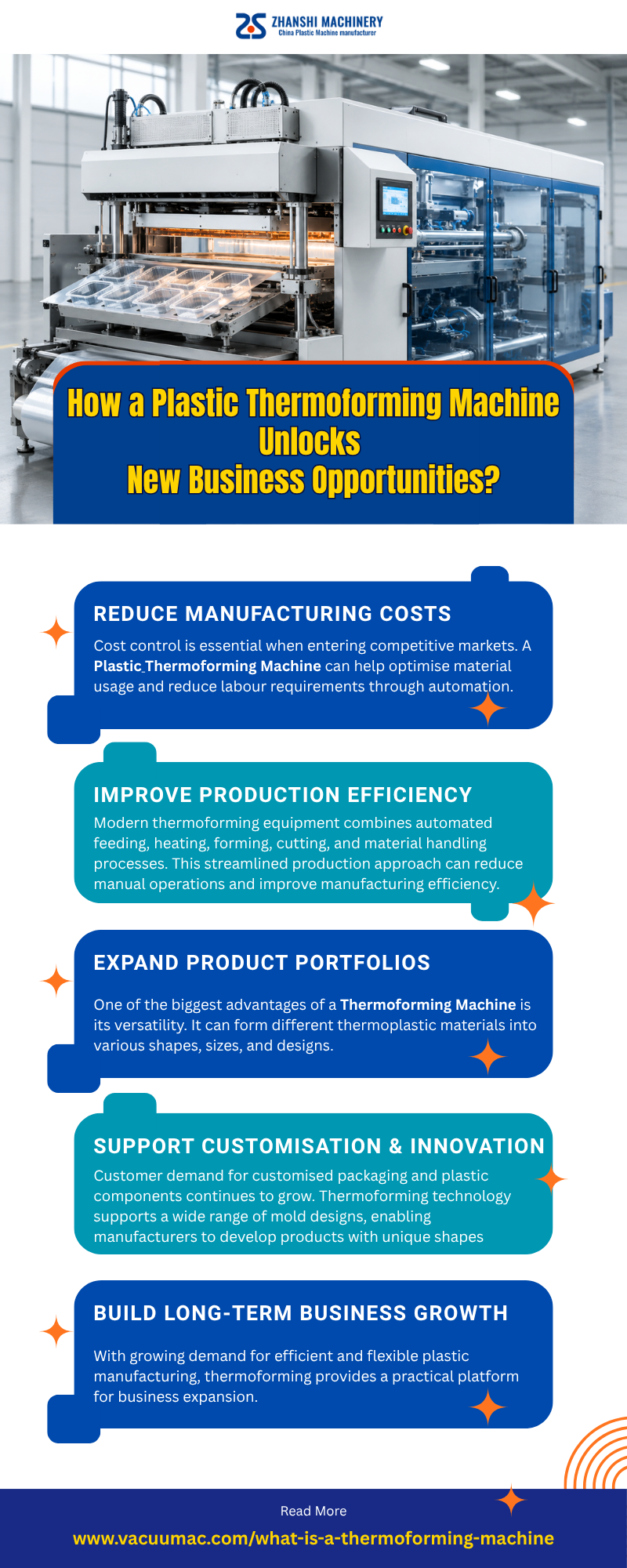
A Plastic Thermoforming Machine can help manufacturers reduce production expenses while improving output, product consistency, and profitability. By heating plastic sheets and forming them over molds using vacuum, pressure, or mechanical force, thermoforming provides an efficient way to produce packaging, trays, containers, automotive components, medical products, and other customized plastic parts.
One major advantage of a Thermoforming Machine is its material efficiency. The process can minimize material waste, helping businesses lower raw-material costs. Modern machines also feature precise temperature, pressure, and timing controls, which improve product consistency and reduce defects, rework, and production losses.
Automation can further improve productivity by reducing manual operations and shortening production cycles. Faster forming, cooling, and trimming processes allow manufacturers to complete more orders in less time. In addition, flexible thermoforming technology supports different plastic materials, product sizes, shapes, and thicknesses, making it suitable for both customized and large-scale production.
For businesses seeking reliable and cost-effective plastic manufacturing solutions, choosing the right equipment and supplier is essential. Shanghai Zhanshi Mechanical Equipment Co., Ltd. provides advanced thermoforming solutions designed to support efficient production, consistent quality, and long-term business growth.
Visit https://tinyurl.com/36uenuvf or give us a call at +86 13916846091 to learn more about the Plastic Thermoforming Machine!
The global packaging industry stands at the crossroads of innovation and necessity. As consumer demands evolve and the world shifts towards more sustainable and efficient production processes, manufacturers are challenged to keep pace with new packaging requirements, environmental standards, and tight delivery timelines. Amid these challenges, a groundbreaking technology has emerged as an industry game-changer: the plastic thermoforming machine.
A modern plastic thermoforming machine goes far beyond traditional molding and packaging production methods. By utilizing advanced heating, forming, and automation technologies, these machines empower manufacturers to create precise, lightweight, and customizable packaging solutions faster, cheaper, and more sustainably than ever before. Shanghai Zhanshi Mechanical Equipment Co., Ltd. stands at the forefront of this revolution, delivering cutting-edge plastic thermoforming machines designed for today’s dynamic market.
1. The Evolution of Packaging Manufacturing
In the past, packaging was little more than a functional necessity—a way to protect goods during shipping or display them in stores. Today, packaging is a critical part of a product’s branding, user experience, and environmental footprint. As a result, packaging manufacturers must respond swiftly to new trends:
Personalization: Custom, eye-catching designs are more in demand than ever.
Sustainability: Consumers and regulators are pushing for packaging that’s recyclable, compostable, or reusable.
Operational Efficiency: Speed and accuracy are non-negotiable in today’s market.
To meet these needs, new technology is essential. This is where the plastic thermoforming machine is playing a pivotal role.
2. Understanding Plastic Thermoforming Technology
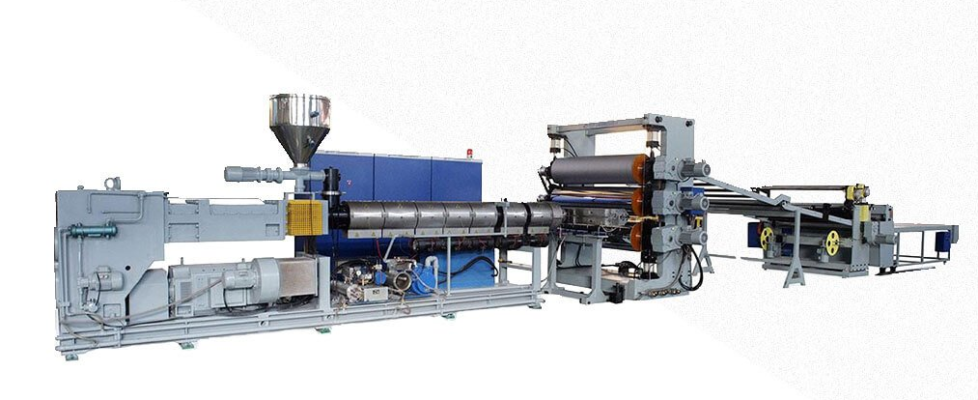
At its core, a plastic thermoforming machine takes flat plastic sheets and heats them to a suitable temperature before forming them into specific shapes using a mold, followed by trimming and finishing. Unlike injection molding or blow molding, thermoforming is more adaptable and requires lower tooling costs, making it ideal for diverse packaging needs and shorter production runs.
There are two major types:
Vacuum Thermoforming Machines: Utilize vacuum suction to pull the heated plastic sheet onto the mold.
Pressure Thermoforming Machines: Apply positive air pressure for finer details and enhanced consistency.
Shanghai Zhanshi Mechanical Equipment Co., Ltd. uses the latest innovations in both approaches, giving clients unprecedented control, speed, and customization.
3. Key Advantages of a Plastic Thermoforming Machine
a. Unmatched Flexibility
Modern plastic thermoforming machines can produce a wide range of packaging products—trays, blisters, clamshells, cups, lids, containers, inserts, and more. Tooling and form changes can happen rapidly, allowing for easy experimentation with designs and faster adaptation to market feedback.
b. Speed and Efficiency
With advanced heating systems and automation, production lines can churn out thousands of units per hour. Quick mold changes and automated stacking or counting minimize labor needs and maximize uptime.
c. Lower Tooling and Entry Costs
Compared to injection molding, plastic thermoforming machines require less costly molds and die sets. This drastically lowers the entry barrier for small and medium businesses, making it feasible to launch or iterate new packaging lines with minimal upfront investment.
Thanks to CNC machining and computer-controlled settings, thermoforming is not just fast but incredibly precise. Brands enjoy consistent wall thickness, crisp details, and reliable repeatability across production runs.
e. Reduced Material Waste
Thermoforming allows manufacturers to use just enough material for each package, trimming excess and recycling it back into the process—yielding both environmental and economic gains.
4. The Role of Plastic Thermoforming Machines in Customization
In the modern market, one-size-fits-all solutions rarely win consumer loyalty. Custom-shaped packaging—tailored to the product’s unique features and brand identity—stands out on the shelves. A plastic thermoforming machine enables unparalleled customization:
Complex 3D Shapes: Easily formed with affordable, quick-change molds.
Branding Elements: Company logos, textures, or intricate patterns can be embossed directly onto packaging.
Functional Add-ons: Features such as resealable tabs, stacking designs, and secure locking mechanisms are simple to integrate.
With traditional processes, adding such features would be costly and time-consuming; with a plastic thermoforming machine from Shanghai Zhanshi Mechanical Equipment Co., Ltd., it becomes a competitive advantage.
5. Plastic Thermoforming and Sustainable Packaging
Global awareness of plastic pollution has forced the packaging industry to rethink its materials and methods. A plastic thermoforming machine is at the heart of this transformation for several reasons:
Material Efficiency: Thinner gauge substrates can be used without compromising strength, reducing overall plastic use.
Compatibility with Eco-friendly Plastics: Thermoforming machines, especially those from Shanghai Zhanshi, readily process recycled PET, PLA, and other biodegradable materials.
In-plant Recycling: Trim scrap from each run can be reground and reused for further production, closing the loop and cutting waste.
Lower Carbon Footprint: Lightweight packaging means less fuel used in shipping and logistics.
6. How Plastic Thermoforming Machines Support Business Scalability
One of the standout features of the modern plastic thermoforming machine is its scalability:
Start Small, Grow Fast: New businesses can start with compact tabletop models, then upgrade to fully automated, high-output lines as demand grows.
Integrate with Existing Processes: Easily paired with labeling, printing, or filling systems for seamless packaging production.
Modular Expansion: Additional forming or trimming stations can be added as needed, avoiding the need for entirely new lines.
For startups and SMEs, this means less risk and more opportunities for adaptation—key to surviving and thriving in turbulent markets.
Continuous Innovation: R&D teams invest in faster heaters, smarter controls, and safer operations.
Customization: Machines can be tailored to your material mix, speed, and finish requirements.
Reliability: Designed for 24/7 industry operation, with robust technical support.
Sustainability Leadership: Compatibility with eco-friendly plastics and minimal energy use.
Clients benefit from in-depth consultation, full installation, on-site training, and ongoing maintenance—ensuring your investment delivers for years to come.
8. Applications Across Different Industries
A plastic thermoforming machine from Shanghai Zhanshi is used in:
Food and Beverage: Trays, blister packs, cup lids, take-away containers
Medical and Pharma: Sterile packs, pill trays, device holders
Consumer Goods: Electronics packaging, toy shells, storage inserts
This versatility underscores why more industries depend on thermoforming to meet their packaging demands.
9. What to Consider When Choosing a Plastic Thermoforming Machine
When investing in this game-changing technology, ask:
What type and volume of packaging will I produce?
Which materials do I intend to use?
Do I need standalone or inline automation features?
What is my available space and power supply?
How many mold changes will I make each month?
Do I need basic machines or advanced CNC controls with IoT integration?
The experts at Shanghai Zhanshi Mechanical Equipment Co., Ltd. walk clients through this process to ensure a perfect match for business needs today—and into the future.
10. The Future of Packaging with Thermoforming Technology
As technologies like digital printing, 3D scanning, and smart sensors further evolve, the plastic thermoforming machine only grows in capability. Artificial intelligence may soon optimize process parameters, while machine learning tracks minor defects for even greater consistency.
Meanwhile, growing global pressure to eliminate single-use plastics is spurring new research into biodegradable polymers and recyclable materials—all of which are compatible with tomorrow’s advanced thermoforming machines.
For brands and manufacturers, now is the time to invest in scalable, flexible, and sustainable production lines that will keep up with future trends. There is no better place to begin than with a plastic thermoforming machine from Shanghai Zhanshi Mechanical Equipment Co., Ltd.
Embracing the Thermoforming Revolution
The packaging world is changing, and businesses that adapt with the best technology will lead the market. From custom shapes and rapid prototyping to eco-friendly solutions and mass production, the plastic thermoforming machine is at the heart of this revolution. When you partner with Shanghai Zhanshi Mechanical Equipment Co., Ltd., you don’t just buy a machine—you invest in a future of innovation, resilience, and market leadership.
Frequently Asked Questions (FAQ)
Q: What types of packaging can be produced with a plastic thermoforming machine?
A: Almost anything that can be shaped from a thin thermoplastic sheet—food trays, blister packs, retail clamshells, cup lids, industrial trays, seedling pots, and more.
Q: Can a plastic thermoforming machine use recycled or bio-based plastics?
A: Absolutely. Most machines from Shanghai Zhanshi are compatible with a wide range of polymers including rPET, PLA, and starch-based plastics.
Q: How quickly can a new product prototype be produced?
A: With in-house molds and digital controls, it’s possible to go from CAD design to finished prototype in a matter of hours or days.
Q: Is thermoforming only suitable for large factories?
A: Not at all—there are compact and mid-size machines tailored to startups and small operations, as well as industrial lines for high-volume manufacturers.
Q: How does a plastic thermoforming machine reduce overall costs?
A: Lower tooling costs, rapid changeover, reduced material waste, energy efficiency, and automation all combine to greatly decrease cost per unit.
Q: What maintenance is required?
A: Regular inspections, cleaning of forming and heating elements, routine calibration, and prompt replacement of worn parts—Shanghai Zhanshi offers robust support and training.
Q: Can packaging be customized for seasonal or promotional runs?
A: Yes! The low cost and rapid changeover of molds make it easy to produce short runs for holidays, promotions, or market testing.
Q: How sustainable is the process?
A: Thermoforming is among the most sustainable plastic packaging techniques, due to high material yields, compatibility with recyclable plastics, and opportunities for in-plant recycling.