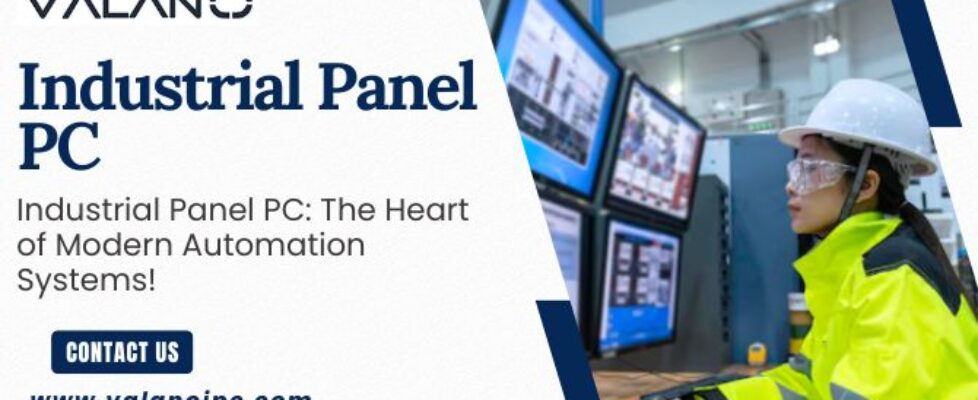
As industries continue to embrace digital transformation, reliable human-machine interface solutions have become increasingly important. A 21.5 inch industrial panel pc offers the perfect balance of display size, computing power, and durability, making it an excellent choice for smart factories, production lines, and industrial control systems.
ValanoIPC provides a high-performance 21.5 inch industrial panel pc designed to meet the demanding requirements of modern industrial environments. Featuring a full HD touchscreen display, this panel PC delivers crisp visuals and responsive touch operation, enabling operators to monitor processes and manage equipment with greater efficiency.
Built for continuous operation, the system utilizes industrial-grade components capable of withstanding vibration, dust, moisture, and temperature fluctuations. Its robust construction ensures stable performance in manufacturing plants, warehouses, transportation hubs, and energy facilities where reliability is critical.
Another advantage of a 21.5 inch industrial panel pc is its flexible installation capability. It supports panel mounting, wall mounting, and VESA mounting options, allowing businesses to optimize workspace layouts according to operational needs. The slim and compact design also helps save valuable production space.
Connectivity is equally important in today’s interconnected industrial landscape. ValanoIPC’s solution offers multiple I/O interfaces, including USB, COM ports, LAN, and HDMI, making it easy to integrate with PLCs, sensors, barcode scanners, and other automation devices. Compatibility with Windows and Linux operating systems further simplifies deployment within existing infrastructures.
The large 21.5-inch display enhances user interaction by providing ample screen space for process visualization, machine control, and data analysis. Operators can access real-time information quickly, improving decision-making and reducing downtime.
As factories continue to evolve toward Industry 4.0, investing in a dependable 21.5 inch industrial panel pc can significantly improve productivity and operational efficiency. ValanoIPC remains committed to delivering innovative industrial computing solutions that help businesses achieve smarter, more connected, and highly efficient manufacturing operations.
In today’s fast-evolving industrial landscape, the right computing solutions can make all the difference in operational efficiency, durability, and future-proofing your automation systems. Among these solutions, industrial panel PCs stand out as indispensable tools that combine ruggedness with user-friendly interfaces, designed specifically for harsh industrial environments. However, not all industrial panel PC manufacturers offer the same level of quality, customization, and after-sales support. Therefore, choosing a reliable manufacturer is a critical decision that directly impacts your business’s productivity and longevity.
ValanoIPC, a leader among industrial panel PC manufacturers, is dedicated to guiding you through this complex selection process. This comprehensive guide will explore the key factors every business must consider when sourcing industrial panel PCs. From product quality and customization capabilities to technical support and industry-specific expertise, you will gain invaluable insights to make an informed decision.
Moreover, as industrial automation and Industry 4.0 technologies continue to scale, the demands placed on panel PCs are becoming increasingly sophisticated. Hence, understanding how to properly evaluate manufacturers ensures you invest in devices that not only meet your current needs but also scale with future technological advancements.
In this article, we will cover everything you need to know — with clear explanations and practical tips — to confidently select a trusted manufacturer that aligns with your operational goals. Additionally, we include a frequently asked questions section to address common concerns when working with industrial panel PC manufacturers.
Why Choosing the Right Industrial Panel PC Manufacturer Matters?
First and foremost, industrial panel PCs differ significantly from consumer-grade computers due to the durability required to function reliably in extreme conditions such as dust, humidity, temperature fluctuations, and vibrations. You might be tempted to pick a manufacturer based simply on price or availability; however, overlooking other critical factors could lead to premature equipment failure, costly downtime, or poor after-sales service.
Additionally, your choice of a manufacturer determines the extent to which customization is possible. Every industry has unique requirements—whether it’s waterproofing, touch interface responsiveness, size specifications, or integration with legacy systems—and a reputable manufacturer will tailor solutions to fit these preferences.
Therefore, transitioning from understanding basic specs to evaluating manufacturers’ commitment to quality and innovation is essential for the long-term success of your investments.
Ready to Dive in?
Let’s explore the essential aspects to consider when choosing the best industrial panel PC manufacturer for your business. Whether you are upgrading an existing system or deploying a full-scale automation network, this guide will equip you with all the knowledge you need to make an empowered decision.
Detailed Blog Outline & Key Sections
To help you visualize the complete guide, here is a proposed detailed outline with expanded key discussion points. The full blog post, when fleshed out, will comfortably exceed 2000 words.
1. Understanding Industrial Panel PCs: What Sets Them Apart Definition and core features Operating environment challenges Differences from consumer panel PCs
2. Crucial Evaluation Criteria for Industrial Panel PC Manufacturers Quality standards and certifications (IP rating, MIL-STD, ISO) Product reliability: materials, components, and build quality Performance benchmarks (CPU, memory, display quality, touch technology) Longevity and lifecycle support
3. Importance of Customization and Scalability Tailoring panel size, processor types, mounting options Software compatibility and interface customization Expandability for future technology upgrades
4. Assessing Technical Support and Warranty Services Response time and availability of technical support On-site servicing versus remote assistance Warranty duration and coverage specifics
5. Industry-Specific Needs and Use Cases Manufacturing & automation Transportation and logistics Energy and utilities Healthcare and pharmaceuticals Food & beverage industry
6. Emerging Trends in the Industrial Panel PC Market Touchscreen innovations (multi-touch, glove-friendly, sunlight readable) Edge computing and IoT integration Enhanced cybersecurity features Green manufacturing and energy efficiency
7. Why ValanoIPC Stands Out Among Industrial Panel PC Manufacturers Company overview and commitment to innovation Highlight specific product lines and success stories Demonstrate customer-centric services
8. FAQ: Common Questions Regarding Industrial Panel PC Manufacturers
What certifications should I look for?
How durable are industrial panel PCs in extreme environments?
Can I get a fully customized solution?
What is the typical lifecycle for industrial panel PCs?
How important is after-sales support? What role do industrial panel PCs play in Industry 4.0?
Are industrial panel PCs compatible with legacy automation systems?
How do I balance cost with quality?
Sample FAQ Section (Expanded)
Q1: What certifications and standards indicate high-quality industrial panel PCs?
A1: Certifications like IP65/IP67 for water and dust resistance, MIL-STD-810 for shock and vibration resistance, and ISO 9001 for quality management are vital indicators of product reliability.
Q2: How critical is manufacturer support in industrial panel PC procurement?
A2: Extremely critical. Reliable technical support ensures quick resolution of issues, minimizing costly downtime. Manufacturers who provide extended warranties and on-site service options add significant value.
Q3: Are off-the-shelf panel PCs sufficient for all industrial applications?
A3: Not always. Many industries require tailored solutions due to unique environmental or operational constraints. Choose manufacturers that offer modular and customizable products.
Conclusion
Selecting the most reliable industrial panel PC manufacturers is a pivotal investment decision for any industrial operation aiming for long-term success and resilience. By thoroughly understanding your specific needs and critically evaluating potential suppliers against quality, customization, and service criteria, you can effectively mitigate risk and maximize ROI.
At ValanoIPC, we invite you to explore our innovative product range and dedicated support services designed to empower your industrial automation and digital transformation journey. For tailored consultations and detailed technical specifications, contact us today.
In today’s highly competitive manufacturing landscape, efficiency, reliability, and precision are more critical than ever. As factories strive to optimize operations and reduce downtime, investing in advanced technology solutions becomes paramount. One such essential technology is the 21.5 inch industrial panel pc, a powerful yet compact computing device that has gained tremendous popularity in modern industrial environments.
At ValanoIPC, we specialize in providing cutting-edge industrial computing solutions, including an array of 21.5 inch industrial panel PCs designed to meet the rigorous demands of factory settings. This blog post will explore the top 7 benefits of integrating a 21.5 inch industrial panel pc into your factory operations and how this technology drives productivity, enhances control, and supports long-term operational success.
Why Choose a 21.5 Inch Industrial Panel PC for Your Factory?
Before delving into the specific benefits, it is important to understand the unique advantages that a 21.5 inch industrial panel pc brings compared to traditional computers or larger industrial displays.
The 21.5 inch industrial panel pc sits at an ideal size, providing a balance between screen real estate and physical footprint. It is large enough to show detailed data, dashboards, or control interfaces clearly, yet compact enough to fit into crowded control panels or operator stations without requiring excessive space.
Furthermore, these devices are purpose-built for harsh factory conditions. Unlike consumer-grade PCs, industrial panel PCs are engineered to withstand dust, moisture, vibrations, temperature fluctuations, and electromagnetic interference that are common in factory settings. This ensures higher reliability and longer lifespan, reducing costly downtime and maintenance.
Transitioning from Conventional Setups to 21.5 Inch Industrial Panel PCs
Many factories still rely on conventional desktop setups, manual controls, or outdated monitoring methods that can be inefficient and prone to errors. Transitioning to a 21.5 inch industrial panel pc allows centralized, touchscreen-driven control with intuitive interfaces designed specifically for industrial use.
Moreover, these panel PCs support integration with a variety of industrial protocols and hardware such as PLCs, sensors, barcode scanners, and automation equipment, facilitating seamless communication across factory systems.
Top 7 Benefits of Using a 21.5 Inch Industrial Panel PC in Your Factory
1. Enhanced Visual Display and User Interface One of the primary benefits of the 21.5 inch industrial panel pc is the enhanced visual display, which optimizes the human-machine interface (HMI). The 21.5-inch screen size gives operators sufficient room to view complex data and control systems without zooming or excessive scrolling. Moreover, high-resolution displays mean more detail, clearer graphs, and easier visualization of operational status.
Transitioning to touchscreen technology further improves usability. Operators can input commands faster and with greater accuracy, reducing the time needed for training and minimizing input errors. Capacitive or resistive touchscreens provide flexibility to interact even with gloves, which is important in industrial environments.
2. Robust Durability and Industrial-Grade Reliability Unlike consumer-grade touchscreens that quickly succumb to harsh environments, 21.5 inch industrial panel PCs are ruggedized. They often come sealed to IP65 or higher, protecting against dust, water sprays, and even chemical exposure.
Additionally, many models feature vibration and shock-resistant construction to endure factory floor conditions and meet standards like MIL-STD-810. This reliability extends the device’s useful life and drastically lowers maintenance costs and unplanned downtime — a key productivity driver.
3. Space Efficiency and Easy Installation Factories often face constraints in equipment space, especially on control panels packed with machinery and instrumentation. Here, the 21.5 inch industrial panel pc strikes the perfect balance — large enough to provide clear visibility, yet compact enough to fit where larger displays would be impractical.
Most units support panel mounting, VESA mounting, or rack mount installations, offering flexible options to adapt the hardware wherever it’s most useful. This space-efficient deployment frees up valuable floor space and reduces clutter, which can improve operator comfort and reduce mistakes.
4. Seamless Integration with Factory Automation Systems Modern industrial processes demand tightly integrated systems. The 21.5 inch industrial panel pc offers extensive connectivity options, including Ethernet, serial ports (RS-232/485), USB ports, and sometimes even wireless modules like Wi-Fi or Bluetooth.
This connectivity enables integration with Programmable Logic Controllers (PLCs), SCADA systems, sensors, industrial cameras, and barcode scanners — centralizing control and monitoring on a single platform. As a result, operators gain real-time access to process data, analytics, and diagnostic tools, accelerating decision-making and problem resolution.
5. Improved Operator Productivity and Reduced Errors Efficiency gains arise when operators can perform tasks quickly and intuitively. The touchscreen interface, coupled with customizable HMI software, makes navigation more straightforward and responsive.
Since the 21.5 inch industrial panel pc supports multi-touch gestures and programmable hotkeys, repetitive tasks become faster, multitasking improves, and data input errors decline. Additionally, clear visual and auditory alarms notify personnel instantly of any anomalies, enabling rapid response and preventing costly production errors.
6. Cost Savings Through Reduced Downtime and Maintenance Downtime in factories translates directly to lost output and revenue. Industrial panel PCs like these reduce downtime by focusing on reliability and ease of maintenance.
With fanless designs, sealed enclosures, and shock resistance, these devices operate continuously without failure, even in dusty, wet, or vibration-heavy environments. Moreover, their solid-state storage options reduce mechanical breakdowns.
In turn, fewer service calls, reduced parts replacement, and minimized disruptions improve your factory’s overall profitability.
7. Scalability and Customization for Evolving Needs Factories evolve constantly; today’s production line can expand or shift to new products requiring updated control solutions. The 21.5 inch industrial panel pc is highly customizable — from processor options and memory size to screen brightness, touch technologies, and I/O configurations.
OEMs like ValanoIPC can tailor these devices to fit specific factory requirements, ensuring future-proof compatibility with emerging technologies. This scalability protects your investment by providing flexibility as operational needs change.
Real-World Applications of 21.5 Inch Industrial Panel PCs
Automotive Manufacturing: Operators manage robotic assembly lines with precise control while monitoring real-time quality metrics.
Food and Beverage: Panel PCs withstand washdowns and control packaging machines while displaying production stats on clear screens.
Pharmaceutical: Demand for hygienic designs with sealed enclosures ensures compliance alongside reliable electronic batch control.
Textile Factories: Operator stations equipped with panel PCs coordinate weaving machines and monitor environmental sensors for process optimization.
Logistics Centers: Panel PCs integrate with barcode scanners and conveyor controls for efficient handling and tracking.
ValanoIPC – Your Trusted Partner in Industrial Panel PCs
At ValanoIPC, we understand the importance of deploying reliable, high-performance industrial panel PCs that align perfectly with your production demands. Our 21.5 inch industrial panel pcs undergo rigorous quality control, meet international certifications, and can be customized to meet your exact specifications.
Whether you require enhanced ruggedness, specific I/O options, or embedded computing power, ValanoIPC offers expert consultation, engineering support, and after-sales service to ensure your success.
Conclusion
Investing in a 21.5 inch industrial panel pc is more than upgrading equipment — it is a strategic move towards enhanced productivity, operational efficiency, and manufacturing excellence. This balance of durability, usability, and flexibility makes it an indispensable asset in modern factories.
At ValanoIPC, we are ready to help you select, customize, and deploy the ideal 21.5 inch industrial panel pc that enhances your processes and supports future growth. Contact us today to start transforming your factory floor with smart, reliable industrial computing.
Frequently Asked Questions (FAQs)
Q1: What environments can a 21.5 inch industrial panel pc withstand?
Most models are designed to endure dust, moisture (IP65+ rating), wide temperature ranges, vibrations, and shocks typical on factory floors.
Q2: Can these panel PCs be used outdoors?
Some units are suited for outdoor use if equipped with sunlight-readable displays and appropriate sealing; check specific model specs.
Q3: What operating systems are supported?
Commonly supported OS include Windows, Linux distributions, and often embedded OS versions tailored for industrial use.
Q4: Are these panel PCs customizable?
Yes, ValanoIPC provides custom options including touch type, processor, memory, storage, and connectivity adaptations.
Q5: How do industrial panel PCs reduce downtime?
Rugged design, fanless cooling, and solid-state drives contribute to greater reliability and lower failure rates.
Q6: What mounting options are available?
Panel mount, rackmount, VESA mount, and sometimes wall mount options provide flexible installations.
In the age of Industry 4.0, manufacturing floors are becoming ever more connected, automated, and intelligent. Central to this transformation is the deployment of advanced computing interfaces that empower operators to monitor, control, and optimize manufacturing operations in real time. Among these interfaces, the 21.5 inch industrial panel PC has emerged as an ideal solution, perfectly balancing screen size, ruggedness, and functionality to meet the stringent demands of modern manufacturing environments.
At ValanoIPC, we recognize that manufacturing floors require robust and reliable computing platforms capable of withstanding harsh conditions such as dust, vibration, temperature fluctuations, and continuous operation. The 21.5 inch industrial panel PC combines a generous display area with rugged industrial design, making it an essential tool for enhancing operator productivity, improving data visibility, and ultimately boosting overall factory efficiency.
The Role of Industrial Panel PCs on Manufacturing Floors
Manufacturing floors are complex ecosystems where machines, human operators, and automated systems must work seamlessly together. Industrial panel PCs serve as the primary human-machine interface (HMI), delivering centralized control and real-time feedback. Unlike consumer-grade computers, these PCs are designed to endure environmental stresses common in manufacturing settings while providing stable, continuous performance for critical operational tasks.
The 21.5 inch industrial panel PC offers a display size that strikes the perfect balance between visibility and footprint. It is large enough to present detailed data dashboards, process controls, and multiple application windows without occupying excessive space on crowded factory walls or control cabinets. Moreover, the ruggedized design ensures it can handle the rough treatment and environmental challenges typical of manufacturing floors.
Key Features of the 21.5 Inch Industrial Panel PC That Make It Ideal for Manufacturing Floors
1. Optimized Screen Size for Enhanced User Interface
The 21.5-inch diagonal screen size is a “sweet spot” for many manufacturing applications. It provides:
Ample space to display multiple widgets, graphs, and controls simultaneously, improving situational awareness.
High-resolution display capabilities to present crisp, clear visuals, essential for monitoring complex data related to process KPIs, machine health, and quality metrics.
Compact overall size that fits comfortably in various mounting scenarios—whether wall-mounted, panel-mounted, or integrated into control stations.
This size advantage allows operators to interact efficiently and reduces eye strain during long shifts, contributing to improved accuracy and productivity.
2. Rugged Industrial Design Built for Longevity
Manufacturing floors subject equipment to environmental hazards, including dust, moisture, shocks, and extreme temperatures. ValanoIPC’s 21.5-inch industrial panel pc models are engineered with:
IP65 or higher-rated enclosures, ensuring protection against dust ingress and water splashes.
Shock and vibration resistance following MIL-STD-810G standards, safeguarding performance during heavy machinery operation.
Wide operating temperature range to function reliably in both cold storage and hot factory environments.
This ruggedization guarantees that the panel PC maintains uptime and functionality in even the most unforgiving settings.
3. Touchscreen Versatility with Multi-Touch and Glove Compatibility
Modern manufacturing workflows demand intuitive and responsive input methods. The 21.5 inch industrial panel pc includes:
Projected capacitive touchscreens, which support precise multi-touch gestures.
Glove-friendly operability, acknowledging that operators frequently wear protective gloves on the factory floor.
Optional resistive touchscreens for environments requiring stylus or pressure-sensitive input.
These features ensure operators can reliably interact with the system without removing personal protective equipment, preserving safety and efficiency.
4. Powerful Industrial-Grade Hardware and Expandability
To meet the processing needs of modern applications, such as IIoT monitoring, real-time analytics, and HMI/SCADA systems, the 21.5 inch industrial panel pc incorporates:
Latest generation industrial processors such as Intel Core or AMD Ryzen Embedded series, delivering robust computational power.
Adequate RAM and solid-state drives (SSD) for fast boot times, reliable data logging, and multitasking.
Flexible I/O options including multiple Ethernet ports, serial interfaces (RS232/485), USB, and display outputs to integrate easily with varied machines and sensors.
Expansion slots or modular designs allowing for future upgrades like embedded GPUs or additional connectivity modules.
This ensures the device can support evolving manufacturing software demands without frequent hardware replacements.
5. Seamless Connectivity for Smart Factory Integration
Connectivity is the cornerstone of Industry 4.0. The 21.5 inch industrial panel pc enables:
Wired and wireless networking: Gigabit Ethernet, Wi-Fi, and optional cellular modules (4G/5G) for remote monitoring.
Supports MQTT, OPC UA, MODBUS, and other industrial communication protocols, ensuring easy integration with PLCs, sensors, and cloud platforms.
USB and serial ports to connect legacy devices and modern peripherals alike.
By facilitating uninterrupted data flow, this panel PC helps manufacturers harness the power of real-time data for improved decision-making.
6. Compliance with Industrial Standards and Certifications
ValanoIPC’s 21.5 inch industrial panel pc models comply with multiple industry standards addressing safety, electromagnetic compatibility (EMC), and environmental factors. Certifications include:
CE, FCC, UL certifications assuring compliance with international safety and interference standards.
Adhering to these standards provides peace of mind when deploying critical infrastructure on the factory floor.
Benefits of Deploying a 21.5 Inch Industrial Panel PC on Manufacturing Floors
Increased Operator Efficiency and Accuracy With its large, clear display and responsive touchscreen capabilities, operators can access comprehensive control dashboards, reducing the need to switch between multiple devices or screens. This leads to less input errors and faster response times to process anomalies.
Enhanced Process Visibility and Control The panel PC’s visual interface fosters real-time monitoring of production parameters, enabling early detection of deviations and immediate corrective actions. Workers can monitor equipment status, adjust machine parameters, and document quality metrics directly through a single interface.
Reduced Maintenance and Downtime Due to its rugged design and industrial-grade components, the 21.5 inch industrial panel pc withstands the harsh conditions of manufacturing without frequent repairs or replacements. Moreover, remote monitoring and diagnostics help identify issues early, preventing costly shutdowns.
Space and Cost Efficiency Compared to deploying multiple smaller displays or extended peripheral setups, a single, well-sized industrial panel PC conserves floor space and cuts down hardware costs without compromising functionality.
Future-Proof Investment The versatile hardware and support for ongoing software upgrades make the 21.5 inch industrial panel pc a sustainable choice. Manufacturers can add new capabilities—such as AI-driven analytics or augmented reality interfaces—using this reliable platform.
Real-World Applications: How Manufacturers Use 21.5 Inch Industrial Panel PCs
Assembly Line Control: Operators use the panel PC to monitor assembly progress, machine status, and parts inventory in real time, enhancing line balancing and throughput.
Quality Assurance: The display is used for interactive inspections and defect logging, allowing inspectors to record data instantly and initiate corrective measures where needed.
Predictive Maintenance: Engineers review sensor data streams and predictive alerts directly on the panel PC, scheduling timely maintenance and extending machine lifespans.
Inventory Management: Warehouse and material handling teams use the device to track stock levels and guide material flow, ensuring just-in-time manufacturing.
The 21.5 inch industrial panel pc emerges as an optimal choice for modern manufacturing floors by combining robust performance, user-friendly interfaces, and rugged durability tailored for challenging industrial conditions. At ValanoIPC, we deliver advanced panel PCs designed to empower manufacturers in achieving higher productivity, enhanced operational visibility, and lower downtime.
Investing in a 21.5 inch industrial panel pc means equipping your manufacturing floor with a reliable, adaptable, and future-ready technology platform—key ingredients for success in today’s competitive industrial landscape.
Frequently Asked Questions (FAQ)
Q1: What makes a 21.5 inch industrial panel pc better than larger or smaller models?
A1: The 21.5-inch size offers an ideal balance between sufficient screen real estate for complex interfaces and a compact footprint suitable for busy, space-constrained factory environments. It provides detailed visibility without overwhelming workstations.
Q2: Can the panel PC operate in extreme temperature conditions?
A2: Yes. ValanoIPC’s 21.5-inch industrial panel PCs are designed to operate within wide temperature ranges, often from -20°C to 60°C, making them suitable for refrigerated or high-heat production areas.
Q3: Are these panel PCs compatible with glove use?
A3: Absolutely. The capacitive touchscreens support multi-touch gestures and are glove-friendly, ensuring operators wearing protective gloves can interact without issues.
Q4: How do these Panel PCs support connectivity with existing equipment?
A4: They offer comprehensive I/O including Ethernet, serial ports (RS232/485), USB, and support for industrial protocols like MODBUS, OPC UA, and MQTT, facilitating seamless integration into existing factory automation systems.
Q5: What operating systems are supported on the 21.5 inch industrial panel PC?
A5: Common OS options include Windows 10/11 IoT Enterprise, various Linux versions, and other embedded platforms tailored for industrial use.
Q6: Is custom software installation supported?
A6: Yes, ValanoIPC provides flexible support to preload or install custom software as per client specifications to ensure immediate deployment readiness.
Q7: How do I maintain and clean the industrial panel PC?
A7: Regular cleaning with non-abrasive cloths and approved cleaning solutions is recommended. The rugged design minimizes maintenance, but periodic functional checks are advised to ensure optimal performance.
In the era of Industry 4.0, automation is no longer a luxury but a necessity for businesses striving to remain competitive, efficient, and innovative. At the core of this technological revolution lies a powerful, versatile, and reliable device: the Industrial Panel PC. At ValanoIPC, we recognize that the Industrial Panel PC is not just another piece of hardware—it is the very heart of modern automation systems, seamlessly bridging the gap between human operators and complex machinery.
As factories, warehouses, and production lines become increasingly digitized, the demand for robust computing solutions that can withstand harsh environments and deliver real-time control has never been greater. The Industrial Panel PC stands out as the ideal solution, offering a unique combination of durability, performance, and user-friendly interfaces.
Understanding the Industrial Panel PC
What is an Industrial Panel PC?
An Industrial Panel PC is an all-in-one computing device that integrates a high-performance computer with a touch-enabled display, all housed within a rugged enclosure. Unlike traditional desktop computers, Industrial Panel PCs are specifically engineered for use in industrial environments, where they must endure dust, moisture, vibration, extreme temperatures, and continuous operation.
These devices are designed to serve as the central interface for operators, providing real-time monitoring, control, and data visualization for a wide range of automation applications. Whether mounted on a production line, embedded in a control cabinet, or installed in a cleanroom, the Industrial Panel PC delivers reliable performance where it matters most.
Key Features of Industrial Panel PCs
Rugged Construction: Built with industrial-grade materials such as aluminum or stainless steel, ensuring durability and protection against physical and environmental hazards.
Touchscreen Interface: Capacitive or resistive touchscreens allow for intuitive operation, even with gloves or in wet conditions.
Sealed Design: High ingress protection (IP) ratings guard against dust, water, and other contaminants.
Wide Operating Temperature Range: Capable of functioning in extreme hot or cold environments.
Fanless Cooling: Many models use passive cooling to reduce maintenance and prevent dust ingress.
Flexible Mounting Options: VESA, panel, or arm mounting for versatile installation.
Rich Connectivity: Multiple I/O ports (USB, serial, Ethernet, HDMI, etc.) for seamless integration with industrial equipment.
Long Lifecycle Support: Extended product availability and support from manufacturers like ValanoIPC.
The Role of Industrial Panel PCs in Modern Automation
Why Are Industrial Panel PCs Essential?
In today’s automated environments, the need for real-time data, precise control, and reliable operation is paramount. The Industrial Panel PC serves as the nerve center of automation systems, enabling operators to interact with machines, monitor processes, and make informed decisions on the fly.
Key Roles of Industrial Panel PCs:
Human-Machine Interface (HMI): Provides a user-friendly interface for operators to control and monitor machinery.
Process Visualization: Displays real-time data, alarms, and trends for quick decision-making.
Data Acquisition and Analysis: Collects and processes data from sensors, PLCs, and other devices.
Edge Computing: Performs local data processing to reduce latency and bandwidth usage.
Industrial IoT Integration: Connects legacy equipment to modern networks and cloud platforms.
How an Industrial Panel PC Powers Modern Automation Systems?
1. Enhancing Productivity With instant access to process data, control functions, and diagnostic tools, operators can respond quickly to changing conditions, troubleshoot issues, and optimize workflows. The intuitive touchscreen interface of an Industrial Panel PC reduces training time and minimizes human error, leading to higher productivity.
2. Improving Operational Efficiency Industrial Panel PCs enable seamless integration between machines, sensors, and enterprise systems. This connectivity allows for better coordination, reduced downtime, and optimized resource utilization. For example, predictive maintenance applications can analyze equipment data to anticipate failures before they occur, minimizing unplanned downtime and maintenance costs.
3. Ensuring Reliability and Uptime Factory floors are harsh environments where dust, vibration, and temperature fluctuations are common. Industrial Panel PCs are built to withstand these challenges, ensuring continuous operation even in the toughest conditions. Their rugged design and fanless cooling systems reduce the risk of hardware failure, keeping your production lines running smoothly.
4. Enabling Real-Time Decision Making With the ability to process and analyze data at the edge, Industrial Panel PCs provide operators and managers with real-time information. This capability enables faster response to changing conditions, immediate troubleshooting, and more informed decision-making. As a result, your factory can adapt quickly to market demands and operational challenges.
5. Supporting Digital Transformation The journey to a smart factory begins with digitalization. Industrial Panel PCs are the foundation of this transformation, enabling the integration of legacy equipment with modern IoT platforms, cloud services, and advanced analytics. By bridging the gap between the physical and digital worlds, Industrial Panel PCs pave the way for Industry 4.0 initiatives such as predictive maintenance, remote monitoring, and autonomous operations.
Key Applications of Industrial Panel PCs
Manufacturing On the factory floor, Industrial Panel PCs are used for machine control, process monitoring, quality assurance, and data visualization. Their ruggedness and reliability make them ideal for continuous operation in demanding environments.
Food and Beverage In food processing plants, hygiene and reliability are critical. Industrial Panel PCs with stainless steel enclosures and high IP ratings are easy to clean and resistant to water and chemicals, making them perfect for washdown areas.
Pharmaceuticals Cleanroom environments require equipment that is easy to sanitize and resistant to contamination. Industrial Panel PCs with sealed designs and antimicrobial coatings meet these stringent requirements.
Energy and Utilities Industrial Panel PCs are deployed in substations, wind farms, and solar installations to monitor equipment, collect data, and enable remote control.
Transportation and Logistics In warehouses and distribution centers, Industrial Panel PCs streamline order picking, shipping, receiving, and inventory tracking. Their barcode scanning capabilities and wireless connectivity ensure efficient and accurate operations.
Building Automation Industrial Panel PCs serve as control interfaces for HVAC, lighting, and security systems in smart buildings, providing centralized management and monitoring.
How to Choose the Right Industrial Panel PC?
Selecting the best Industrial Panel PC for your automation system involves several important considerations. Here’s a step-by-step guide to help you make an informed decision:
1. Define Your Application Requirements
Identify the specific tasks the panel PC will be used for. Will it be for machine control, process visualization, data acquisition, or edge computing? The application will determine the required features, performance, and accessories.
Processor and Memory: Choose a device with sufficient processing power and RAM for your applications.
Storage: Consider the amount of data you need to store locally and whether you need expandable storage options.
Operating System: Decide between Windows, Linux, or Android based on your software ecosystem.
2. Assess Environmental Conditions
Consider the physical environment where the panel PC will be used:
Temperature Range: Select a model rated for the expected temperature extremes.
Ingress Protection: Look for IP ratings that match your exposure to dust and water.
Vibration and Shock Resistance: Check MIL-STD-810G or similar certifications for drop and vibration resistance.
3. Evaluate Connectivity Needs
List all the devices and networks the panel PC must connect to:
USB, Serial, and Ethernet Ports: For peripherals and network integration.
Wireless Connectivity: For remote or mobile applications.
Expansion Slots: For future-proofing and additional I/O.
4. Consider Display Size and Touch Technology
Choose a screen size and resolution that fits your workspace and application needs. Decide between capacitive and resistive touchscreens based on your environment and user requirements.
5. Check for Mounting and Installation Options
Ensure the panel PC can be mounted in your desired location, whether it’s on a wall, panel, arm, or within a control cabinet.
6. Plan for Security and Device Management
Look for features such as secure boot, TPM chips, and remote device management to protect sensitive data and ensure compliance with industry regulations.
7. Partner with a Trusted Supplier
Choose a reputable supplier like ValanoIPC that offers high-quality products, customization options, technical support, and long-term availability.
The ValanoIPC Advantage
At ValanoIPC, we specialize in providing top-tier Industrial Panel PCs tailored to the unique needs of modern automation systems. Our products are engineered for durability, performance, and reliability, with a focus on customer support and customization.
Why Choose ValanoIPC?
Expert Consultation: Our team works with you to assess your requirements and recommend the best solution.
Customization: We offer a range of hardware, software, and accessory options to fit your application.
Long-Term Support: With extended product lifecycles and comprehensive warranties, your investment is protected.
Quality Assurance: All our products undergo rigorous testing to ensure they meet the highest standards of reliability and performance.
The Industrial Panel PC is more than just a display or a computer—it is the heart of modern automation systems. By combining rugged durability, powerful performance, and intuitive interfaces, Industrial Panel PCs empower businesses to achieve new heights of productivity, efficiency, and innovation.
Frequently Asked Questions (FAQ)
1. What makes an Industrial Panel PC different from a regular PC or tablet?
An Industrial Panel PC is designed for harsh environments, with rugged construction, sealed enclosures, and advanced components. Unlike regular PCs or tablets, it can withstand dust, vibration, extreme temperatures, and continuous operation, making it ideal for industrial and automation use.
2. Can an Industrial Panel PC run standard business applications?
Yes, most Industrial Panel PCs support popular operating systems such as Windows or Linux, allowing them to run standard business and industry-specific applications.
3. How do I know if a panel PC is suitable for my environment?
Check the device’s IP rating for dust and water resistance, MIL-STD-810G certification for drop and shock resistance, and the specified operating temperature range. These ratings indicate the panel PC’s suitability for tough environments.
4. Are Industrial Panel PCs energy efficient?
Yes, these devices are designed for efficient power consumption, often featuring fanless cooling and low-power components for continuous operation.
5. What connectivity options are available?
Industrial Panel PCs typically offer a wide range of connectivity options, including USB, serial, Ethernet, HDMI, Wi-Fi, and Bluetooth, as well as expansion slots for additional I/O.
6. Can I use an Industrial Panel PC with gloves or in wet conditions?
Absolutely. Many panel PCs feature touchscreens that support glove and wet touch operation, making them ideal for industrial and outdoor use.
7. How long do Industrial Panel PCs last?
With proper care, Industrial Panel PCs can last 5-10 years or more, depending on usage and environmental conditions.
8. What support does ValanoIPC offer?
ValanoIPC provides expert technical support, extended warranties, and long-term product availability to ensure your investment is protected.
In an era driven by automation, data acquisition, and real-time decision-making, businesses across industries increasingly rely on ruggedized computing solutions to keep operations running smoothly. From factory floors and clean rooms to offshore platforms and utility substations, one piece of equipment has become indispensable: the Industrial Panel PC.
Robust yet remarkably versatile, an Industrial Panel PC combines the functionality of a traditional computer with a touchscreen interface and is engineered to thrive in environments that challenge ordinary consumer-grade technology. Unlike standard desktops or tablets, these systems are carefully designed to resist dust, moisture, vibration, extreme temperatures, and other environmental hazards—making them a reliable choice for industrial automation, HMI (Human Machine Interface), SCADA systems, fleet management, and more.
At ValanoIPC, we design and manufacture a wide range of high-performance Industrial Panel PCs purpose-built to meet demanding applications across sectors such as manufacturing, energy, transportation, healthcare, agriculture, and logistics. Our systems not only survive in hostile conditions—they perform exceptionally well while simplifying operational control, data input, and visualization in real time.
What is an Industrial Panel PC?
An Industrial Panel PC is an all-in-one computer that integrates a high-performance processor, memory, storage, and industrial I/O ports into a rugged, sealed chassis with a built-in touchscreen display. It is designed to provide reliable, touch-based computing in challenging environments where consumer-grade devices would fail or underperform.
Available in screen sizes typically ranging from 7” to 24” or more, and built from fanless aluminum enclosures or stainless steel casings, these panel PCs feature wide operating temperature ranges, ingress protection (IP65–IP69K), and flexible mounting options.
They are often used as display and control units in smart manufacturing lines, process automation systems, warehouse control stations, mobile vehicle consoles, and more.
Key Benefits of Using an Industrial Panel PC in Harsh Environments:
Rugged Reliability
Industrial Panel PCs are purpose-built to withstand:
Water and moisture
Dust, sand, and metal shavings
Extreme heat and cold
Continuous vibration or shock
Grease, oil, chemicals, and solvents
This makes them ideal for food and beverage processing plants, oil rigs, outdoor kiosks, and cleanrooms alike.
2. Fanless Operation for Dust Reduction
Most units are equipped with passive cooling systems and solid-state drives (SSDs). Without fans, there’s no internal airflow to pull in contaminants, ensuring longer service life and minimal system maintenance.
3. Touchscreen Interface
With projective capacitive (PCAP) or resistive touchscreen technology, these systems facilitate:
Hands-free or gloved operation
Quick HMI feedback
Reduced need for external peripherals
Some models also offer anti-glare, sunlight-readable, and multi-touch support for precision control.
4. All-in-One Form Factor
An Industrial Panel PC consolidates:
CPU
Display
Touchscreen
Serial and network communications
Industrial digital/analog I/O
Design Features That Matter for Rugged Environments
To perform under stress, an Industrial Panel PC must include the following:
IP65 to IP69K Certification: Protects against dust, water, and full high-pressure washing
Wide Temperature Range: (-20°C to +70°C or more) for freezers, furnaces, or outdoor deployments
Vibration Resistance: Conforms to MIL-STD-810G/810H standards for transportation and heavy machinery operation
EMC/EMI Shielding: Avoids electromagnetic interference in sensitive technical environments
Sunlight Readability: Up to 1,000+ nits brightness for outdoor visibility
Mounting Flexibility: VESA, panel-mount, and arm-based installations
Common Configurations at ValanoIPC
At ValanoIPC, our Industrial Panel PC solutions are designed to perform right out of the box, offering:
Mounting Options: VESA, panel mount, open frame, DIN rail
Certifications: CE, FCC, RoHS, IP65/IP69K rated front panels
We also offer BSP custom development, extended software support for automation integrators, and white-label solutions for OEM partners.
Deployment Best Practices
Assess Required IP Rating: Use IP65/IP67 for general dust/water protection; IP69K for hygiene-sensitive or washdown areas
Evaluate I/O Needs: Choose ports based on peripheral devices (barcode scanners, printers, sensors)
Power Configuration: Choose wide input voltage models (9–36V) for use in mobile applications
Plan for Maintenance: Opt for fanless, sealed units to minimize cleaning or on-site service disruptions
Software Compatibility: Test with SCADA, MES, ERP, or field-data collection software before deployment
Smar, Rugged, and Ready for Anything
When your business operates in tough environments that push standard hardware to its limits, your data and process control systems need to be even tougher. A reliable Industrial Panel PC from ValanoIPC can provide the foundation for seamless control, real-time monitoring, and efficient human-machine interaction — all while standing firm against heat, dust, moisture, and impact.
Frequently Asked Questions (FAQ)
Q1: Can an Industrial Panel PC be used outdoors?
A: Yes. Models designed with sunlight-readable screens, IP65/IP67 sealing, and wide temperature ratings are perfect for industrial or agricultural outdoor deployments.
Q2: What operating systems can be installed on ValanoIPC panel PCs?
A: Our systems support Windows 10/11, Linux (Ubuntu/Yocto), and Android. We also offer customized operating system images for OEM clients.
Q3: What’s the difference between capacitive and resistive touchscreens?
A: Capacitive screens support multi-touch and better clarity but require bare skin or special gloves. Resistive screens work with styluses, gloves, or bare hands — better for wet or dirty environments.
Q4: How do I mount the device on a machine or surface?
A: Most models offer VESA or panel-mount configurations. Optional arm mounts and wall brackets are also available for flexible installs.
Q5: Can the device run 24/7 in hot environments?
A: Absolutely. Our fanless cooling designs, SSD storage, and passive heatsinks are made for 24/7 operations in up to 70°C conditions, depending on the model.
Q6: Do you support bulk orders and custom branding?
A: Yes, ValanoIPC offers volume discounts, private-labeling, and full OEM/ODM customizations, including logo customization, BIOS adjustments, and casing design.
In the era of Industry 4.0, automation projects are rapidly evolving, demanding smarter, more flexible, and cost-effective solutions for human-machine interaction, data visualization, and process control. As a result, the Android Industrial Panel PC has emerged as a popular choice for engineers, system integrators, and plant managers seeking to modernize their operations. However, with a wide array of models, features, and specifications available, selecting the right Android Industrial Panel PC for your automation project can be a complex task.
At first glance, the appeal of an Android-based platform is clear: a familiar interface, a vast ecosystem of apps, and the ability to leverage mobile development expertise. Yet, the requirements of industrial environments—such as reliability, connectivity, ruggedness, and long-term support—demand careful consideration. Choosing the wrong device can lead to integration headaches, unexpected downtime, and increased total cost of ownership.
In this comprehensive guide, we will walk you through the key factors to consider when selecting an Android Industrial Panel PC for your automation project. From hardware specifications and environmental ratings to software compatibility and lifecycle management, we’ll help you make an informed decision that ensures your investment delivers maximum value and performance.
The Rise of Android in Industrial Automation Android, once the domain of smartphones and consumer tablets, has made significant inroads into the industrial sector. Its open-source nature, intuitive user experience, and extensive developer community make it an attractive platform for industrial applications. Today, Android Industrial Panel PCs are used in a wide range of settings, including manufacturing plants, warehouses, transportation hubs, energy facilities, and retail environments.
The flexibility of Android allows for rapid development and deployment of custom applications, integration with cloud services, and seamless connectivity with IoT devices. However, industrial use cases introduce unique challenges that go far beyond those faced by consumer devices. Therefore, choosing the right Android Industrial Panel PC requires a deep understanding of both your application’s needs and the capabilities of available hardware.
1. Define Your Application Requirements Before diving into technical specifications, it’s essential to clearly define the requirements of your automation project. Consider the following questions:
What is the primary function of the panel PC? (e.g., HMI, data visualization, machine control, kiosk, digital signage
What software or apps will it run? (Custom Android apps, third-party solutions, web-based interface
What are the performance requirements? (Processing power, memory, storage
What connectivity is needed? (Ethernet, Wi-Fi, Bluetooth, serial ports, USB, fieldbus
What is the expected operating environment? (Temperature, humidity, dust, vibration, exposure to chemicals or water
How will the device be mounted and accessed? (Panel mount, VESA, wall mount, arm mount
What are the security and compliance requirements? (User authentication, data encryption, regulatory standards)
By answering these questions, you’ll create a clear set of criteria to guide your selection process.
2. Evaluate Hardware Specifications The hardware platform is the foundation of any Android Industrial Panel PC. Key factors to consider include:
a. Processor and Performance The choice of CPU (ARM or x86) will impact performance, compatibility, and power consumption. For basic HMI or data entry tasks, a quad-core ARM Cortex-A53 may suffice. For more demanding applications—such as real-time video processing, edge AI, or multi-app environments—look for higher-end processors with dedicated graphics acceleration.
b. Memory and Storage Adequate RAM ensures smooth multitasking and responsive performance. For most industrial applications, 2GB to 4GB of RAM is standard, but 8GB or more may be needed for complex tasks. Storage should be industrial-grade (eMMC, SSD) and sized to accommodate your OS, apps, and data logs. Consider whether you need expandable storage via SD card or USB.
c. Display Size and Resolution Android Industrial Panel PCs are available in a range of sizes, from compact 7-inch models to large 21.5-inch or even 32-inch displays. Choose a size that fits your application and installation space. High-brightness, wide-viewing-angle, and sunlight-readable options are important for outdoor or high-ambient-light environments. Touchscreen technology (capacitive, resistive, or PCAP) should match your use case—glove operation, wet environments, or multi-touch.
d. Ruggedness and Environmental Ratings Industrial environments can be harsh. Look for devices with appropriate IP ratings (e.g., IP65 for dust and water resistance), wide operating temperature ranges, and certifications for shock, vibration, and EMC. Stainless steel or aluminum enclosures offer added durability in food, pharmaceutical, or corrosive settings.
e. Power Supply Check for wide-range DC input (e.g., 9-36V), support for uninterruptible power supplies (UPS), and protections against surges, over-voltage, and ESD. This ensures reliable operation in unstable power environments.
3. Assess Connectivity and I/O Options Connectivity is critical for integrating your Android Industrial Panel PC into automation systems. Evaluate the following:
Ethernet: Gigabit LAN for fast, reliable networking
Wi-Fi/Bluetooth: For wireless communication with sensors, peripherals, or mobile devices
Serial Ports (RS-232/422/485): Essential for legacy equipment and industrial protocols
USB Ports: For peripherals, data transfer, or expansion
Digital I/O: For direct control of relays, alarms, or sensors
Fieldbus Support: Modbus, CAN, Profibus, or other industrial protocols as needed
Expansion Slots: Mini-PCIe, M.2, or SIM slots for cellular connectivity or custom modules.
Ensure the panel PC offers the right mix of ports and expansion options for your current and future needs.
4. Consider Software Compatibility and Support The Android OS version and software ecosystem are crucial for long-term success.
a. Android Version Choose a device running a recent, stable version of Android (e.g., Android 10 or later) to ensure compatibility with modern apps and security updates. Some industrial vendors offer extended support for specific Android versions, which is important for regulated industries.
b. App Deployment and Management Consider how you will deploy, update, and manage applications. Does the device support Google Play, or will you use a private app store or MDM (Mobile Device Management) solution? Can you sideload custom APKs? Look for features like kiosk mode, remote management, and OTA (over-the-air) updates.
c. Customization and SDKs If you need to develop custom apps or integrate with proprietary systems, check for available SDKs, APIs, and documentation. Some vendors offer value-added software tools for device management, security, and integration.
5. Evaluate Security Features Security is paramount in industrial automation. Look for the following features in your Android Industrial Panel PC:
User Authentication: Support for passwords, PINs, biometrics, or smart cards
Data Encryption: Protect sensitive data at rest and in transit
Secure Boot and TPM: Hardware-based security for OS integrity
Remote Lock/Wipe: Ability to secure or erase devices if lost or stolen
Network Security: Support for VPNs, firewalls, and secure protocols.
Ensure the device can be configured to meet your organization’s security policies and compliance requirements.
6. Plan for Installation and Maintenance Installation and ongoing maintenance are often overlooked but can significantly impact the total cost of ownership.
a. Mounting Options Choose a panel PC with flexible mounting options—panel mount, VESA, wall, or arm mount—to fit your installation environment. Consider cable management and accessibility for service.
b. Serviceability Look for modular designs that allow easy replacement of key components (e.g., storage, battery, I/O modules). Check for remote diagnostics, firmware updates, and support resources.
c. Lifecycle and Availability Industrial projects often require long-term availability and support. Choose a vendor with a clear product roadmap, long-term supply commitments, and robust after-sales service.
7. Compare Vendor Support and Ecosystem Not all Android Industrial Panel PCs are created equal. Evaluate vendors based on:
Reputation and Experience: Proven track record in industrial automation.
Customization Services: Ability to tailor hardware or software to your needs.
Documentation and Training: Comprehensive manuals, SDKs, and training resources.
Warranty and Support: Length and coverage of warranty, availability of technical support, and RMA processes.
Ecosystem: Availability of compatible accessories, peripherals, and integration partners.
A strong vendor relationship can make a significant difference in project success.
8. Calculate Total Cost of Ownership (TCO) While upfront cost is important, consider the total cost of ownership over the device’s lifecycle:
Initial Purchase Price
Installation and Integration Costs
Maintenance and Support
Downtime and Replacement Costs
Energy Consumption
Upgrade and Scalability
A higher-quality Android Industrial Panel PC may cost more initially but deliver greater value through reliability, lower maintenance, and longer service life.
9. Real-World Use Cases To illustrate the selection process, let’s look at a few real-world scenarios:
a. Manufacturing HMI A factory needs a 15-inch Android Industrial Panel PC for machine control. Key requirements include IP65 front panel, resistive touchscreen for glove use, dual Ethernet, and support for Modbus over RS-485. The chosen device runs a custom HMI app, integrates with the plant’s SCADA system, and is panel-mounted in a washdown area.
b. Warehouse Kiosk A logistics company deploys 10-inch Android Industrial Panel PCs as self-service kiosks for inventory lookup. Requirements include Wi-Fi, barcode scanner integration, VESA mounting, and kiosk mode to lock down the interface. The devices are managed remotely via MDM and receive OTA updates.
c. Smart Retail Display A retailer installs 21.5-inch Android Industrial Panel PCs as interactive digital signage. Key features include high-brightness display, multi-touch, HDMI output for video walls, and Bluetooth for customer interaction. The devices run a custom app and connect to cloud analytics.
10. Future-Proofing Your Investment As automation projects evolve, your needs may change. Choose an Android Industrial Panel PC with:
Modular Expansion: Add or upgrade I/O, wireless, or storage as needed.
Software Flexibility: Support for future Android versions and app updates.
Vendor Roadmap: Commitment to ongoing development and support.
This ensures your investment remains valuable as technology and requirements advance.
Conclusion
Selecting the right Android Industrial Panel PC for your automation project is a critical decision that impacts performance, reliability, and long-term success. By carefully evaluating your application requirements, hardware and software features, connectivity, security, and vendor support, you can ensure your investment delivers maximum value.
As industrial automation continues to advance, the flexibility and power of Android-based panel PCs will play an increasingly important role in enabling smarter, more connected operations. Whether you’re upgrading legacy systems, deploying new HMIs, or building the next generation of smart factories, the right Android Industrial Panel PC is the foundation for your success.
If you need expert guidance or want to explore the latest solutions, contact our team today. We’re here to help you navigate the options and choose the best device for your unique automation needs.
Frequently Asked Questions (FAQ)
1. What is an Android Industrial Panel PC?
An Android Industrial Panel PC is a touch-enabled, all-in-one computer designed for industrial environments, running the Android operating system. It combines a rugged display, processing hardware, and connectivity in a single unit, suitable for HMI, kiosks, and automation control.
2. Why choose Android over Windows or Linux for industrial panel PCs?
Android offers a familiar interface, a large app ecosystem, and cost-effective hardware. It’s ideal for applications requiring rapid development, mobile-style interfaces, or integration with IoT and cloud services. However, Windows or Linux may be preferred for legacy software or specific industrial protocols.
3. Can I run standard Android apps on an Android Industrial Panel PC?
Yes, most standard Android apps can run, but industrial devices may lack Google Play certification. You may need to sideload APKs or use a private app store. Custom apps can be developed for specific use cases.
4. How do I ensure my Android Industrial Panel PC is secure?
Choose devices with robust security features—user authentication, encryption, secure boot, and remote management. Implement strong passwords, regular updates, and network security best practices.
5. What is the typical lifespan of an Android Industrial Panel PC?
With proper care, industrial panel PCs can last 5-7 years or more, thanks to rugged construction and long-term component availability.
6. Can I integrate an Android Industrial Panel PC with PLCs and industrial networks?
Yes, many devices support serial ports, Ethernet, and industrial protocols (e.g., Modbus, CAN). Check for compatibility with your specific automation equipment.
7. How do I update software on an Android Industrial Panel PC?
Updates can be delivered via OTA (over-the-air), USB, or SD card. For large deployments, use MDM solutions for centralized management.
8. Are there options for custom hardware or branding?
Many vendors offer customization—screen size, enclosure material, I/O, branding, and preloaded software. Discuss your needs with the manufacturer.
9. What should I look for in a vendor?
Choose a vendor with industrial experience, strong support, customization options, and a clear product roadmap. Check references and case studies.
10. How do I calculate the total cost of ownership?
Consider purchase price, installation, maintenance, downtime, energy use, and upgrade costs. A reliable, well-supported device often delivers the best long-term value.