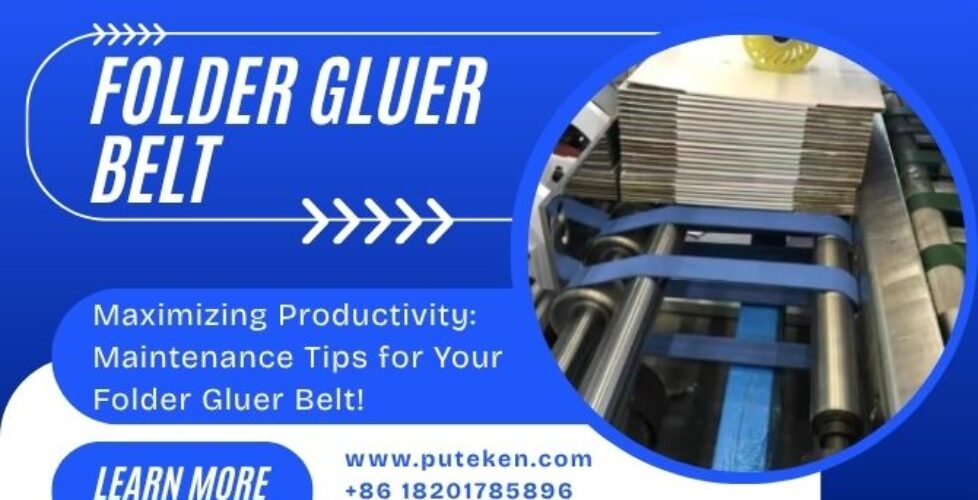
Maximizing Productivity: Maintenance Tips for Your Folder Gluer Belt!
In today’s fast-paced world of packaging and print finishing, every minute of production is precious. With increasing demands for accuracy, speed, and quality from customers, businesses cannot afford delays or substandard output. This is particularly true for operations that rely on Folder Gluer Belts—critical components that drive efficiency in folding carton plants, printing houses, and packaging facilities worldwide. While these specialized belts may seem like just another conveyor, their impact on uptime, product quality, and overall productivity is profound.
At Shanghai Puteken Transmission System Co., Ltd., we have witnessed the remarkable difference that well-maintained Folder Gluer Belts can make. In fact, even the most advanced folder gluer machines will underperform if the belts are neglected, worn, or improperly cared for. Belt-related downtime can stall entire production lines, disrupt shipping schedules, and erode a company’s reputation for reliability. On the flip side, a proactive and informed approach to belt maintenance enables you to maximize the lifespan of your equipment, reduce scrap rates, and deliver flawless cartons to your customers.
It is not enough to simply react when a problem arises. Instead, businesses must embrace preventative maintenance and regular inspection as a core part of their operational strategy. By understanding the unique requirements of the Folder Gluer Belt, from tensioning and alignment to cleaning and replacement schedules, companies can avoid costly breakdowns and unexpected stoppages. Furthermore, by working with a trusted partner like Shanghai Puteken Transmission System Co., Ltd., you can access best-in-class belts tailored to your application, along with expert guidance to ensure optimal performance year after year.
The Critical Role of the Folder Gluer Belt in Packaging Productivity
A Folder Gluer Belt is specially engineered to carry and guide carton blanks through a complex series of folding, gluing, and pressing stages within the gluing machine. Unlike conventional conveyor belts, folder gluer belts are designed for precise gripping, high flexibility, and excellent abrasion resistance—qualities essential in fast-moving and demanding environments. They ensure correct alignment of cartons, promote smooth folding, and provide enough traction to prevent misfeeds or jams.
If a Folder Gluer Belt is not properly maintained, it can lead to:
- Skewed or misaligned cartons (causing quality defects)
- Inconsistent glue application (resulting in open seams or failed boxes)
- Unexpected machine stoppages (impacting throughput)
- Excessive belt wear or damage (shortening belt life and increasing costs)
Therefore, a well-maintained Folder Gluer Belt is foundational to maximizing productivity and sustaining high output quality in a competitive packaging sector.
Key Maintenance Tips for Your Folder Gluer Belt:
1. Establish a Regular Inspection Routine
Assess your Folder Gluer Belts at the start and end of every shift, looking for signs of wear, fraying, cracking, glazing, or contamination from glue or dust. Adding these checks to your daily maintenance log gives you early warning of potential issues before they lead to downtime.
Checklist:
- Inspect for belt edge fraying
- Look for surface glazing (shiny spots may indicate slippage or heat damage)
- Check tension and tracking
- Examine for embedded debris, glue build-up, or foreign objects
2. Maintain Proper Tension and Tracking
Belt tension that is too high causes premature stretching and can damage pulleys or bearings, while tension that is too low leads to slippage, misalignment, and inconsistent product movement. Use the manufacturer’s recommended tensioning specifications for your specific belt type and folder gluer model.
How to Adjust Tension:
- Refer to the equipment manual for the correct tension range.
- Use a belt tension gauge for accuracy.
- Adjust tension incrementally, and recheck after run-in.
Tracking is also essential—if the belt starts to drift off-center, inspect for cause (improper tension, misaligned pulleys, or worn guide rollers) and correct immediately to prevent edge damage.
3. Clean Belts Frequently and Correctly
Folder Gluer Belts are prone to accumulating glue overspray, paper dust, and ink—especially in high-speed lines. This build-up not only affects belt grip, but may also lead to tracking problems or reduced carton quality.
Cleaning Recommendations:
- Use a manufacturer-approved belt cleaner or a mild detergent.
- Avoid solvents that degrade adhesives or belt coatings.
- Wipe belts with a soft, lint-free cloth—never abrasive pads.
- For stubborn glue or ink, let the cleaning solution sit for a few minutes before wiping.
Tip: Set up scheduled cleaning stops, for example once per shift, to avoid heavy build-up over time.
4. Rotate or Flip Belts When Possible
Some Folder Gluer Belts are designed with reversible profiles. Flipping or rotating belts at scheduled maintenance intervals promotes even wear and extends belt lifespan.
5. Replace Belts Before Failure
Don’t wait until a Folder Gluer Belt snaps or delaminates. Track service hours and proactively schedule replacements at the first sign of significant wear or slip. Leading-edge companies tie belt replacement to other scheduled maintenance—minimizing extra downtime.
Signs a Replacement Is Needed:
- Persistent tracking problems that cannot be corrected by adjustment
- Glazing or bald spots
- Deep grooves, cuts, or loss of grip pattern
- Unusual belt noise or vibration
6. Choose the Right Belt Material and Profile
Folder Gluer Belts from Shanghai Puteken Transmission System Co., Ltd. are available in various cover compounds (natural rubber, NBR, PU) and surface finishes (smooth, textured, grooved) to match your substrate and glue type. Selecting the right belt at the outset improves both longevity and production speed.
Advanced Tips: Maximizing Uptime with Predictive Maintenance
1. Implement Real-Time Belt Monitoring
Many modern folder gluer systems can be equipped with sensor modules that monitor tension, temperature, and tracking in real-time. These systems alert operators immediately if parameters drift out of safe ranges, allowing for quick corrective action and reducing the risk of catastrophic belt failures.
2. Analyze Wear Patterns for Systemic Issues
If certain belts wear faster than others, or if the same kind of failure repeats, review your line configuration:
- Are there sharp transitions, misaligned guides, or excessive vibration downstream?
- Does one operator run the line at higher speeds?
- Are product sizes within the ideal range for your belt profile?
Addressing root causes extends not only belt life but also overall machine life.
3. Train and Retrain Operators
Make sure every shift knows how to check and clean Folder Gluer Belts, as well as how to report signs of trouble. An investment in operator skill and awareness pays off through reduced errors and fewer costly emergencies.
4. Keep Spares On-Site
Downtime waiting for a replacement Folder Gluer Belt can cripple productivity. Keep a stock of critical sizes and types on hand so worn or damaged belts can be swapped out immediately.
5. Track Belt Life Data
Maintain a database of installation dates, running hours, cleaning intervals, and reasons for replacement to optimize your preventative maintenance schedule and support better belt selection decisions in the future.
Common Issues and Troubleshooting
1. Belt Slippage
Often caused by insufficient tension, contamination, or worn pulley lagging.
Solution: Increase tension per spec, clean belt and pulleys, or replace worn pulleys.
2. Belt Tracking Off-Center
Could indicate misalignment, improper tension, or uneven loading.
Solution: Realign guides, check pulley set-up, spread load evenly, and recalibrate tension.
3. Premature Surface Wear
Often seen with improper cleaning (using harsh solvents), running belts against rough guides, or excessive tension.
Solution: Change cleaning protocol, replace or machine smooth any rough hardware, check for over-tensioning.
4. Glue or Dust Buildup
Results in loss of grip and messy carton presentation.
Solution: Increase cleaning frequency; consider using air knives or install dust extraction at key positions.
Benefits of Proactive Maintenance for Folder Gluer Belt
- Reduced unscheduled downtime: Less lost production time from unexpected failures.
- Consistent product quality: Fewer jams, misfeeds, or glue application errors.
- Lower total cost of ownership: Belts last longer and equipment suffers less wear.
- Higher operator safety: Fewer emergency interventions.
- Greater customer satisfaction: You meet deadlines with well-crafted product.
Selecting the Ideal Folder Gluer Belt for Your Operation
At Shanghai Puteken Transmission System Co., Ltd., we offer a substantial range of Folder Gluer Belts engineered for:
- Varied carton substrates (coated, laminated, recycled, etc.)
- Different glue systems (hot-melt, PVA, water-based)
- Unique machine models (Bobst, Jagenberg, Vega, and others)
We provide technical advice and on-site evaluation to ensure your operation is running the correct belt type for ultimate productivity.
Your Folder Gluer Belt is much more than a machine component—it’s a strategic asset that, when properly maintained, delivers measurable advantages in productivity and profit. By taking proactive steps to inspect, clean, tension, and replace belts before failure, you can dramatically reduce downtime, extend equipment life, and guarantee consistent, high-quality cartons for every client order.

FAQ: Folder Gluer Belt
Q1: How often should I inspect my Folder Gluer Belt?
A: Inspect at least once per shift, or more often for high-volume operations. Early detection of wear, misalignment, or contamination can save thousands in downtime and scrap.
Q2: What cleaning agents are safe to use?
A: Use manufacturer-recommended cleaners or a mild, pH-neutral detergent. Avoid solvents unless your belt is certified as solvent-resistant, as most harsh chemicals can degrade the adhesive bonds or surface.
Q3: How do I know when it’s time to replace the belt?
A: Replace if you see fraying, deep cuts, glazing, loss of grip pattern, persistent tracking issues, or if the belt consistently slips after tensioning and cleaning.
Q4: Can I flip or reverse my Folder Gluer Belt to extend its life?
A: Some belt types are reversible and flipping can even out wear; others are directional—always check with Shanghai Puteken’s technical support before doing so.
Q5: What if my machine has frequent belt tracking problems?
A: Ensure pulleys and rollers are aligned and guides are in good condition. Tracking issues often stem from systemic mechanical issues, not just the belt.
Q6: Does environmental humidity or temperature affect belt life?
A: Yes. Extreme humidity or heat can affect belt elasticity and glue. Using belts designed for your local climate and keeping the production area well-ventilated helps minimize issues.
Q7: Why do new belts sometimes slip at first?
A: There may be a break-in period. Monitor tension, retighten after the belt stabilizes, and avoid running at maximum speed for the first few hours of operation.
Q8: Can Shanghai Puteken help with custom belt designs?
A: Absolutely! We offer belts with custom cover materials, thickness, profiles, or anti-static treatments to suit your application and environment.
Q9: Is operator training available?
A: Yes, we provide on-site and remote training on belt installation, inspection, maintenance, and troubleshooting.
Q10: How do I order spare belts or schedule a belt assessment?
A: Simply contact the Shanghai Puteken Transmission System Co., Ltd. team for immediate assistance and quick turn-around on spares.