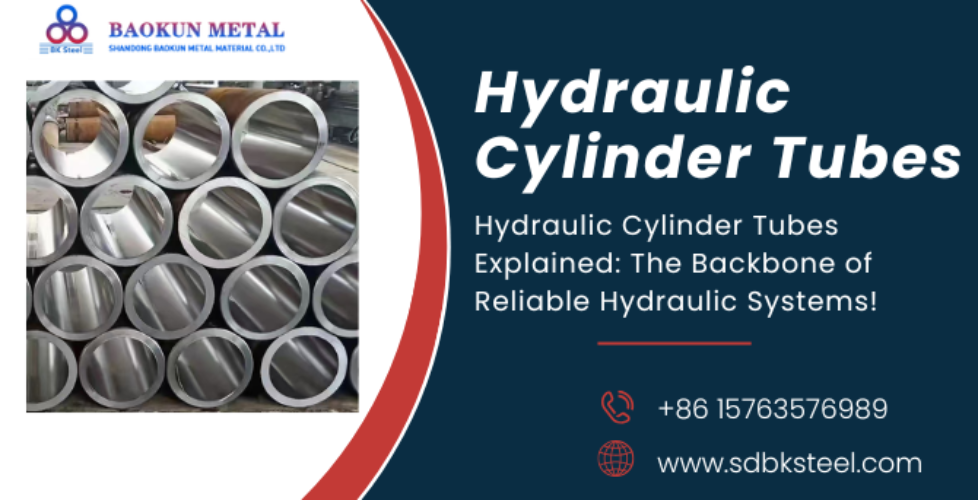
Hydraulic Cylinder Tubes Explained: The Backbone of Reliable Hydraulic Systems!
In today’s world of advanced machinery and industrial automation, hydraulic systems are the lifeblood of countless industries. From heavy equipment on construction sites to precision machinery in manufacturing plants, hydraulic power ensures smooth, efficient, and safe operations. It’s no exaggeration to say these systems keep the world turning. Yet, while many focus on the visible hydraulic rams or the force generated by pumps, the true unsung hero—the structural and functional core of every reliable hydraulic actuator—remains the Hydraulic Cylinder Tubes.
Hydraulic Cylinder Tubes are not simply hollow cylinders; instead, they are meticulously engineered components designed to withstand immense pressure, ensure minimal friction, maintain critical tolerances, and offer lasting durability. Without precision-made, high-grade Hydraulic Cylinder Tubes, even the most sophisticated hydraulic mechanisms could be rendered useless by leaks, inefficiency, or sudden failure.
What Are Hydraulic Cylinder Tubes?
Hydraulic Cylinder Tubes are specialized, seamless or welded steel tubes, most commonly featuring a precisely honed or polished inner surface. Their main purpose is to act as the pressure vessel inside a hydraulic cylinder assembly—guiding the piston and sealing elements as they move back and forth under high-pressure fluid.
Key characteristics of Hydraulic Cylinder Tubes include:
- High dimensional accuracy (ID and OD tolerances)
- Superior surface finish (often with Ra 0.2-0.4 µm roughness)
- Excellent straightness and roundness
- Outstanding mechanical strength and fatigue resistance
- Corrosion resistance (for demanding or harsh environments)
Without these qualities, hydraulic cylinders are susceptible to rapid seal wear, energy loss from friction, internal leakage, or even catastrophic bursting under pressure.
The Role of Hydraulic Cylinder Tubes in Hydraulic Systems
To better appreciate their value, it’s critical to understand the role Hydraulic Cylinder Tubes play within the entire hydraulic system:
1. Pressure Containment
Hydraulic systems often operate at pressures ranging from 100 bar (1450 psi) up to 700 bar (over 10,000 psi) in some specialized applications. The Hydraulic Cylinder Tube serves as the main pressure boundary, containing the hydraulic fluid and absorbing the stresses produced during operation.
2. Guide for Moving Parts
The tube provides a low-friction, perfectly round guiding surface for the piston and rod; this maintains alignment, permits smooth movement, and ensures equal force distribution throughout every stroke.
3. Surface for Sealing
Honed or polished inner surfaces are essential for seal performance and lifespan. Any unevenness can cause leaks, excessive wear, or pressure loss.
4. Structural Strength & Reliability
The tube must withstand not only static pressures but also cyclic loads, side loads, bending stresses, and the rigors of real-world shock and vibration.
5. Protection Against Corrosion & Contamination
Many Hydraulic Cylinder Tubes are treated or coated to withstand water, chemicals, or outdoor climates, thus extending both tube and cylinder life.
In summary: Hydraulic Cylinder Tubes determine the efficiency, longevity, and safety of the entire hydraulic system.
Materials and Grades Used in Hydraulic Cylinder Tubes
Material selection is foundational, influencing everything from machinability and cost to strength and corrosion performance. The following are commonly used:
1. Carbon Steel
This is the dominant material for Hydraulic Cylinder Tubes, due to its excellent strength, weldability, and cost-effectiveness. Grades like ST52 (E355), CK45, SAE 1020/1026, and 20#, 45# are widely specified around the world.
2. Alloy Steels
Where higher strength, toughness, or better wear/corrosion performance are needed (for example, in mining, marine, or extreme climates), alloy steels such as 42CrMo4 or SAE 4140 are preferred.
3. Stainless Steels
For environments where rust or chemical attack is a concern, grades like 304/304L, 316/316L, or Duplex stainless steels offer excellent protection—but at a higher material cost.
4. Special Coatings
Some applications specify standard tubes with a hard chrome, ceramic, or nickel-plated interior for added wear or corrosion resistance.
Shandong Baokun Metal Material Co., Ltd. offers the full range of steel grades and coatings, ensuring your Hydraulic Cylinder Tubes are perfectly matched to your working environment.
Manufacturing Process of Hydraulic Cylinder Tubes
Producing a first-class Hydraulic Cylinder Tube involves several precise steps—each requiring advanced machinery, specialist knowledge, and rigorous quality control.
1. Tube Manufacturing (Seamless or Welded)
Seamless tubes: Produced from solid billets pierced and drawn into tubes.
Welded tubes: Created from plate or coil, rolled and longitudinally welded (ERW or DOM). While both can be made to high quality, seamless tubes are preferred for high-pressure, critical, or safety-focused applications.
2. Heat Treatment
Stress-relieving or normalizing heat treatments ensure ideal grain structure and even mechanical properties throughout the tube wall.
3. Honing or Skiving & Roller Burnishing
This is a crucial step: precision machinery is used to hone (abrade with stones) or skive and burnish (cut and polish) the internal surface to achieve a mirror-smooth, perfectly round bore. This guarantees proper seal operation and low friction levels.
4. Dimensional Control
Modern CNC equipment ensures exact internal diameter, wall thickness, and straightness. Tolerances are typically kept within ±0.02-0.05 mm.
5. Surface Protection
Rust proofing (phosphating, oiling, or painting) is applied as standard, with optional internal or external plating available for marine or outdoor use.
6. Cutting & Finishing
Tubes are cut to customer-specified lengths (often up to 12 meters), deburred, cleaned, visually inspected, and bundled for safe shipment.
Shandong Baokun Metal Material Co. Ltd utilizes global best practice in every stage, delivering Hydraulic Cylinder Tubes that meet or exceed international standards.
Quality Standards and Testing
Assuring the quality of Hydraulic Cylinder Tubes is paramount for safety, customer satisfaction, and regulatory compliance.
Global standards include:
- EN 10305-1, EN 10305-2 (Europe)
- DIN 2391 / 2393 (Germany)
- ASTM A519, ASTM A106 (USA)
- JIS G3445 (Japan)
- ISO 3320 / 10216
Typical quality assurance tests include:
- Dimensional and geometric checks (ID, wall, straightness, ovality)
- Surface roughness measurement (Ra/µm)
- Non-destructive tests (eddy current, ultrasonic, hydrostatic)
- Tensile, yield, and elongation tests
- Hardness and impact testing
- Chemical analysis
Shandong Baokun Metal Material Co. Ltd delivers full traceability, test certificates, and customer-specific inspection regimes for peace of mind.
Selection Criteria—How to Choose the Right Hydraulic Cylinder Tubes
Selecting the best Hydraulic Cylinder Tubes for your project requires careful consideration of multiple technical parameters:
1. Internal Diameter (ID) & Wall Thickness
Choose according to operating pressure, desired stroke, and force output. Over- or under-sizing can cause performance, safety, and cost issues.
2. Length
Longer tubes must have stricter straightness and concentricity—especially critical for long-stroke hydraulic applications.
3. Material/Grade
Match to your environmental conditions and mechanical requirements.
4. Surface Finish
For high-sealing or speed applications, the smoother the inner surface, the better the performance and seal lifespan.
5. Tolerance & Precision
If your hydraulic cylinder requires precision engineering, select tubes with the tightest tolerances available.
6. Supplier Reliability
Choose experienced suppliers who offer consistent quality, technical support, documentation, and a proven track record—like Shandong Baokun Metal Material Co. Ltd.
Applications of Hydraulic Cylinder Tubes Across Industries
Hydraulic Cylinder Tubes can be found anywhere robust motion or force is required:
- Construction machinery: Excavators, bulldozers, cranes, loaders.
- Agricultural equipment: Tractors, harvesters, sprayers.
- Material handling: Forklifts, lifts, palletizers.
- Manufacturing automation: Presses, injection molding, machine tools.
- Marine & offshore: Winches, steering systems, deck equipment.
- Mining: Rock drills, roof supports, haul trucks.
- Energy: Wind turbines, oil & gas, hydroelectric gates.
- Railway & transportation: Brake systems, suspensions, doors.
Innovations & the Future of Hydraulic Cylinder Tubes
With rising demands for sustainability, strength, and zero-downtime, innovation is accelerating in the hydraulic tube sector:
- Advanced alloys and composites for higher pressure/lighter weight
- Nano-surface coatings for extreme environments and longer life
- Integrated sensors to monitor wear and report real-time status (Industry 4.0)
- Process automation for even tighter tolerances and higher throughput
Shandong Baokun Metal Material Co. Ltd is continuously investing in new technology, R&D, and green production to help clients meet tomorrow’s needs.
Hydraulic Cylinder Tubes are truly the unsung heroes powering modern industry. Their precision, durability, and carefully engineered properties influence not just how hydraulic systems perform, but also how safe, efficient, and sustainable today’s machines can be. When you choose a trusted partner like Shandong Baokun Metal Material Co. Ltd, you gain access to top-tier expertise, world-standard materials, and the reliability your business demands.
Don’t let the hidden core of your hydraulic system become a weak link—embrace quality Hydraulic Cylinder Tubes and secure operational excellence for years to come.
Frequently Asked Questions (FAQ)
Q1: What’s the difference between a Hydraulic Cylinder Tube and a regular steel tube?
A Hydraulic Cylinder Tube is specially honed for precise internal diameter, surface finish, and roundness, providing superior sealing and wear characteristics—in contrast to regular tubes, which may lack the necessary surface quality or dimensional accuracy.
Q2: How long do Hydraulic Cylinder Tubes last?
With proper design and material selection, they can last many years—even decades—in good operating conditions. Factors such as fluid cleanliness, pressure cycles, and environment will affect lifespan.
Q3: Can Hydraulic Cylinder Tubes be customized for non-standard sizes?
Yes. Leading manufacturers including Shandong Baokun Metal Material Co. Ltd can supply both metric and imperial sizes, custom wall thickness, special grades, and unique finishes on request.
Q4: How do I prevent corrosion inside my Hydraulic Cylinder Tubes?
Select appropriate steel grades or opt for internal coatings if working in corrosive environments. Regular inspection and fluid maintenance also help prevent corrosion.
Q5: Are seamless tubes always better than welded?
For most high-pressure and critical-industrial cylinders, seamless is preferred. But for moderate pressures or cost-sensitive jobs, high-quality welded (DOM) tubes may suffice.
Q6: What services does Shandong Baokun Metal Material Co. Ltd provide?
Baokun offers comprehensive material selection advice, custom fabrication, precision honing, quality certificates, packing & logistics, and technical support throughout the purchase and application process.
Q7: How can I verify the quality of my supplied Hydraulic Cylinder Tubes?
Always request test certificates, surface finish reports, and—if required—third-party inspection before shipment. Shandong Baokun readily provides all documentation.
Q8: What are the most common failure modes for Hydraulic Cylinder Tubes?
Typical issues include corrosion, internal scoring (from dirty fluid or misalignment), cracking (from fatigue or impact), and excessive ovality (from poor material or overloading).