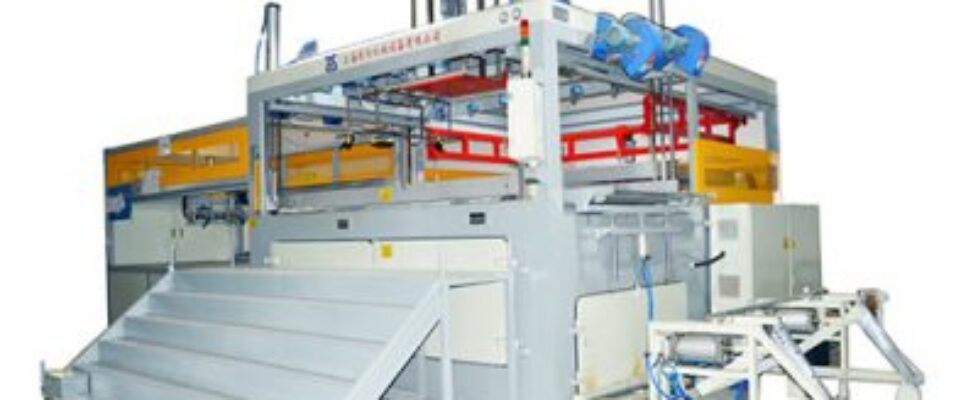
A Thick Gauge Thermoforming Machine is a powerful manufacturing solution designed to produce durable, high-quality plastic components from thick thermoplastic sheets. It is widely used across industries that require strong, lightweight, and precisely formed products. Shanghai Zhanshi Mechanical Equipment Co., Ltd. provides advanced thermoforming machines that deliver outstanding forming accuracy, production efficiency, and long-term reliability for a wide range of industrial applications.
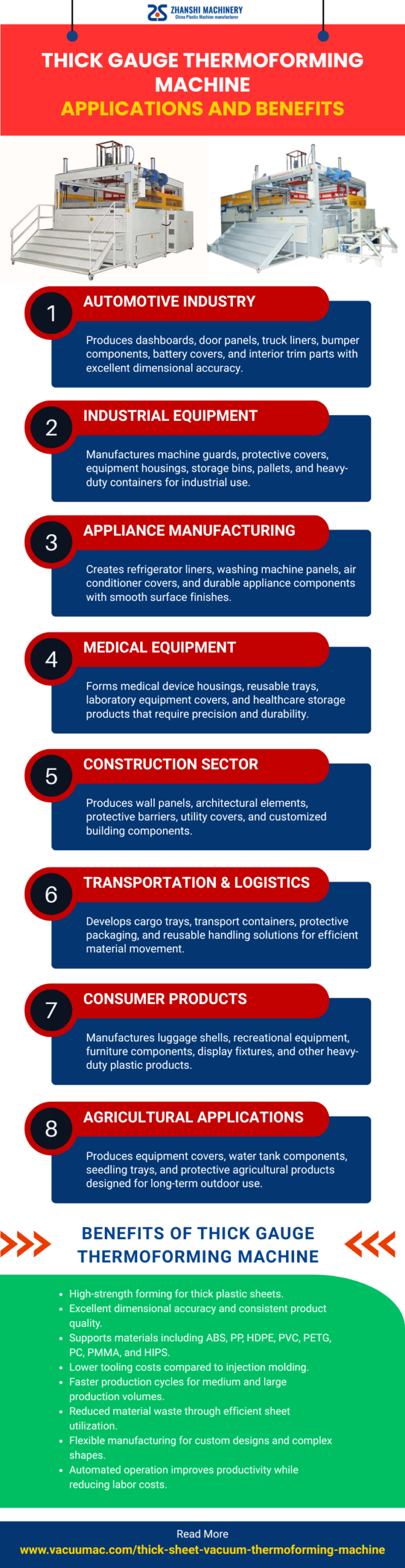
The Thick Gauge Thermoforming Machine is commonly used in the automotive industry to manufacture dashboards, door panels, trunk liners, and protective covers. It also plays an important role in producing appliance housings, industrial equipment enclosures, medical device shells, logistics containers, construction panels, and custom plastic products. These machines support materials such as ABS, PP, HDPE, PVC, PETG, PC, PMMA, and HIPS, offering excellent versatility for different manufacturing requirements.
One of the biggest advantages of a Thick Gauge Thermoforming Machine is its ability to produce complex shapes with exceptional dimensional accuracy while reducing material waste. Compared with traditional molding methods, it offers lower tooling costs, faster production cycles, and greater flexibility for custom designs. Automated operation also improves productivity and minimizes labor costs. With innovative technology from Shanghai Zhanshi Mechanical Equipment Co., Ltd., manufacturers can achieve consistent product quality, enhanced production efficiency, and reliable performance for both medium- and high-volume manufacturing projects. For more information, click https://tinyurl.com/bdkwaf8f and call us at +86 13916846091 or email us at Daisy@smktek.com today!
In today’s rapidly advancing industrial landscape, the demand for robust, custom, and efficient heavy-duty plastic products is shaping the future of manufacturing. From automotive body panels and truck bed liners to industrial bins, medical beds, and architectural elements, end-users are looking for solutions that combine strength, flexibility, and cost-effectiveness. And at the core of this production evolution is the thick gauge thermoforming machine—the game-changing technology making it all possible.
Unlike traditional thin gauge packaging systems, a thick gauge thermoforming machine is engineered to heat and form plastic sheets with thicknesses ranging typically from 3mm up to 20mm, allowing manufacturers to create large, structurally sound, and complex parts without the need for costly and less flexible molding techniques. These machines bring together the best of design freedom, rapid prototyping, competitive cost structure, and sustainable manufacturing, redefining what’s possible for industries ranging from agriculture and automotive to medical, logistics, and infrastructure.
Thick Gauge Thermoforming: An Overview
What is Thick Gauge Thermoforming?
Thermoforming is the process of heating a thermoplastic sheet until soft, then shaping it over a mold—using vacuum, pressure, or both—before cooling and trimming to form the desired part. When referring to “thick gauge,” we mean sheets significantly thicker than those used in standard packaging—often from 3mm up to 20mm or more. These thicker sheets open the door to manufacturing heavy-duty, durable, and functional parts on scales and speeds unimaginable with legacy fabrication methods.
Benefits Over Other Methods
Compared to Injection Molding:
Faster and less expensive tool/mold creation
Shorter lead times for both prototypes and production
Viable for lower- to medium-production quantities
Allows design changes and modifications between runs
Compared to Composites and Metal Fabrication:
Lightweight yet tough components
No corrosion, rot, or metal fatigue
Streamlined one-piece forms that require less finishing
Anatomy of a Modern Thick Gauge Thermoforming Machine
Not all thermoforming machines are created equal—especially when forming heavy-gauge materials. So, what makes a thick gauge thermoforming machine different?
Key Machine Components
High-Powered Ovens: Multi-zone IR or quartz heaters capable of evenly heating thick materials with precise temperature control.
Robust Clamping Frames: Designed to handle the weight and stiffness of heavy plastic sheets, preventing warping or “sheet sag” during heating.
Deep-Draw Forming Tables: Powerful platforms with advanced lifting and lowering mechanisms allow for reinforced molds and deep, complex part geometries.
Vacuum and Assist Pressure Systems: High-flow vacuum pumps, with optional plug assists or pressure domes, for intricate shapes and uniform material distribution.
Automated Sheet Loaders/Unloaders: Minimize manual handling and help support higher production rates.
Integrated Cutting & Trimming Systems
Post-formed parts are often trimmed using CNC routers or robotic cutters directly adjacent to the forming station, ensuring fast, precise finishing and reducing labor needs.
Controls and Automation
PLC (Programmable Logic Controller)/HMI (Human-Machine Interface): Enables operators to set, monitor, and adjust every stage of the process.
Recipe Storage: Store and instantly recall process parameters for different jobs, reducing setup time for repeat orders.
Sensors and Data Logging: Monitor temperatures, pressures, cycle times, and output data for quality assurance and traceability.
Production Advantages with Thick Gauge Thermoforming
Speed and Flexibility
Gone are the days when manufacturing a large, tough plastic part meant waiting weeks or months for an expensive, complex metal mold. With a thick gauge thermoforming machine:
Tooling lead times are typically measured in days or weeks—not months.
Tooling costs are often a fraction of those seen in injection molding or composite tooling.
Design changes can be implemented quickly and affordably, enabling true product innovation.
Scalability for Any Batch Size
Whether you’re making ten custom enclosures or ten thousand vehicle panels, thick gauge thermoforming offers a production approach that scales cost-effectively.
Reduced Waste
Forming sheet plastic cuts material scrap compared to subtractive methods. Many manufacturers recycle off-cuts and trimmings, grinding and reusing them for environmental and cost benefits.
Lower Unit Costs and Lean Manufacturing
Automated forming, handling, and trimming, along with less manual labor and simplified logistics, bring both CAPEX and OPEX benefits.
Heavy-Duty Plastics: Material Options and Part Design
Commonly-Used Thick Gauge Materials
ABS (Acrylonitrile Butadiene Styrene): Excellent toughness and heat resistance for automotive and equipment enclosures
Polycarbonate (PC): High impact resistance and optical clarity
High-Density Polyethylene (HDPE): Chemical and moisture resistant, ideal for tanks and transport
HIPS (High Impact Polystyrene): Good for low-cost, rigid items
TPO (Thermoplastic Polyolefins): Used for bumpers and exterior panels thanks to flexibility and UV stability
Acrylic, PVC, or Multi-Layered/Sandwich Sheets: For specialty projects
Design Guidelines
Allow for draft angles for easy part removal
Consider wall thickness variation in deep-draw parts
Integrate ribs, textures, or molded-in features to increase rigidity without excess weight
Mate designs to available trimming and secondary process capabilities
CNC routers and robotic cutters produce complex, finished parts straight from the machine—no hand finishing required.
Automated demolding, stacking, or conveying systems improve throughput and reduce injuries.
b) Energy Management
Multi-zone oven controls save energy by precisely heating only the required sheet area.
Insulation and fast-cooling systems reduce cycle time and overall plant energy usage.
c) Digital Controls & Quality Assurance
Smart PLC/HMI systems manage hundreds of variables and display diagnostics, process alerts, and production data.
“Recipe” management supports quick changeovers and facilitates compliance with QMS or ISO requirements.
d) Remote Monitoring, Training, and Support
Many new machines feature remote support via the internet, enabling diagnostics, software upgrades, and troubleshooting from anywhere.
Shanghai Zhanshi Mechanical Equipment Co., Ltd. provides training programs to help staff reach proficiency and avoid operational pitfalls.
Real-World Applications
a) Automotive
Dashboards, door panels, armrests, running boards, bumpers, and truck bed liners take advantage of the strength and finish of thick gauge forming.
Rapid prototyping allows automotive designers to iterate fast.
b) Agriculture and Heavy Equipment
Equipment hoods, guards, tank covers, and housings are made tough enough for field duty but much lighter than steel.
Resistant to the harshest weather and chemicals.
c) Material Handling and Logistics
Pallets, bins, crates, shipping containers—created in standard or custom sizes for efficiency in supply chain and warehousing.
Easily cleaned and endlessly reusable.
d) Construction and Infrastructure
Wall claddings, utility boxes, architectural features, playground panels, and even public transit seating.
Vandal-resistant, weatherproof, and easy to maintain.
e) Custom and OEM Products
Medical beds, spa enclosures, kiosks, industrial consoles, and more.
Complex geometries achieved with one-piece, seamless designs.
Case Study
A global logistics company partnered with Shanghai Zhanshi for the production of custom thick gauge HDPE transport pallets. Through advanced machine controls, cycle times were cut by 40%, tooling costs were minimized, and the durability of the pallets exceeded steel alternatives—while reducing weight for shipping.
Implementing and Maintaining a Thick Gauge Thermoforming Machine
Installation & Factory Preparation
Ensure proper floor space, ventilation, and access for large sheet handling
Electrical service and compressed air/vacuum lines must support high-powered equipment
Workforce Training
Operators must understand PLC controls, sheet loading, and safe mold handling
Ongoing training ensures consistent output and fewer operator errors
Preventive Maintenance
Routine cleaning of ovens, changing filters, inspecting seals/gaskets
Scheduled checks of vacuum and pressure lines, heating elements, and motion drives
Documentation of downtime and repairs for continuous improvement
Upgrading and Retrofitting
Many machines can be upgraded with advanced HMIs, new heaters, or CNC trimmers for evolving production needs
Remote support and upgrades are available through Shanghai Zhanshi
The thick gauge thermoforming machine stands at the heart of today’s heavy-duty plastic production revolution. Its potent blend of design freedom, rapid prototyping, cost-effective tooling, and scalable manufacturing is unlocking unprecedented value for a host of industries. Whether your business produces rugged automotive parts, high-impact material handling systems, long-lasting construction elements, or innovative custom products, thick gauge thermoforming machines from Shanghai Zhanshi Mechanical Equipment Co., Ltd. deliver the strength, precision, and reliability you demand—along with the flexibility to adapt for tomorrow’s markets.
Frequently Asked Questions (FAQ)
Q1: What thickness and size plastic sheets can a thick gauge thermoforming machine handle?
A1: Most machines handle 3mm–20mm thick sheets, with maximum sheet sizes depending on the model—some up to several meters for automotive or large panels.
Q2: What tooling costs can I expect, and how does this compare to injection molding?
A2: Thermoforming tools (molds) cost a fraction of injection molds, with prices depending on part size and complexity. Tooling can often be made of aluminum, wood, or composite materials, reducing cost and lead time.
Q3: Are finished parts recyclable or sustainable?
A3: Virtually all thick gauge thermoformed parts are made from recyclable thermoplastics. Many companies reclaim trimmed scrap and off-cuts for reuse.
Q4: How long does it take to changeover tooling?
A4: With modular quick-change systems, experienced operators can transition molds in as little as 30 minutes, enhancing responsiveness for varied production orders.
Q5: What is the cycle time for a thick gauge thermoforming machine?
A5: It varies by part complexity and material, but most large parts are formed and loaded in 3–10 minutes—much faster than alternative methods for such sizes and thicknesses.
Q6: Can these machines be integrated with downstream automation?
A6: Yes, Shanghai Zhanshi machines support integration with robots, CNC trimmers, conveyors, and part stackers for full-process automation.
Q7: What kind of support is available after purchase?
A7: Shanghai Zhanshi offers installation, commissioning, training, online and phone support, remote diagnostics, spare parts supply, and upgrade paths for ongoing productivity.