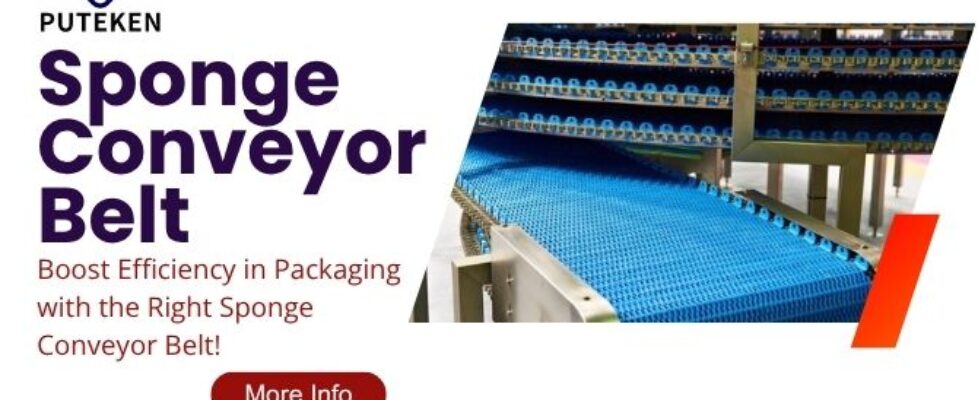
Boost Efficiency in Packaging with the Right Sponge Conveyor Belt!
In today’s fast-paced industrial world, efficiency on the packaging line is no longer optional—it is essential. Whether you’re handling delicate dairy cups, labeling pharmaceutical bottles, or sealing cosmetic cartons, every product must be transported quickly, gently, and precisely. In these scenarios, the right conveyor belt can play a pivotal role—and few solutions are as versatile and effective as the Sponge Conveyor Belt.
A Sponge Conveyor Belt, also known as a foam or cellular polyurethane belt, features a soft, elastic surface that offers cushioning support during product transport. This specialized belt type is especially useful in packaging applications where surface contact, shock absorption, or gentle gripping are required.
At Shanghai Puteken Transmission System Co., Ltd., we’ve developed a range of high-quality sponge conveyor belts tailored to meet the demanding needs of modern packaging systems. Our belts are widely used in food, pharma, e-commerce, cosmetics, and electronics industries, where material handling needs to be both protective and precise.
What Is a Sponge Conveyor Belt?
A Sponge Conveyor Belt is a type of conveyor belt that features a foam or sponge-like surface layer mounted on a base belt (usually made from fabric-reinforced rubber, PVC, or PU). This design balances the durability of a traditional conveyor belt with the soft-touch capabilities of sponge material, ensuring that fragile or irregular-shaped items can be transported smoothly and gently.
Sponge belts are available in different foam densities, thicknesses, and textures, allowing customization based on load, pressure, and machine type.
Key Properties and Materials:
Quality sponge conveyor belts typically combine the following layers:
- Base Layer: Made of PVC, PU, or polyester-based fabric for strength and dimensional stability
- Top Layer: Soft sponge (usually polyurethane or modified rubber) available in various densities and finishes
- Adhesive Layer: Industrial-grade adhesive that bonds foam to the base securely
Core Features:
- Gentle Surface: Prevents scratches, smashing, or mark-offs
- Compressibility: Supports height variations in products without jamming
- Noise Reduction: Lower vibration and sound during transport
- Optional Anti-static or Oil-resistant Surfaces
Top Benefits of Using Sponge Conveyor Belts in Packaging
Choosing the right Sponge Conveyor Belt directly impacts line performance. Here are the top ways it boosts your packaging processes:
✅ 1. Safe Handling of Delicate Items
Sponge surfaces are forgiving and elastic—perfect for handling glass bottles, aluminum cans, cosmetics, and electronics.
✅ 2. Improved Product Gripping and Alignment
The foam surface grips items gently but firmly, reducing slipping, misalignment, or tipping during high-speed transport.
✅ 3. Shock and Vibration Absorption
Sponge belts absorb external stress, especially when items drop onto the belt or travel on multi-stop lines.
✅ 4. Perfect for Labeling or Print Registration
Maintains product stability at labeling heads or coding stations, ensuring accurate label placement and printing.
✅ 5. Smoother Transfer Between Conveyors
Facilitates seamless product handovers from one conveyor line to another at different elevations or curves.
Common Industries and Applications
You’ll find Sponge Conveyor Belts wherever fragile or vibration-sensitive items are in use. Common applications include:
- Consumer Goods
Transporting cosmetic bottles, eye shadow palettes, skin-care tubes - Beverage & Food Packaging
Handling glass jars, yogurt cups, and PET bottles - Pharmaceutical & Healthcare
Bottles, blister packs, syringe tubes in automated packaging - E-commerce & Parcel Handling
Protecting packaged items in multi-step package sorting centers - Electronics
Conveying phones, PCBs, or fragile circuit boards during assembly or testing
Types of Sponge Conveyor Belts
Depending on your packaging challenges, you can choose from:
- Flat Sponge Belts
Universal belts used in linear transport and general product handling - Timing Belts or Toothed Belts with Sponge Covering
Used when synchronization is key—especially under labeling or printing systems - Coated Rollers or Sponge Sheets
Custom sponge wraps for drive rollers or belt segments - Grooved or Textured Foam Belts
Support increased friction or reduced product sticking
How to Select the Right Belt for Your Application?
To choose the right Sponge Conveyor Belt, consider:
- Product Dimensions and Weight
- Conveyor Load and Speed Requirements
- Level of Precision Needed (e.g., Labeling)
- Cleaning & Maintenance Protocol Requirements
- Chemical Exposure (detergents, oils, etc.)
- Need for Anti-static or Flame-retardant Properties
Shanghai Puteken offers custom-built belts tailored precisely to your production line specs.
Maintenance Tips to Extend Belt Life
Like all industrial belts, sponge belts benefit from routine care:
- Clean regularly with a soft, non-abrasive brush or sponge
- Inspect for dents, wear, or delamination monthly
- Trim loose edges as needed to prevent tearing
- Avoid exposure to high heat or open flames
- Choose compatible cleaning agents (non-oil solvents)
We offer free maintenance guides and on-call service for OEM customers.
Why Choose Sponge Conveyor Belts from Shanghai Puteken?
At Shanghai Puteken Transmission System Co., Ltd., we bring innovation and reliability to every belt we produce. Our sponge conveyor belts are engineered using high-quality base fabrics, precision lamination, and customizable foam densities to fit your exact line requirements.
Our Advantages:
- Custom Design and Manufacturing for all industrial sectors
- In-house QC Lab to test temperature, durability, and wear
- Fast Lead Times and Global Delivery Network
- OEM/ODM & Branding Support Available
- EU/FDA Material Compliance Options
- 24/7 Technical Support
With customers in over 30 countries, we’re proud to be a trusted global supplier of conveyor belt systems.
Comfort Meets Control for Peak Line Efficiency
For manufacturers, packagers, and distributors who deal with fragile, irregular, or easily marked products, a Sponge Conveyor Belt offers the perfect balance of soft-touch handling, product alignment, and noise control. Whether you’re upgrading an entire conveyor system or just solving a problem at one sensitive point in your line, sponge belts provide a low-cost, high-value solution.

Frequently Asked Questions (FAQs)
Q1: What is the typical thickness of a sponge conveyor belt?
A: Thickness ranges from 2mm to 10mm, depending on your product needs. The base belt can also be adjusted based on tensile strength requirements.
Q2: Can sponge belts be used in wet or humid environments?
A: Yes, with the right coating and base material such as PU or PVC, sponge belts can be water-resistant and easy to maintain in moist conditions.
Q3: Are your sponge belts FDA-compliant?
A: Absolutely. Our belts can be made with FDA/EC-compliant materials, suitable for the food and pharma industries.
Q4: Do you offer belts for curved conveyors with sponge tops?
A: Yes. We have flexible and curved conveyor belt solutions with sponge covers for turning or incline systems.
Q5: What’s the lifespan of a typical sponge conveyor belt?
A: With regular care, a sponge belt lasts 8–18 months, depending on load, speed, and operating environment.
Q6: Can you provide custom color or branding?
A: Yes. We can supply belts with custom logos, belt colors, and private label options for distributors.