
How a Pressure Thermoforming Machine Enhances Speed and Precision in Manufacturing!
In the world of modern manufacturing, where precision, speed, and cost-effectiveness define the competitive edge, companies are continuously searching for innovative solutions to improve their production processes. Among these advancements, thermoforming technology stands out as a leader in packaging and plastic product manufacturing. More specifically, the Pressure Thermoforming Machine has emerged as a vital asset for manufacturers aiming to accelerate their output while maintaining intricate detailing and high-grade consistency.
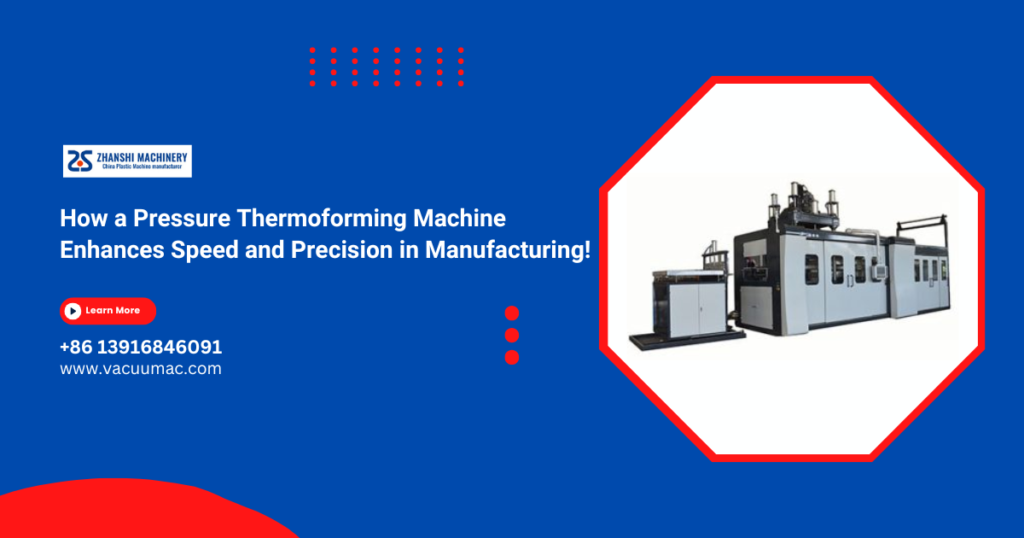
At Shanghai Zhanshi Mechanical Equipment Co., Ltd., we specialize in designing and delivering advanced thermoforming machinery engineered for high performance and long-term reliability. Our Pressure Thermoforming Machines are trusted by global manufacturers to produce high-precision parts at record speeds, across a wide array of industries—from food and medical packaging to automotive components and consumer goods.
Pressure Thermoforming Machine?
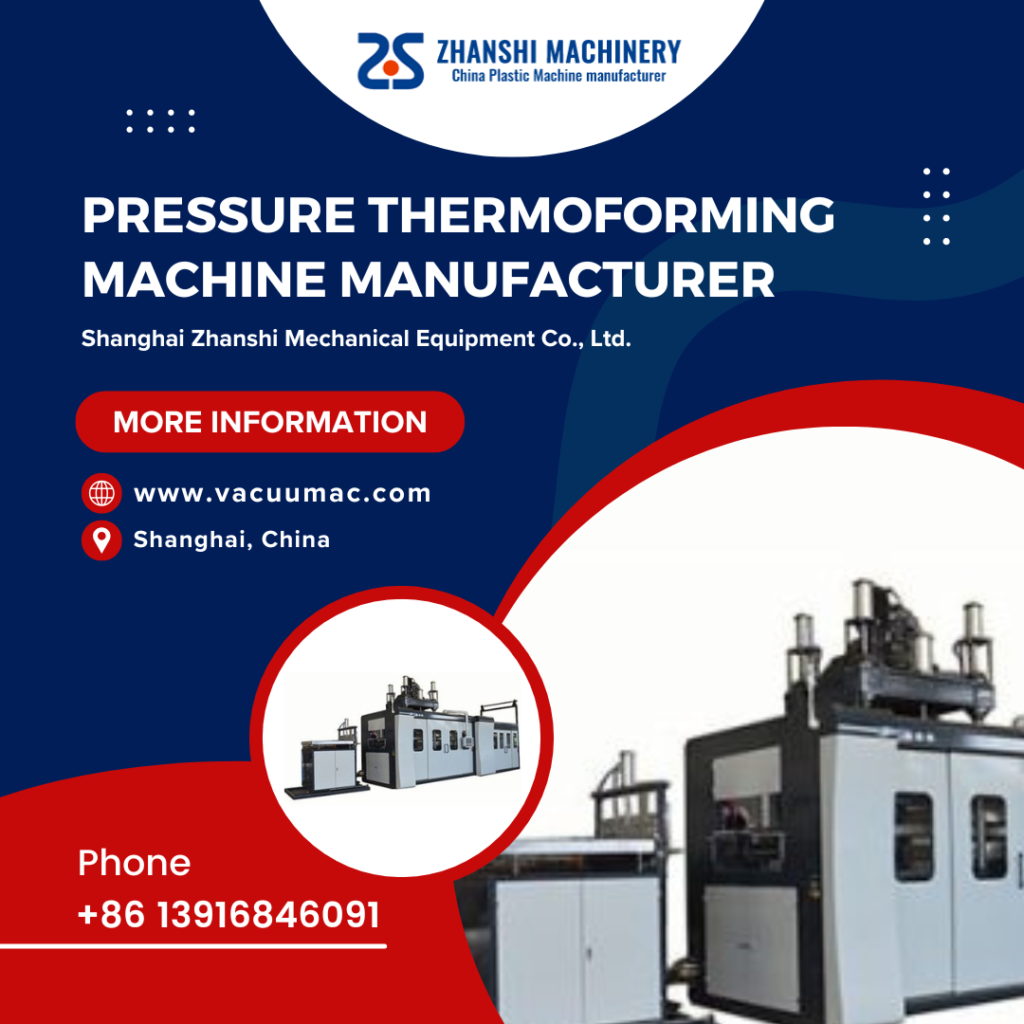
A Pressure Thermoforming Machine is advanced equipment that shapes heated plastic sheets into detailed, high-quality parts by using both vacuum and controlled air pressure. This technology ensures precise material distribution, sharper mold definition, and improved surface finish compared to standard thermoforming methods. Ideal for packaging, medical trays, automotive components, and consumer products, a pressure thermoforming machine enhances production efficiency, consistency, and part strength.
How Does a Pressure Thermoforming Machine Work?
While the concept is straightforward, pressure thermoforming involves a sophisticated sequence of operations that must be executed with exact timing and controls—something our machines at Shanghai Zhanshi are meticulously designed to provide.
Here’s a step-by-step breakdown of the process:
- Sheet Loading: A thermoplastic sheet (often ABS, HIPS, PETG, or PP) is automatically fed into the machine.
- Heating: Radiant or contact heaters raise the plastic to its forming temperature (~160°–220°C depending on material).
- Forming Chamber Seals: Once heated, the sheet is moved over a female or male mold.
- High-Pressure Air is Introduced: Swift and high-pressure air forms the sheet tightly against the mold—capturing every design element.
- Cooling: The formed part is cooled using air blowers or water channels in the mold.
- Trimming and Ejection: Trimming cutters remove excess material, and the part is ejected for stacking or assembly.
Also read: How Pressure Thermoforming Machine Works [Infographic]
Key Benefits of Using a Pressure Thermoforming Machine
Now that you understand the process and how it compares to other methods, let’s explore the benefits of using a Pressure Thermoforming Machine in further detail.
1. Faster Production Speeds
Speed is of the essence in modern manufacturing, and this is where pressure thermoforming shines. Shanghai Zhanshi machines are capable of rapid cycle times, allowing manufacturers to output hundreds or even thousands of units per hour.
Key features enhancing speed include:
- Servo motor-driven systems
- Automated sheet loading and unloading
- Integrated trimming systems
- Real-time process monitoring
These features allow for continuous, high-volume production with minimal manual intervention.
2. Unmatched Precision and Detail
One of the main reasons companies choose a Pressure Thermoforming Machine is its ability to produce complex shapes with fine textures, logos, and undercuts—often rivaling injection-molded parts at a fraction of the cost.
Applications requiring detailed aesthetics, such as coffee machine panels, control interfaces, display cases, medical trays, or cosmetics packaging, benefit immensely from pressure forming.
3. Lower Tooling Costs
Compared to injection molding, pressure thermoforming offers significantly lower tooling and mold design costs. Molds are generally made from aluminum, epoxy, or ABS, depending on application and volume requirements.
Quick-turn prototyping is a breeze, and design modifications can be implemented without breaking the bank—crucial for market testing, seasonal packages, or product refreshes.
4. Material Flexibility
Pressure thermoforming supports a wide variety of materials, such as:
- ABS (Acrylonitrile Butadiene Styrene)
- PS (Polystyrene)
- PETG (Polyethylene Terephthalate Glycol)
- PVC (Polyvinyl Chloride)
- PC (Polycarbonate)
- Biodegradable plastics (PLA, PHA)
This enables manufacturers to respond swiftly to market needs, customer preferences, and environmental standards.
Also Read: The Key Features to Consider When Buying a Pressure Thermoforming Machine in 2026 [Infographic]
5. Cost-Efficient for Mid-to-High Volumes
Due to faster cycle times and moderate tooling costs, pressure forming is ideal for medium to high-volume runs, offering a cost-effective alternative to both vacuum forming and injection molding.
6. Cleaner, Sustainable Operations
Shanghai Zhanshi Pressure Thermoforming Machines are equipped with:
- Energy-efficient heating systems
- Scrap recovery functionality
- Precision cutters that minimize waste
- Compatibility with recyclable plastics
This allows you to run eco-conscious manufacturing lines while staying lean and efficient.
Real Industry Applications for Pressure Thermoforming
The versatility of pressure-formed products makes the use of this technology widespread across industries. Here are notable examples:
Food & Beverage
-Meat and cheese packaging
-Disposable serving trays
-Yogurt cups and deli containers
Medical & Pharmaceutical
-Sterile surgical tray enclosures
-Diagnostic device covers
-Pharmaceutical blister packaging
Consumer Goods
-Cosmetic product trays
-Appliance panels
-Electronic product inserts
Also Read: Pressure Thermoforming Machine Industries Application [Infographic]
Automotive & Industrial
-Dashboards and console panels
-Airflow control panels
-Protective casing and housing
Retail & E-Commerce
-High-end point-of-sale displays
-Custom molded packaging
-Secure clamshell packs
The need for precise, attractive, and functional plastic parts is growing—and pressure thermoforming offers the fastest, most versatile way to meet these demands.
Why Choose Shanghai Zhanshi Mechanical Equipment Co., Ltd.?
When investing in advanced technology like a Pressure Thermoforming Machine, reliability and support are just as important as performance.
At Shanghai Zhanshi Mechanical Equipment Co., Ltd., we offer:
1. State-of-the-Art Machines
Built using cutting-edge components, our machines are engineered with precision, longevity, and user-friendliness in mind.
-Servo-controlled motion systems
-Multi-zone heating elements
-Integrated forming + trimming units
-Quick mold-change designs
2. Customization and Scalability
From compact models for small series to high-throughput systems for mass production, we offer customized configurations based on your industry and specs.
3. Expert Support Services
-Equipment installation and calibration
-Operator training programs
-On-site and remote technical assistance
-Tooling, mold design, and consultation
4. Global Reach
With customers in over 60 countries and counting, we’re experienced in exporting, compliance, and multi-lingual support.
Boost Your Production Line with Pressure Thermoforming
As modern manufacturing moves toward smarter, leaner, and more sustainable solutions, Pressure Thermoforming Machines have become essential tools for organizations aiming to keep pace with demand without compromising on quality or detail.
Speed, accuracy, economy, sustainability—all in one machine. That’s the power of pressure forming.
Frequently Asked Questions (FAQ)
Q1: What distinguishes pressure forming from vacuum forming?
Pressure forming uses positive air pressure to press the heated sheet into a mold, producing crisper detail and tighter tolerances than vacuum forming, which relies solely on suction.
Q2: What volume range is best suited for pressure thermoforming?
Medium to high-volume runs are ideal. It’s cost-efficient, thanks to quick cycle times and moderate tooling costs.
Q3: Is it suitable for sterile or food-grade applications?
Yes! Many of our machines are used in medical device packaging and food industries. We offer easily cleanable components and materials suitable for FDA compliance.
Q4: Can I reuse material or work with recycled plastic?
Absolutely. Our systems are compatible with recycled plastic sheets, and we offer options to reintegrate edge trims and waste back into your production loop.
Q5: How fast is the cycle time?
Depending on part size and material, cycles can be as short as 10–30 seconds, significantly boosting your daily output.
Q6: Is a Pressure Thermoforming Machine expensive?
Compared to injection molding systems, pressure thermoforming machines are much more affordable, especially considering long-term tooling and maintenance savings.
Q7: What kind of maintenance does the machine need?
Minimal. Our machines are designed for low-maintenance operation. We recommend regular inspections, basic cleaning, and periodic calibration.


