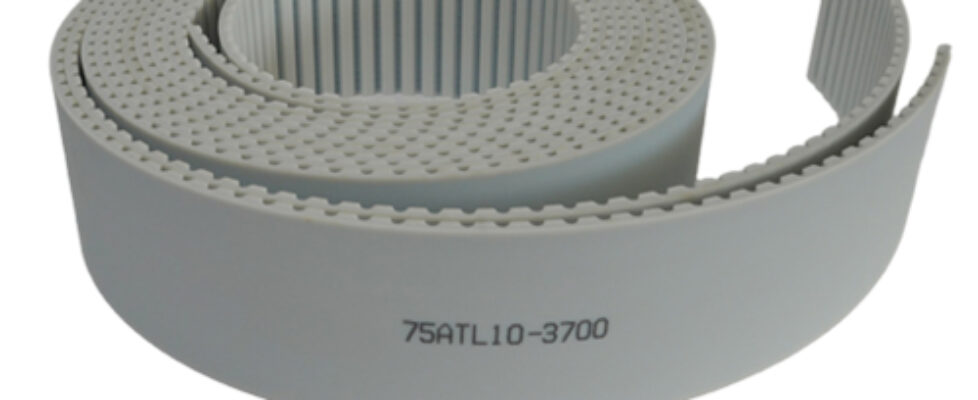
Choosing the right Open-ended Timing Belt is essential for achieving accurate, reliable, and efficient power transmission in linear and automated motion systems. First, consider the required belt width, pitch, length, and tooth profile to ensure compatibility with the pulley and drive system. The operating speed, load, positioning accuracy, and working environment should also be evaluated before selection.
Key Features to Consider
High dimensional accuracy for precise synchronous movement.
Strong tensile performance for stable operation under load.
Excellent flexibility for continuous movement and complex routing.
Good wear resistance for extended service life.
Reliable tooth engagement to minimize slipping and maintain synchronization.
Shanghai Puteken Transmission System Co., Ltd. provides quality Open-ended Timing Belt solutions for automation, conveying, and linear motion applications, helping customers achieve dependable and efficient equipment performance.
In today’s rapidly evolving industrial landscape, flexibility and customization are more important than ever. As businesses strive to optimize their operations and adapt to unique production requirements, the need for versatile power transmission solutions has grown significantly. Among the many options available, the Open-ended Timing Beltstands out as a highly adaptable and efficient choice for custom applications. Whether you are designing a new piece of machinery, upgrading an existing system, or seeking a solution for a non-standard drive configuration, open-ended timing belts offer unmatched versatility and performance.
At Shanghai Puteken Transmission System Co., Ltd., we understand that every application is unique. Our extensive experience in the transmission system industry has shown us that a one-size-fits-all approach rarely delivers the best results. Instead, we believe in providing our clients with tailored solutions that meet their specific needs.
What is an Open-ended Timing Belt?
It is essential to understand what an Open-ended Timing Belt is and how it differs from traditional endless timing belts. As the name suggests, an open-ended timing belt is manufactured in a continuous length and is not joined at the ends. This design allows users to cut the belt to any desired length, making it ideal for applications where standard belt sizes do not fit or where frequent adjustments are required.
Open-ended timing belts are typically constructed from high-quality materials such as polyurethane or rubber, reinforced with tensile cords made from steel, fiberglass, or aramid fibers. This robust construction ensures excellent strength, flexibility, and resistance to stretching, making these belts suitable for demanding and dynamic environments.
Key Features of Open-ended Timing Belt
The Open-ended Timing Belt is engineered to deliver superior performance and adaptability in a wide range of applications. Some of its key features include:
Customizable Length: The belt can be cut to any required length, providing maximum flexibility for custom applications.
High Tensile Strength: Reinforced with strong cords, the belt can handle high loads without elongation.
Precise Tooth Profile: The toothed design ensures accurate power transmission and synchronization.
Easy Installation: Open-ended belts can be installed without dismantling machinery, reducing downtime.
Low Maintenance: With proper installation, open-ended timing belts require minimal maintenance compared to traditional belts.
Material Versatility: Available in various materials to suit different environmental and operational requirements.
Advantages of Using Open-ended Timing Belt
Transitioning to an Open-ended Timing Belt offers numerous advantages for businesses seeking to optimize their power transmission systems. Let’s explore some of the most significant benefits:
1. Maximum Flexibility for Custom Applications The primary advantage of the open-ended timing belt is its ability to be cut to any length. This feature is invaluable for custom machinery, conveyor systems, and applications where standard belt sizes are not suitable. Whether you need a short belt for a compact device or a long belt for an extended conveyor, open-ended timing belts provide the flexibility you need.
2. Simplified Installation and Replacement Unlike endless belts, which often require the disassembly of machinery for installation, open-ended timing belts can be easily fitted and replaced without major disruptions. This ease of installation translates to reduced downtime and lower labor costs.
3. Enhanced Design Freedom Engineers and designers appreciate the creative freedom that open-ended timing belts offer. They can be used in linear drives, reciprocating systems, and other non-standard configurations that would be challenging or impossible with traditional belts.
4. Cost-effective Solution By allowing users to cut belts to the exact length required, open-ended timing belts help minimize waste and reduce inventory costs. There is no need to stock multiple belt sizes, as a single roll can serve a variety of applications.
5. Reliable Performance Open-ended timing belts are designed for precise power transmission and synchronization. Their robust construction ensures consistent performance, even in demanding environments.
6. Versatility Across Industries From automation and robotics to packaging and material handling, open-ended timing belts are used in a wide range of industries. Their adaptability makes them a go-to solution for engineers and maintenance professionals.
Applications of Open-ended Timing Belt
The versatility of the Open-ended Timing Belt makes it an ideal choice for various industries and applications. Some common uses include:
Linear Drives Open-ended timing belts are widely used in linear drive systems, where precise movement and positioning are required. These systems are common in CNC machines, 3D printers, and automated assembly lines.
Conveyor Systems In conveyor applications, open-ended timing belts provide the flexibility to create custom-length conveyors for material handling, packaging, and sorting operations.
Automated Gates and Doors Open-ended timing belts are used in the automation of gates, doors, and barriers, providing smooth and reliable motion control.
Robotics Robotic systems often require custom belt lengths for unique movement patterns and configurations. Open-ended timing belts offer the adaptability needed for these advanced applications.
Printing and Textile Machinery In printing presses and textile machines, open-ended timing belts ensure precise movement and synchronization of various components.
Medical Equipment Open-ended timing belts are used in medical devices and laboratory equipment, where custom configurations and precise motion control are essential.
How to Select the Right Open-ended Timing Belt?
Choosing the appropriate Open-ended Timing Belt for your application involves several considerations. Here are some key factors to keep in mind:
1. Application Requirements Assess the specific needs of your system, including the type of motion (linear or rotary), load requirements, and desired belt length.
2. Belt Profile and Pitch Open-ended timing belts are available in various tooth profiles and pitches. The choice of profile and pitch affects the belt’s load capacity, flexibility, and compatibility with pulleys.
3. Material Selection Select a belt material that suits your operating environment. Polyurethane belts offer excellent wear resistance and chemical stability, while rubber belts provide flexibility and shock absorption.
4. Reinforcement Cords The type of tensile cord (steel, fiberglass, aramid) determines the belt’s strength and resistance to stretching. Choose the appropriate reinforcement based on your load and speed requirements.
5. Environmental Conditions Consider factors such as temperature, humidity, exposure to chemicals, and presence of dust or debris. Choose a belt material and construction that can withstand these conditions.
6. Pulley Compatibility Ensure that the belt’s tooth profile matches the pulleys in your system. Mismatched profiles can lead to premature wear and reduced efficiency.
7. Customization Options Some applications may require special coatings, perforations, or other custom features. Work with a reputable supplier like Shanghai Puteken Transmission System Co., Ltd. to explore customization options.
Step-by-Step Guide to Selecting the Right Open-ended Timing Belt
To simplify the selection process, follow these steps:
Step 1: Define Your Application Clearly outline the purpose of the belt, the machinery involved, and the operational requirements.
Step 2: Gather Technical Specifications Collect data on load, speed, pulley sizes, center distances, and environmental conditions.
Step 3: Choose the Appropriate Belt Profile and Pitch Select a tooth profile and pitch that matches your pulleys and meets your load and speed requirements.
Step 4: Select the Right Material and Reinforcement Choose a belt material and tensile cord that offer the necessary strength, flexibility, and resistance to environmental factors.
Step 5: Determine Belt Length Measure the required belt length based on your system layout. Remember, open-ended belts can be cut to size, providing maximum flexibility.
Step 6: Consult with Experts Reach out to Shanghai Puteken Transmission System Co., Ltd. for expert advice and to explore customization options if needed.
Step 7: Install and Test Properly install the belt, ensuring correct tension and alignment. Conduct initial tests to verify performance and make any necessary adjustments.
Installation and Maintenance Tips
Proper installation and maintenance are essential for maximizing the lifespan and performance of your Open-ended Timing Belt. Here are some best practices:
Installation
Inspect Components: Check pulleys, shafts, and other components for wear or damage before installation.
Align Pulleys: Ensure pulleys are properly aligned to prevent uneven wear and tracking issues.
Tension Correctly: Apply the recommended tension to avoid slippage or excessive strain.
Secure Belt Ends: Use appropriate clamping or joining methods to secure the belt ends in place.
Cleanliness: Keep the installation area clean to prevent contamination.
Maintenance
Regular Inspections: Periodically check the belt for signs of wear, cracks, or fraying.
Monitor Tension: Re-tension the belt as needed to maintain optimal performance.
Replace When Necessary: Replace the belt at the first sign of significant wear or damage.
Lubrication: While open-ended timing belts are generally maintenance-free, ensure that adjacent components are properly lubricated to reduce overall system friction.
Why Choose Shanghai Puteken Transmission System Co., Ltd. for Your Open-ended Timing Belt Needs?
At Shanghai Puteken Transmission System Co., Ltd., we are dedicated to providing high-quality, reliable, and innovative power transmission solutions. Here’s why you should partner with us:
Expertise: Our team has extensive experience in designing and supplying open-ended timing belts for a wide range of industries.
Quality Assurance: We use only the finest materials and adhere to strict quality control standards.
Customization: We offer tailored solutions to meet your specific application needs. Technical Support: Our experts are available to provide guidance on selection, installation, and maintenance.
Global Reach: With a robust distribution network, we serve clients worldwide, ensuring timely delivery and support.
The Open-ended Timing Belt is a game-changer for industries seeking flexibility, customization, and reliable performance in their power transmission systems. Its unique design, robust construction, and adaptability make it the preferred choice for a wide range of custom applications. By partnering with Shanghai Puteken Transmission System Co., Ltd., you gain access to top-quality products, expert guidance, and unparalleled customer support.
Frequently Asked Questions (FAQ) About Open-ended Timing Belt
1. What is an Open-ended Timing Belt?
An Open-ended Timing Belt is a synchronous belt manufactured in a continuous length, allowing it to be cut to any desired size for custom applications.
2. What are the main advantages of using an Open-ended Timing Belt?
The main advantages include customizable length, easy installation, design flexibility, cost-effectiveness, reliable performance, and versatility across industries.
3. Can Open-ended Timing Belts be used in high-temperature environments?
Yes, depending on the material, open-ended timing belts can be designed to withstand a wide range of temperatures. Consult with the manufacturer for specific temperature ratings.
4. How do I determine the correct belt profile and pitch for my application?
The correct profile and pitch depend on your pulley design, load, and speed requirements. Our technical team at Shanghai Puteken Transmission System Co., Ltd. can assist you in making the right choice.
5. Are Open-ended Timing Belts suitable for food processing applications?
Yes, food-grade open-ended timing belts are available for applications requiring high hygiene standards.
6. How often should I replace my Open-ended Timing Belt?
Replacement intervals depend on the application, load, and operating conditions. Regular inspections are recommended, and the belt should be replaced at the first sign of significant wear or damage.
7. Can I get a custom-sized Open-ended Timing Belt from Shanghai Puteken Transmission System Co., Ltd.?
Absolutely. We offer customization services to provide open-ended timing belts in various sizes and specifications to meet your unique requirements.
8. What maintenance does an Open-ended Timing Belt require?
Open-ended timing belts are generally maintenance-free, but regular inspections and proper tensioning are recommended to ensure optimal performance.
9. How do I know if my Open-ended Timing Belt is installed correctly?
Proper installation involves aligning pulleys, applying the correct tension, securing the belt ends, and ensuring the belt is free from contamination. Our technical support team can provide detailed installation guidelines and assistance.
10. How can I order Open-ended Timing Belts from Shanghai Puteken Transmission System Co., Ltd.?
You can contact our sales team through our website or customer service hotline. We will assist you in selecting the right product and provide a competitive quote.