MCB Explained: How AC Miniature Circuit Breakers Keep Your Electrical System Safe!
In any electrical installation—whether residential, commercial, or industrial—safety and reliability are of paramount importance. Among the essential devices that ensure protection against electrical hazards, the MCB (Miniature Circuit Breaker) is one of the most widely used and effective components. Despite its compact size, the MCB plays a crucial role in preventing electrical overloads, short circuits, and electrical fires by automatically interrupting electrical flow when abnormal conditions occur.
In this increasingly electrified world, understanding how an MCB works and why it is indispensable in AC electrical systems is vital not only for electricians and engineers but also for homeowners and business owners alike. By acting as the first line of defense against electrical faults, the MCB safeguards your appliances, wiring, and most importantly, the lives of people interacting with these systems.
What is an MCB?
An MCB, or Miniature Circuit Breaker, is an automatically operated electrical switch designed to protect electrical circuits from damage caused by overload, short circuit, or electrical faults. It detects excess current caused by these faults and interrupts the circuit to prevent further damage.
The “miniature” aspect refers to the device’s physical size—an MCB is compact enough to be installed within electrical distribution boards and consumer units. This compactness makes it ideal for residential and light commercial systems, as it can handle typical household and business currents ranging from a few amperes to hundreds.
MCBs are reusable devices. Unlike fuses, which melt and need replacing after a fault, MCBs can be reset after tripping, making them more convenient and cost-effective for ongoing electrical safety.
How Does an MCB Work?
An MCB monitors electrical current continuously. When current exceeds the rated safe level, the MCB trips and opens its contacts, stopping the flow of electricity. The interruption prevents wiring overheating and potential fires.
Key Components of an MCB:
- Thermal element: Protects against overloads
- Magnetic element: Protects against short circuits
- Operating mechanism: Trips the circuit when either element activates
- Contacts: Open or close the circuit when tripped or reset
Here’s how these parts function together:
1.Overload Protection – Thermal Trip
When an overload current (slightly above the rated current but not a direct short) persists, the thermal bimetallic strip heats up. As it reaches a specific temperature, the strip bends, triggering the operating mechanism to open the circuit. The thermal trip allows for short delays, accommodating temporary surge currents, such as startup currents from motors or appliances.
2.Short Circuit Protection – Magnetic Trip
In the case of a sudden, large current spike, such as a direct short circuit, the magnetic coil generates a strong magnetic field that instantly actuates the operating mechanism, opening the circuit without delay.
Why is the MCB Important for Electrical Safety?
The MCB functions as a critical safeguard within an electrical installation, and the reasons for its importance include:
1. Preventing Electrical Fires
Electrical fires often originate from overloaded wiring or short circuits, which generate heat strong enough to ignite surrounding materials. The MCB interrupts these fault conditions rapidly, preventing fire hazards.
2. Protecting Electrical Equipment and Appliances
Sensitive electronics and appliances can be damaged by excess current. The MCB prevents damage by disconnecting the circuit when unsafe conditions arise.
3. Avoiding Human Injury
Electric shocks and accidents are preventable through effective circuit interruption. MCBs protect users and technicians by cutting off dangerous currents.
4. Simplifying Fault Diagnosis and Maintenance
When a circuit breaker trips, it signals a fault within the circuit, aiding technicians in locating and resolving electrical problems efficiently.
5. Reusability and Convenience
Unlike traditional fuses, MCBs can be reset quickly after a trip without replacing parts, minimizing downtime and cost.
Types of MCBs
Understanding the types and ratings of MCBs is crucial when selecting the best MCB for your installation. MCBs vary by:
1. Current Rating
Indicates the maximum continuous current the MCB can handle without tripping, ranging typically from 1 A to 125 A or more.
2. Poles
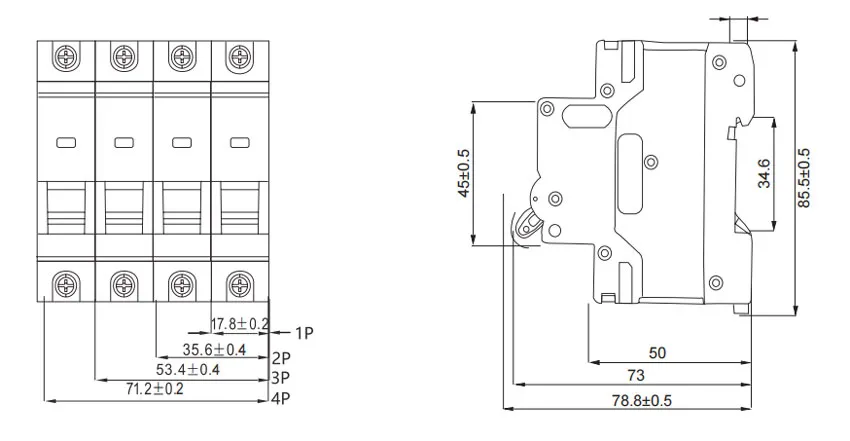
MCBs come in different pole configurations, depending on the phases they protect: single-pole (1P), double-pole (2P), triple-pole (3P), and four-pole (4P).
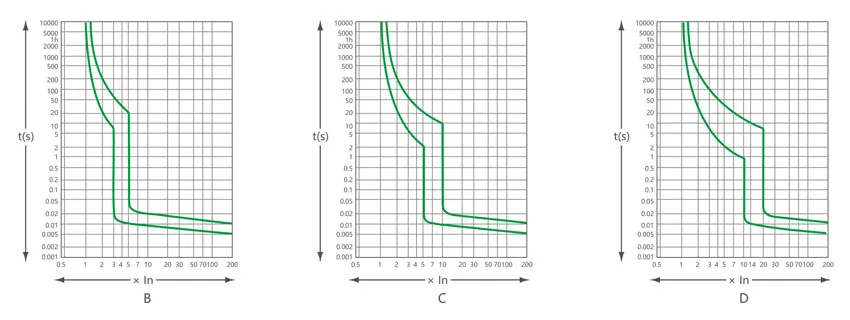
3. Tripping Characteristics (Curve Types)
- Type B: Trips between 3 to 5 times the rated current; suitable for residential and light commercial loads with low inrush currents.
- Type C: Trips between 5 to 10 times the rated current; used for commercial or industrial loads with moderate inductive loads.
- Type D: Trips between 10 to 20 times the rated current; designed for heavy inductive loads like motors and transformers.
Choosing the right curve ensures the MCB does not trip unnecessarily due to inrush currents but will respond quickly to dangerous fault conditions.
Installing MCBs: Best Practices
Installation quality directly affects safety and performance. Here are critical practices to follow:
1. Choose the Correct Rating
Match the MCB’s current and breaking capacity to the circuit load and potential fault current. Oversized MCBs won’t trip timely, while undersized ones cause nuisance trips.
2. Proper Mounting
Install MCBs on appropriately rated DIN rails within distribution boards designed for your environment (indoor/outdoor, moisture levels).
3. Ensure Tight Terminal Connections
Loose wiring can cause overheating and arcing. Use correct tools and torque values for terminal screws.
4. Maintain Clear Labeling
Label each breaker clearly for easy identification during maintenance or emergencies.
5. Regular Testing
Periodically trip MCBs manually to ensure their operating mechanisms function correctly.
MCB in Modern Electrical Systems
Modern electrical systems often include smart and interconnected components. MCB integrate with these systems via:
- Remote monitoring: Advanced MCBs can communicate status to central panels or monitoring software, enabling predictive maintenance.
- Combination with Residual Current Devices (RCDs): MCBs can be combined with RCDs to provide both overload/short circuit and earth fault protection.
- Integration with Renewable Energy Systems: In solar or battery systems, dedicated MCBs protect DC and AC sides, ensuring comprehensive circuit protection.
At Wenzhou Typle New Energy Technology Co., Ltd., we develop MCB products compatible with evolving smart grid technologies and renewable energy configurations.
Troubleshooting Common MCB Issues
Though reliable, MCBs can occasionally experience problems:
Problem 1: Nuisance Tripping
Possible causes include overloads, inrush currents, or wiring faults. Verify load sizes, select proper tripping curves, and inspect circuit wiring.
Problem 2: Failure to Trip
This is serious and could indicate mechanical failure or internal faults. Replace defective breakers immediately.
Problem 3: Warm or Burnt MCB
Indicates poor connections or overload. Tighten wiring and ensure the MCB is rated correctly.
Problem 4: Breaker Won’t Reset
Sometimes caused by persistent faults or damaged breakers. Troubleshoot the circuit and replace if necessary.
Why Choose Wenzhou Typle New Energy Technology Co., Ltd. MCBs?
Our company specializes in manufacturing premium MCBs engineered to deliver:
- Precision engineering conforming with IEC 60898 and IEC 60947-2 standards
- High breaking capacities suitable for a wide range of applications
- Durable materials for superior mechanical and electrical endurance
- Compact designs suitable for residential, commercial, and industrial boards
- Comprehensive customer support and technical guidance
By opting for Wenzhou Typle New Energy Technology Co., Ltd. MCBs, you ensure the safety, reliability, and longevity of your electrical installations.
Every electrical system demands reliable protection against faults and overloads. The MCB stands as a fundamental device that balances safety, convenience, and performance. Understanding its operation, selecting the correct type, and maintaining it properly ensures that your electrical panels function securely and efficiently.

Frequently Asked Questions (FAQs)
Q1: What is the difference between an MCB and a fuse?
An MCB can be reset and reused after a fault, whereas a fuse must be replaced after it blows. MCBs also provide more precise and reliable protection.
Q2: Can I install an MCB myself?
Installation should be performed by a qualified electrician to ensure safety and compliance with electrical codes.
Q3: How often should MCBs be tested?
Monthly visual inspections and manual trip tests every 6 to 12 months are recommended.
Q4: What happens if the MCB rating is too high for my circuit?
An oversized MCB may fail to protect your circuit, allowing damage or fire risks.
Q5: Can MCBs work with renewable energy systems?
Yes, specific MCBs are designed for both AC and DC circuits in renewable energy setups.
Q6: How long do MCBs last?
Typically, MCBs last 10 to 20 years depending on usage and environmental conditions.