Industrial Mini PC Buying Guide: Key Features to Consider in 2026!

The evolution of industrial automation and edge computing is accelerating at an unprecedented pace. As factories, laboratories, warehouses, and production lines across the world embrace digital transformation, the demand for reliable, compact computing solutions grows ever stronger. Industrial mini PCs have become central to this evolution. Their small footprint, robust construction, and high performance make them favorites for control cabinets, smart kiosks, machine vision, AI inference at the edge, and Industrial IoT applications. But as technology races forward, choosing the right industrial mini PC in 2026 is more complex than ever.
At ValanoIPC, we believe that making informed decisions is the cornerstone of future-proof, efficient operations. Whether you’re upgrading legacy equipment, planning a new installation, or scaling up smart factory infrastructure, this industrial mini PC buying guide lays out the critical features, industry trends, and practical tips you need to consider. We aim to arm facility managers, engineers, and procurement teams with actionable insights to select a system that maximizes uptime, productivity, and ROI—even in the most demanding environments.
The Role of the Industrial Mini PC in Today’s Smart Industry
First, let’s address why the industrial mini PC has become indispensable. Traditional desktop PCs are simply not designed for the rigors of harsh industrial environments characterized by vibrations, dust, fluctuating temperatures, and humidity. Meanwhile, embedded PLCs and legacy controllers—though stable—often lack versatility, processing power, and modern connectivity.
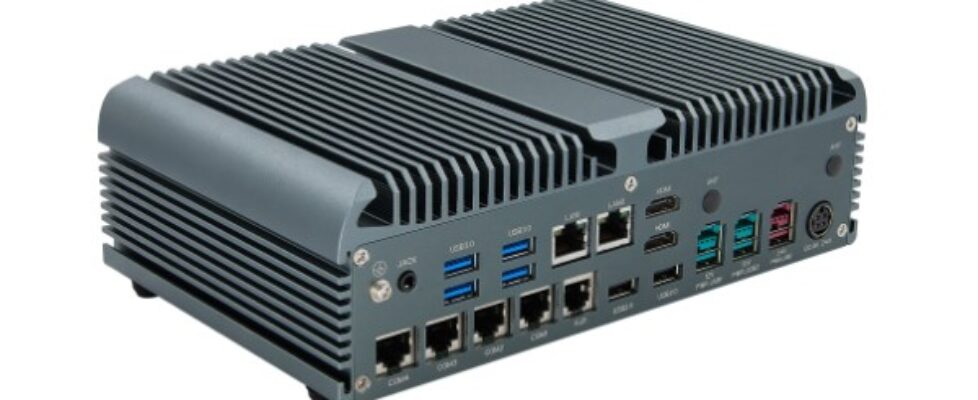
Enter the industrial mini PC: a compact, energy-efficient computer, often not much larger than a paperback book, but tough enough to thrive on the factory floor. With the latest processors, multiple network interfaces, seamless connectivity, and support for key industrial protocols, an industrial mini PC brings robust IT computing power right to the edge of operations—bridging the gap between OT (Operational Technology) and IT.
Why Invest in an Industrial Mini PC Now?
The year is 2026, and the landscape is changing rapidly. Industry 4.0 technologies are standard. Real-time analytics, AI-powered quality control, and seamless machine-to-machine (M2M) communication are table stakes in advanced facilities. If you’re not digitizing now, you’re at risk of falling behind.
Industrial mini PCs are at the core of these transformation efforts by:
- Enabling edge computing and local processing, lowering latency and bandwidth costs
- Replacing legacy PLCs with more flexible, software-driven systems
- Powering smart cameras, digital displays, HMIs, and mobile robots
- Supporting advanced computational tasks, such as machine vision and AI
- Providing reliable gateways for IoT sensors and actuators
However, not all industrial mini PCs are created equal. Selecting the right system is critical—to ensure compatibility, minimize downtime, and maximize long-term value.
Key Features to Consider When Buying an Industrial Mini PC
To aid your decision-making, let’s break down the essential features and options that matter most in 2026:
1. Processing Power and Architecture
Performance is king, especially as workloads grow more data-heavy with AI, analytics, and computer vision applications. Consider:
- CPU Generation and Type: Look for the latest Intel (Alder Lake/Arrow Lake) or AMD (Zen 4+) embedded CPUs. ARM-based mini PCs are also on the rise for ultra-low power edge applications.
- Core Count and Threads: Multi-core CPUs with SMT (simultaneous multithreading) support enable parallel tasks—critical for AI workloads and multitasking HMI systems.
- Integrated GPU or Dedicated Graphics: Applications such as machine vision and real-time rendering may require powerful integrated or dedicated GPUs, including NVIDIA Jetson, AMD Radeon, or integrated Xe/VEGA graphics.
2. Memory and Expandability
As industrial software grows more complex, memory requirements rise. Key considerations:
- RAM: Start with at least 8GB DDR5 for basic tasks; opt for 16GB or 32GB for AI, analytics, and virtualization.
- Expandable Slots: Modular mini PCs allow field upgrades to RAM, storage, and sometimes even CPU or expansion cards, which significantly future-proofs your investment.
3. Storage Options
Solid-state storage is now standard for speed, durability, and reliability.
- M.2 NVMe SSDs: Ensure the mini PC supports the latest NVMe drives for high-speed data access.
- Support for Multiple Drives: RAID 1 mirroring or RAID 5/10 configurations offer data protection in critical applications.
- Storage Class Memory/New Options: Some cutting-edge industrial mini PCs now support SCM or hybrid drives for even more performance.
4. Connectivity and I/O Ports
In industrial settings, versatile connectivity is essential:
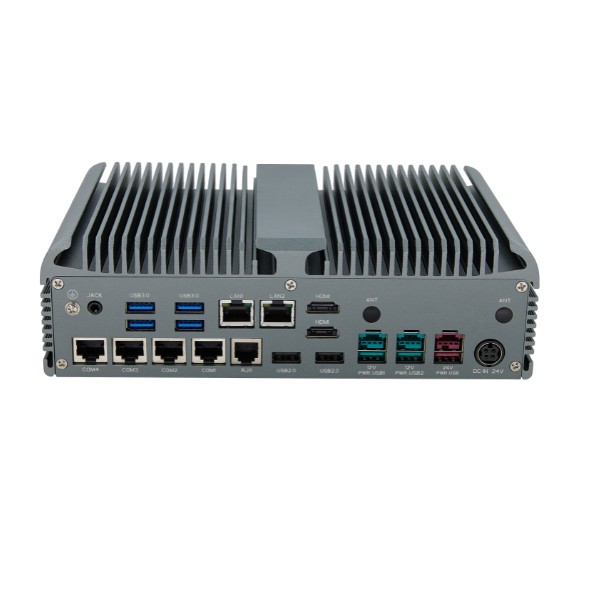
- Serial Ports (RS232/RS485/RS422): Vital for legacy sensors and machine feedback.
- USB (Type-A, Type-C, 3.2/4.0): Required for modern peripherals, firmware updates, and local displays.
- LAN Ports: Multiple Gigabit or 2.5G/10G Ethernet ports are necessary for redundant networking or segmented LANs.
- Wireless Options: Integrated Wi-Fi 6E/7 and Bluetooth 5.x simplify deployment in sparse or mobile environments. For remote/m2m venues, look for optional 5G/LTE modems.
- GPIO, CAN bus, and DIO: For industrial control and automation integration.
5. Ruggedness and Environmental Tolerance
An industrial mini PC must withstand physical stresses:
- Operating Temperature Range: Typical models range from -20°C to +70°C; extreme models go beyond.
- Ingress Protection (IP) Ratings: IP65/IP67-rated chassis resist dust and water ingress, enabling use in wash-down or outdoor environments.
- Shock and Vibration Certification: IEC or MIL-STD-810G ratings certify resistance to physical impacts.
6. Mounting and Form Factor
Deployment flexibility matters:
- VESA, DIN-Rail, or Wall Mount: Depending on cabinet space or mobility needs.
- Small Form Factor: Mini PCs come in ultra-small “palm-size” formats or compact box types for tight spaces.
- Fanless Design: Eliminates one of the most failure-prone components; preferred for dusty or sealed environments.
7. Power Input and Management
Power stability is critical:
- Wide Voltage Support: Ranging from 9V to 36V or even 48V to handle varying industrial supply conditions.
- Overvoltage and ESD Protection: Prevents board and data corruption.
- UPS or Power Management Options: Optional backup or remote power control for uninterrupted operation.
8. Operating System and Software Compatibility
Check OS and integration:
- Windows 11 IoT, Linux Distros, Ubuntu Core: Supported natively on most modern mini PCs; ARM-based devices may require specific distributions.
- Trusted Platform Module (TPM): For OS fleet management, security, and device provisioning.
- Remote Management: Intel vPro/AMT and alternatives allow for headless updates and troubleshooting.
9. Industrial Certifications
Don’t overlook legal and compliance needs:
- EMC, CE, FCC, and UL Certifications: Required for sale in most global markets.
- Industry Specific: Medical (EN60601), Transportation (EN50155), Marine, Oil/Gas, and others.
10. Security and Longevity
Cybersecurity and lifecycle matter now more than ever:
- Physical Security: Lockable enclosures or mounting.
- Integrated TPM and Secure Boot: Hardware-based security enforcement.
- Long-Term Availability: Industrial mini PCs often offer 5- or 10-year lifecycle support, ensuring you won’t have to redesign production lines soon.
Additional Key Trends in Industrial Mini PCs for 2026
The above features are baseline essentials. Yet, several trends are shaping the product category as we advance:
- AI at the Edge: More mini PCs now ship with integrated AI accelerators (e.g., Intel Movidius, NVIDIA Jetson, Google Coral) to handle image recognition, anomaly detection, and process optimization locally, without needing to go to the cloud.
- Modular Expansion: Swappable expansion modules for additional LAN/serial ports, fieldbus cards, or even custom I/O boards directly in the field.
- Zero-Touch Provisioning: Cloud-based deployment and monitoring tools to simplify remote management and security patching.
- Green Computing: Enhanced focus on power efficiency, as companies walk the line between computing power and energy costs.
- 5G/Edge Connectivity: Built-in 5G modules for super-fast always-on connectivity in mobile or remote installations.
Comparing Industrial Mini PC Models
When comparing models, go beyond specification sheets. Consider the operational context:
- Environment: Will the system live in an air-conditioned control room or on the production line subject to oils and dust?
- Performance Needs: Does it need to run a lightweight HMI or perform real-time vision analytics?
- Longevity and Support: Is long-term availability, global support, and RMA turnaround important in your business?
- Integration: Will it be part of a larger system, and does it need to support specific legacy devices?
It’s always helpful to build a requirements checklist tailored to your intended use—then consult with an industrial computing partner like ValanoIPC for a perfect match.
Also Read – Why Every Modern Factory Needs an Industrial Mini PC for Peak Performance!
Practical Use Cases for Industrial Mini PCs
To show the true range and flexibility of the industrial mini pc, here are some typical deployment scenarios ValanoIPC has supported:
- Machine Vision for Quality Control: Mini PCs with dedicated GPUs connected to high-res cameras inspect products at line speed, flagging defects in real time.
- Edge Controller for AGVs/Robots: Lightweight, fanless mini PCs provide navigation, process orders, and handle real-time safety checks on mobile robots.
- IoT Data Gateway: Deployed at the edge, a mini PC aggregates data from various sensors and relays actionable information locally or to the cloud.
- Secure Remote Monitoring: Rugged mini PCs installed on drilling rigs or remote substations transmit telemetry for predictive maintenance over 5G.
- Digital Kiosk or Signage: Fanless, splashproof mini PCs power interactive displays in harsh, public-facing environments.
How ValanoIPC Delivers Superior Industrial Mini PCs
At ValanoIPC, our industrial mini pc solutions are the result of years of innovation guided by real-world challenges. Every system we design is engineered to outlast, outperform, and out-flex competitors. Here’s what sets our offerings apart:
- Comprehensive Customization: From extra I/O to private-label branding, we build to your needs—not a stock template.
- Global Certifications: All products meet or exceed CE, FCC, and relevant industry standards.
- Dedicated Support: Our technical team provides help from pre-sales guidance to long-term service, including on-site support when needed.
- Extended Lifecycle: We guarantee availability and part continuity for up to 10 years—which matters as you scale your operations.
- Checklist: How to Select Your Next Industrial Mini PC
Define application and performance requirements (CPU, RAM, storage, etc.)
- Evaluate environmental and space constraints (temperature, IP rating, form factor)
- List necessary I/O and network connections
- Confirm required certifications and compliance needs
- Identify desired software stack (OS, drivers, security, remote management)
- Prioritize support, warranty, and lifecycle needs
- Request demo or proof-of-concept units from your trusted supplier
Making the right choice for your next industrial mini pc could define your facility’s reliability, scalability, and overall efficiency for years to come. The stakes are higher in 2026—applications are smarter, the edge is more powerful, and security is mission-critical. By understanding the key features, environmental considerations, and technology trends, you position your organization at the forefront of industrial digital transformation.

FAQ: Industrial Mini PC
1. What makes an industrial mini pc different from a standard commercial mini pc?
An industrial mini pc is designed for harsh environments with features like wide temperature support, industrial-grade power and I/O, shock/vibration resistance, and long lifecycle support. Commercial mini PCs, conversely, are optimized for office or home environments and lack these extra protections.
2. Can I use an industrial mini pc outdoors?
Many industrial mini pcs are rated for outdoor or semi-outdoor use (with proper IP ratings). Always verify the system’s IP code and temperature range, and consider environmental protection or additional enclosures if exposure is extreme.
3. Are industrial mini PCs fanless? Why does it matter?
Many industrial mini PCs feature fanless designs, utilizing heatsinks or thermally conductive cases. Fanless operation prevents dust ingress, reduces maintenance, and minimizes points of failure—a significant advantage in dirty or remote environments.
4. What operating systems can run on an industrial mini pc?
Most industrial mini PCs support Windows 11/10 IoT Enterprise and popular Linux distributions. ARM-based models may have restricted OS support. Some models also support lightweight RTOS (real-time OS) or proprietary software for special applications.
5. Is it possible to expand or upgrade an industrial mini pc after deployment?
Some models allow for memory, storage, I/O, and even CPU upgrades, though others are sealed for maximum ruggedness. Always check expansion possibilities at the purchasing stage to future-proof your investment.
6. How long can I expect an industrial mini pc to last in the field?
Designed to outlast typical consumer systems, most quality industrial mini PCs are rated for 5–10 years of 24/7 use, and many vendors (like ValanoIPC) offer component continuity for over a decade, meeting industrial upgrade cycles.
7. Does an industrial mini PC come with network security?
Modern models often include hardware TPM modules, secure boot, physical port locks, and support for the latest OS security updates. Check your vendor’s security credentials and update policy when integrating into sensitive environments.
8. What kind of I/O can I expect on an industrial mini pc?
Typical I/O includes serial ports, multiple LANs, USB 3.2/4.0, HDMI/DisplayPort, CAN bus, GPIO, and sometimes wireless options or fieldbus modules. Customization is available for specialized protocols.
9. Are there energy-efficient options among industrial mini PCs?
Yes—many models use ultra-low power CPUs (such as Intel Atom or ARM) and can be configured to balance performance and power use, important for off-grid or battery-powered installations.
10. What are the support options for ValanoIPC industrial mini PCs?
ValanoIPC offers global technical support, advance replacement warranties, on-site assistance when required, and flexible service contracts—ensuring your operations remain uninterrupted.