How an IGBT Liquid Cold Plate Enhances Power Module Performance and Longevity!
Modern power electronics are the unsung heroes behind the machines and technologies that make our world smarter, more efficient, and more powerful — from electric vehicles (EVs) and industrial robotics to renewable energy systems and mass transit infrastructure. At the heart of these systems lie Insulated Gate Bipolar Transistors (IGBTs), which are widely used for their high efficiency and fast-switching capabilities. However, one of the perennial challenges that designers and engineers face is managing the intense heat generated by IGBTs, especially under continuous or heavy load conditions—a problem effectively addressed by an IGBT liquid cold plate, which ensures optimal thermal management and reliable system performance.
Without sufficient thermal management, IGBTs can overheat, leading to performance degradation, efficiency losses, and even catastrophic failure. This is where IGBT liquid cold plates come in — precision-engineered cooling components that drastically improve temperature control, enhance reliability, and contribute to longer lifespans of electronic systems.
At Tone Cooling Technology Co., Ltd., we specialize in advanced thermal solutions tailored to high-power applications. Our IGBT liquid cold plate designs are the result of years of research, development, and collaboration with power electronics manufacturers across the globe.
What is an IGBT Liquid Cold Plate?
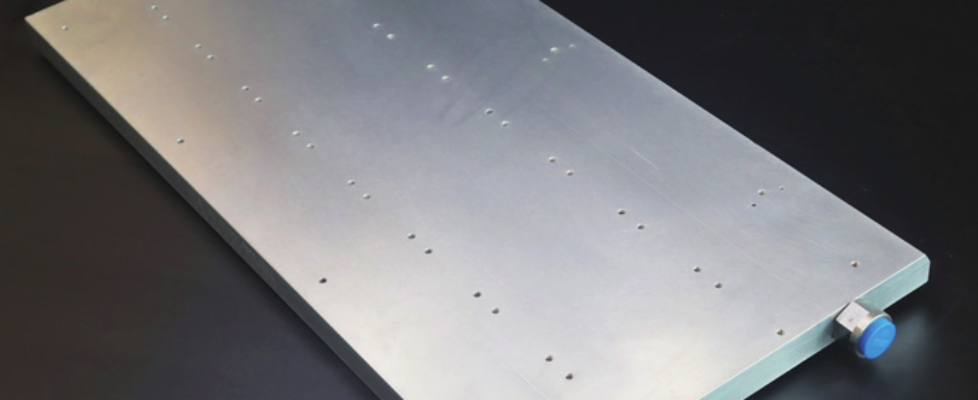
An IGBT liquid cold plate is a heat management device designed specifically to remove heat from an IGBT power module using liquid cooling techniques. It functions by providing an optimized thermal interface between the IGBT module and a liquid-cooled heat exchanger. Coolant flows through precision-engineered internal channels or microstructures within the cold plate, which are in close thermal contact with the IGBT module mount.
The primary objective is to draw heat away quickly and effectively, minimizing the junction temperature of IGBTs and maintaining safe operation even under high power loads.
In comparison to air-cooled heat sinks, liquid cold plates can transfer significantly more heat within a smaller footprint, making them ideal for power-dense systems like:
- High-power inverters
- EV traction systems
- Grid-scale converters
- HVAC control modules
- Railway propulsion systems
- Induction heating and welding systems
The Challenge of Cooling IGBT Power Modules
IGBTs are widely used in medium- to high-voltage applications for their ability to switch large currents with minimal losses. However, they are not immune to heat generation. To tackle these challenges, an IGBT liquid cold plate is often employed. Here are the key problems encountered in the cooling of IGBT modules:
1. High Heat Generation
Every time an IGBT switches, it generates heat — both from conduction and switching losses. In high-frequency applications, this can rapidly lead to a thermal overload without adequate cooling.
2. Localized Hotspots
IGBT modules often feature asymmetrical power distribution, creating hotspots even when the average thermal load appears manageable. Local overheating can cause thermal fatigue and premature device failure.
3. Limited Airflow in Compact Designs
Modern systems are increasingly compact, which restricts airflow and limits the feasibility of fan-based cooling. As a result, active liquid cooling becomes the only option.
4. Industry Standards and Reliability Expectations
Sectors like automotive, aerospace, and renewable energy energy demand long-term reliability, often in harsh environments. Keeping IGBT modules at stable operating temperatures over a product’s lifecycle is critical.
Why Choose an IGBT Liquid Cold Plate for Thermal Management?

Introducing IGBT liquid cold plates into your cooling design can solve most of the traditional thermal limitations of high-performance power systems. Here’s how:
1. Superior Heat Transfer Efficiency
Liquid has a much higher specific heat capacity and thermal conductivity than air. Cold plates can remove 5 to 10 times more heat compared to traditional fin-based solutions.
2. Compact Size, Higher Power Density
Because of the improved heat transfer, systems can be miniaturized while still managing the same or even greater power levels, thereby enhancing the power-per-volume metric.
3. Even Thermal Distribution
Advanced channel designs within the IGBT liquid cold plate ensure even temperature gradients, reducing thermal cycling stress and improving module reliability.
4. Extended Component Lifespan
Maintaining components below specified junction temperatures can extend the mean time between failures (MTBF) considerably, reducing maintenance costs and downtime.
5. Customizable Design Flexibility
Cold plates can be tailored to fit custom PCB layouts, mounting configurations, and flow requirements, making them an ideal choice for proprietary power systems.
Key Design Features of a High-Performance IGBT Liquid Cold Plate
Designing an IGBT liquid cold plate is a sophisticated process that requires managing fluid dynamics, material science, and thermal analysis. At Tone Cooling Technology Co., Ltd., our solutions are characterized by:
A. Optimized Flow Channels
Carefully designed micro-channels, jet impingement, or serpentine patterns ensure uniform heat removal across the IGBT baseplate.
B. High Thermal Conductivity Materials
We use high-quality aluminum, copper, or composite materials depending on your application. Copper provides the best thermal conductivity, while aluminum offers excellent weight-to-performance value.
C. Secure Sealing Structures
Cold plates include leak-proof gaskets, O-rings, or welded enclosures to protect against coolant ingress into sensitive components.
D. Pressure Drop Engineering
Careful modeling ensures optimal pressure drop across the plate, allowing efficient integration into low-power or high-flow cooling systems.
E. Mounting Compatibility
Our cold plates are pre-configured to match popular IGBT module footprints from leading manufacturers like Infineon, Mitsubishi, ON Semiconductor, and Fuji Electric, including half-bridge, full-bridge, and 6-pack modules.
Real-World Applications for IGBT Cold Plates

From enhancing the lifespan of mission-critical drives to reducing energy loss in power delivery systems, liquid cooling has real-world benefits across multiple verticals:
1. Electric Vehicles (EVs)
IGBTs in inverters and motor drives experience high transient loads. Liquid cold plates ensure cooling consistency regardless of vehicle conditions, enabling better acceleration, range, and battery efficiency.
2. Renewable Energy
Solar and wind inverters operate under varying loads continuously. An IGBT liquid cold plate allows these systems to remain stable without fans, helping maintain high conversion efficiency.
3. Rail Transport
Metro and high-speed trains rely on IGBT modules for propulsion and braking systems. These systems demand zero tolerance for failure, making advanced liquid cooling mandatory.
4. Industrial Automation
Robotic arms, CNCs, and power drives use high-frequency switching to maintain speed and torque control. Proper thermal management reduces downtime and increases equipment precision.
Tone Cooling Technology: Your Partner in Customized Cooling Solutions
At Tone Cooling Technology Co., Ltd., we bring more than just off-the-shelf solutions to the table. We are a development partner, offering tailored IGBT liquid cold plates that match your exact performance requirements, form factors, and budget.
✅ Customized Designs
We create precision CNC-machined cold plates optimized for your IGBT layout and coolant flow requirements. CAD models and thermal simulations are available during the design phase.
✅ Global Standards Compliance
Our products comply with international standards for electrical and mechanical compatibility, including RoHS, CE, ISO 9001, and automotive-grade QA systems.
✅ Fast Prototyping and Mass Production
From low-volume R&D projects to mass production for automotive systems, our flexible production lines accommodate any project scale with quick turnaround times.
✅ Support and Co-Development
Our in-house thermal engineers are ready to collaborate with your hardware teams, helping you integrate the best cooling solution from the start of your design journey.
Case Study: EV Inverter Cooling Upgrade
A Tier 1 EV manufacturer approached Tone Cooling looking to improve thermal stability in its inverter modules, which use 1200V, 200A IGBT blocks. After switching from a conventional heat sink to a Tone Cooling liquid cold plate:
- Max junction temperature dropped by 28°C
- Switching efficiency improved by 7%
- Cooling system weight reduced by 15%
- Projected IGBT lifespan increased by 35%
The solution enabled them to achieve higher torque output under load and meet operational targets for their next-gen EV platform.
As power electronics continue to evolve, the demand for efficient, compact, and reliable thermal management only intensifies. Using an IGBT liquid cold plate is not just a means to prevent overheating—it’s a strategic technology investment that enhances performance, extends lifespan, and minimizes failure risks in high-stakes applications.
FAQ:
❓ Q1. What coolant is typically used in liquid cold plates?
Common coolants include deionized water, glycol-water mixtures (e.g., 50/50 EGW), or specialized dielectric fluids for high-voltage environments.
❓ Q2. Can your cold plates be used with third-party IGBT modules?
Yes. We offer both universal and custom-mounting hole patterns supporting common modules from brands like Infineon, Fuji, Semikron, Microsemi, and more.
❓ Q3. What is the typical pressure rating for these cold plates?
Our standard cold plates operate at up to 0.5 MPa (5 bar), but high-pressure models up to 1.2 MPa are available upon request.
❓ Q4. What are the most common materials used in IGBT cold plates?
We manufacture plates using aluminum, copper, and composite alloys, depending on thermal performance, weight, and cost considerations. Copper offers superior thermal performance, while aluminum provides weight advantages.
❓ Q5. Can I request a dual-flow or serpentine channel layout?
Absolutely! We tailor the internal flow path—serpentine, pin-fin, jet-impingement, or parallel-channel—based on your cooling needs and flow rate.
❓ Q6. How do I know a cold plate will fit my application?
Tone Cooling provides detailed technical drawings, 3D models, and simulation data to ensure perfect integration before manufacturing.
❓ Q7. Do you provide quick prototypes with testing validation?
Yes. We offer rapid prototyping services, complete with CFD testing, flow analysis, and thermal characterization upon request.