Maximize Accuracy and Efficiency with a High-Quality Electronic Balance!
In today’s data-driven and precision-oriented scientific landscape, achieving both accuracy and efficiency is no longer optional—it’s a fundamental requirement. Laboratories, research institutions, quality control departments, and production facilities are all under immense pressure to deliver rapid, reproducible, and dependable results. Yet at the core of these operations lies a seemingly simple yet critically important tool: the Electronic Balance.
Ningbo Develo Precision Mac Co., Ltd., a trusted name in laboratory and industrial weighing solutions, proudly offers a comprehensive range of advanced Electronic Balances designed to meet and exceed the exacting demands of modern science and industry. With cutting-edge features, unparalleled build quality, and regulatory compliance in mind, our electronic balances are engineered not only to measure—but also to empower.
What Is an Electronic Balance?
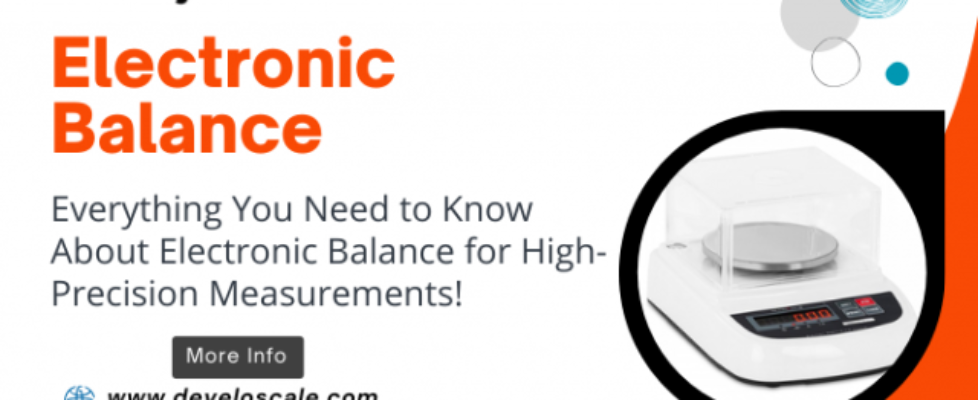
An Electronic Balance is a precision instrument designed to measure mass with high accuracy and speed. Unlike traditional mechanical balances, which rely on counterweights and manual operations, electronic balances use electromagnetic force restoration (EMFR) or strain gauge technology to produce digital readings, usually accurate to the nearest 0.1g, 0.01g, 0.001g, or even 0.0001g.
Key Components of an Electronic Balance:
- Load cell or electromagnetic sensor
- Digital display
- Weighing pan
- Microprocessor controller
- Interfaces for connectivity (USB, RS232, Ethernet, etc.)
Electronic balances come in various categories, including top-loading balances, analytical balances, precision balances, and microbalances, each tailored for specific applications and degrees of readability.
Why Accuracy and Efficiency Matter in Weighing?
- Accuracy: The Foundation of Trusted Results
Whether in pharmaceuticals, chemistry, food inspection, or education, accuracy is the bedrock upon which successful research and production depend. An error of even 0.01 grams can distort experimental results, skew chemical reactions, or compromise product quality. - Efficiency: Meeting Modern Demands
Given the fast-paced nature of modern work environments, delays in sample preparation or measurement can break workflows and increase operational costs. An efficient Electronic Balance streamlines tasks, saving time without compromising precision.
Top Advantages of a High-Quality Electronic Balance
When you choose a premium Electronic Balance from Ningbo Develo Precision Mac Co., Ltd., you’re investing in a tool that enhances every aspect of your workflow.
- Rapid Stabilization Time
Our balances are designed to stabilize quickly, allowing faster sample processing and increased throughput. - High-Resolution Readouts
Models offer up to 0.0001g resolution, suitable for high-precision work such as assay preparation or pharmaceutical compounding. - Easy Calibration
Built-in internal and external calibration features ensure consistent accuracy without manual recalibration. - User-Friendly Interfaces
Touchscreen navigation, high-contrast displays, and intuitive operation make it easy to train staff and reduce user error. - Connectivity and Data Output
Seamlessly connect your balance to LIMS (Laboratory Information Management Systems), printers, or computers for automatic data logging and regulatory documentation. - Compact and Modern Design
Our balances are space-efficient and incorporate sleek, robust materials like stainless steel and PMMA glass, making them suitable for cleanrooms and rugged environments alike.
Features to Look for in a High-Quality Electronic Balance
In the competitive global market, not all balances are created equal. Here’s what to look for when choosing a unit from Ningbo Develo Precision Mac Co., Ltd.:
1. Readability and Capacity
Choose based on your measurement range and precision needs. We offer:
0.1g, 0.01g, 0.001g, and 0.0001g readability
Capacities ranging from 120g to 5kg (and higher for industrial models)
2. Internal vs. External Calibration
Internal calibration offers automated recalibration—ideal for busy labs
External calibration is suitable for environments with set calibration protocols
3. Stability and Repeatability
Our balances incorporate anti-vibration technology, temperature sensors, and algorithms to ensure repeatable, precise measurements.
4. Smart Functions
- Piece counting
- Percent weighing
- Density determinationFormulation support
- Statistical functions (Min/Max, SD, CV)
5. Data Integrity and Compliance
For labs under regulatory control, data integrity features (audit trails, tamper-proof logs, secure access, etc.) are critical. Many of our models meet:
GLP / GMP / ISO 9001
21 CFR Part 11 (for electronic records)
Why Choose Ningbo Develo Precision Mac Co., Ltd.?
With decades of experience in high-precision manufacturing and a strong emphasis on innovation, quality, and service, we have become an international leader in weighing solutions.
Here’s what sets us apart:
- In-house R&D and patented technology
- ISO-certified production facilities
- High-precision sensor development
- OEM and ODM customization options
- Multilingual support and global distribution
From small academic labs to multinational pharmaceuticals, our balances are trusted worldwide.
Best Practices for Using Your Electronic Balance
To extract the maximum performance and longevity from your investment:
1. Proper Placement
Place your balance on a vibration-free, level surface.
Away from direct sunlight, drafts, and climate control vents.
Use an anti-vibration table for micro and semi-micro balances.
2. Routine Calibration
Use certified standard weights regularly (even if the balance has internal calibration).
Document calibration results for compliance.
3. Cleaning and Maintenance
Wipe down the weighing pan and housing after each use.
Avoid chemical spills and wet samples inside the housing.
Schedule annual service or as per the manufacturer’s guidance.
4. Power Protection
Use a regulated supply or UPS to avoid fluctuations or surges.
Turn off the unit when not in use to extend its lifespan.
Future Trends in Electronic Balance Technology
As technology advances, Electronic Balances are evolving to become smarter and more connected. Some exciting developments include:
- AI-driven auto-taring and predictive error correction
- IoT-enabled lab integration and remote monitoring
- Cloud-based data storage and batch reporting
- Touchless or voice-activated controls for improved hygiene
Our engineering team at Ningbo Develo Precision Mac Co., Ltd. is actively developing next-gen balances to align with evolving industry needs, driving forward innovation in lab diagnostics and industrial QC.
Choosing a high-quality Electronic Balance is one of the most important decisions you can make for your laboratory or production facility. Accuracy, consistency, efficiency, and regulatory compliance all hinge on the performance of this essential tool.
With the advanced designs from Ningbo Develo Precision Mac Co., Ltd., you not only gain a world-class instrument but also unlock long-term productivity, minimize errors, and the confidence that your data is nothing short of reliable.
So, whether you’re measuring pharmaceuticals, designing a new food product, or teaching tomorrow’s leading scientists, take the step toward maximum accuracy and efficiency. Invest in an Electronic Balance built for precision. Built by experts.

Frequently Asked Questions (FAQ)
Q1: What’s the difference between a precision balance and an analytical balance?
- Precision balances typically offer readability between 0.1g to 0.001g.
- Analytical balances provide higher sensitivity (0.0001g or 0.1mg) and are used for more delicate measurements.
Q2: Can I use one electronic balance for multiple applications?
Yes, many of our models offer multi-mode weighing functionality, including unit conversion, percentage composition, and density determination, making them versatile across departments.
Q3: How often should an electronic balance be calibrated?
Frequency depends on usage, criticality, and regulations. Internal calibration can be auto-triggered by temperature/time, but we recommend daily calibration for regulated environments.
Q4: What certifications does Ningbo Develo balance carry?
All our balances meet CE, ISO 9001, RoHS, and most models comply with GLP, GMP, and industry-specific regulations such as USP or 21 CFR Part 11.
Q5: Do your balances support data export or cloud software integration?
Yes. Most balances include RS232, USB, or Bluetooth options, with plug-and-play support for LIMS or PC-based lab software.