Top Reasons D Type Rubber Fenders Are a Must-Have for Dock Protection!
When it comes to harbor infrastructure, the safety and longevity of your docks and vessels are paramount. Every day, marine environments put immense stress on docking facilities—whether from tidal actions, waves, heavy vessel impacts, or relentless weather exposure. In these challenging conditions, choosing the appropriate dock protection is not just a matter of best practice, but a necessity for operational efficiency and safety. D type rubber fenders have emerged as one of the most reliable, versatile, and cost-effective solutions for dock protection worldwide.
At Qingdao Seashore Industrial Co., Ltd., we understand that the demands on marine infrastructure are ever increasing. Cargo volumes, vessel sizes, and the intensity of ship traffic are growing, requiring dock owners and operators to invest in robust, long-lasting fendering systems. Our D type rubber fenders are engineered to absorb and dissipate kinetic energy, reduce maintenance costs, and provide continuous protection—making them a must-have for any serious port or marina.
Understanding D Type Rubber Fenders
What Are D Type Rubber Fenders?
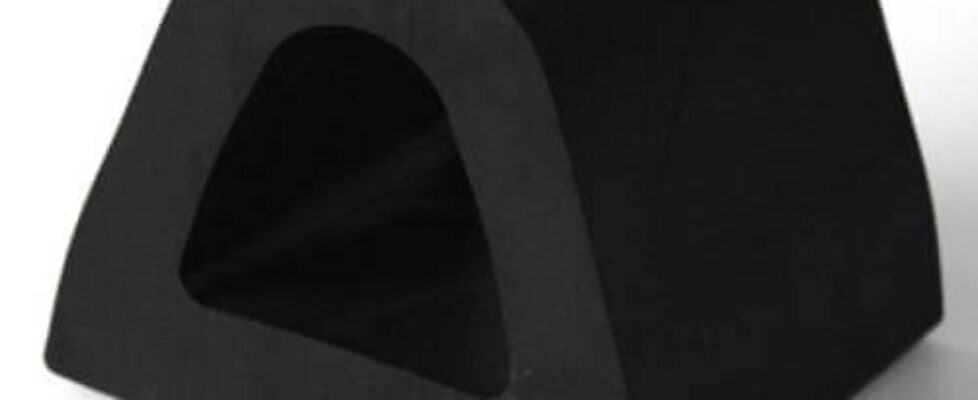
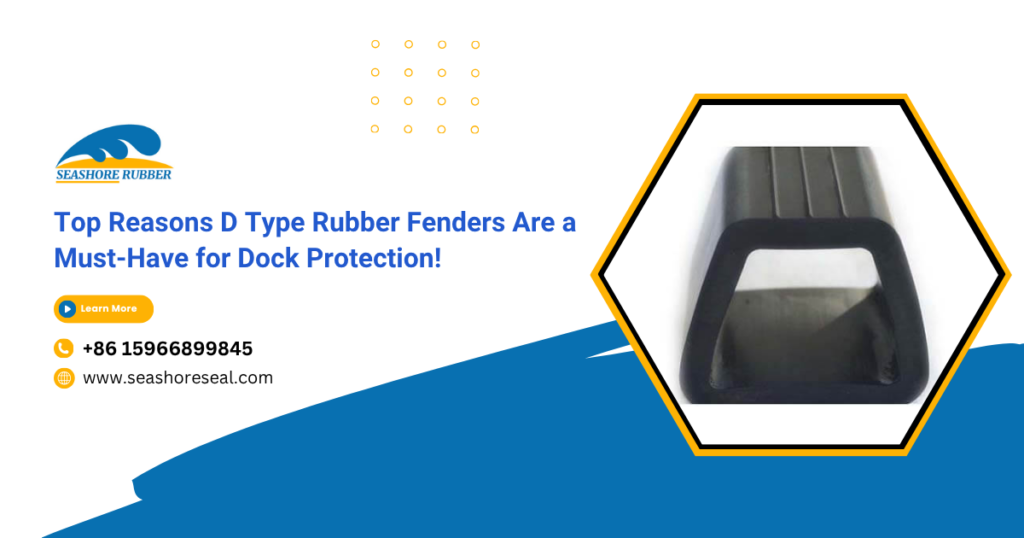
D type rubber fenders, as their name implies, are dock-mounted fendering profiles featuring a distinctive “D” shaped cross-section. This form is designed to efficiently absorb and distribute impact forces when vessels make contact with docks, wharves, piers, or loading bays. The rounded outer surface provides a gentle yet firm cushion, while the flat rear surface allows for secure attachment to a variety of mounting substrates.
Usually made from robust, high-grade natural or synthetic rubber compounds, D type rubber fenders exhibit excellent weather, UV, salt, and abrasion resistance, making them perfect for permanent outdoor deployment in marine environments.
Where Are D Type Rubber Fenders Used?
D type rubber fenders are a common sight in an array of settings, such as:
- Commercial ports and harbors
- Private marinas and yacht clubs
- Ferry terminals and cruise ship berths
- Industrial wharfs and loading docks
- Ship bows, sterns, and hull edges
- Floating pontoons and bridges
- Tugboats and workboats
Their unique size and shape, combined with easy installation, make them a universally preferred choice for both fixed and floating structures.
Top Reasons to Choose D Type Rubber Fenders for Dock Protection
1. Exceptional Energy Absorption and Impact Resistance
Perhaps the most compelling reason to select D type rubber fenders is their outstanding ability to absorb and dissipate the kinetic energy generated when a vessel contacts a dock. This is essential for preventing damage to both the vessel and the dock itself.
How does this work?
The semi-hollow, “D” cross-section compresses upon impact, converting a significant portion of the vessel’s momentum into harmless deformation of the rubber. Once the load subsides, the fender springs back to its original form. This action not only prevents catastrophic damage but also drastically reduces the risk of injuries and downtime from repairs.
Also Read: How D Type Rubber Fenders Enhance Safety in Port Operations!
2. Versatility Across Docking Applications
D type rubber fenders are among the most versatile dock protection systems available. Their adaptability is evident in several ways:
- Multiple sizes and lengths: They can be supplied in small, medium, or large profiles to suit the berthing needs of everything from small boats to heavy freighters.
- Flexible mounting options: They are easily bolted or strapped onto straight or curved surfaces (using flat plates or anchor bolts through the flat surface).
- Custom cuts and mitres: Can be custom-shaped on-site to fit corners, bends, and tight radii.
This flexibility streamlines design, procurement, and installation for diverse projects.
3. Low Maintenance and Longevity
Marine operating environments are notoriously harsh—salt water, sun, ice, and oil can rapidly degrade unsuitable materials. D type rubber fenders, made of specially engineered rubber compounds, offer remarkable resistance to:
- Saltwater corrosion
- Ozone and UV rays
- Abrasion from hulls and debris
- Oils, fuels, and minor chemical spills
As a result, maintenance is minimal. Intervals between inspections and replacements are extended, dramatically lowering lifecycle costs.
4. Ease of Installation
Unlike some complex fendering systems, D type rubber fenders are designed for straightforward installation:
- Pre-drilled holes allow for simple bolting onto existing dock surfaces.
- Standard or custom gasket kits ensure watertight fittings.
- Lightweight compared to massive cellular or cone fenders, so no heavy lifting equipment is required for most profiles.
As a result, docks can be upgraded or maintained with minimal disruption to port operations.
5. Highly Cost-Effective
Dock protection is an investment. D type rubber fenders strike a remarkable balance between upfront affordability and ongoing value. Their excellent durability, reduced maintenance, and long service intervals combine to deliver a lower total cost of ownership compared to many other types of fendering systems.
6. Customizable to Your Exact Needs
No two berths are alike, and neither are the requirements for dock fendering. Qingdao Seashore Industrial Co., Ltd. offers D type rubber fenders in:
- A full range of profiles, from mini-D to extra-large
- Standard and custom lengths, up to several meters
- Multiple colors (black, grey, white, and more)
- Special compounds for extreme environments (high friction, low temperature, etc.)
Custom end caps, mitre joints, and pre-curved options ensure a professional finish and continuous protection along any contour.
7. Enhanced Safety for People and Property
D type rubber fenders do more than prevent expensive repairs—they safeguard human life by reducing risk factors associated with hard landings, unstable vessel movements, or sudden collisions.
Their non-slip, energy-absorbing surfaces reduce the likelihood of slips, trips, and falls for dock workers, crew, and visitors.
Engineering Science Behind D Type Rubber Fenders
Knowing why D type rubber fenders are effective starts with understanding their unique design and material properties.

Mechanical Design
The semi-hollow “D” shape creates a high degree of resiliency upon compression. As a vessel presses against the fender:
- The curved outer wall deforms, distributing pressure across a larger area.
- Internal air or solid rubber acts as a cushion, increasing energy absorption.
- The flat back spreads load against the dock face, preventing point stresses.
These features ensure that both the dock and the vessel benefit from reduced impact forces.
Material Selection
At Qingdao Seashore Industrial Co., Ltd., our D type rubber fenders are crafted from high-tensile, marine-grade elastomers. Key properties include:
- High elongation at break for flexibility
- Premium abrasion and tear resistance
- UV, ozone, saltwater, and chemical resistance
For specialized needs, we can blend additives for greater hardness, flame resistance, or color stability.
Real-World Applications and Success Stories
Major Seaport Modernization
A busy international port sought to retrofit aging wooden fenders, frequently damaged by large cargo ships. Qingdao Seashore Industrial Co., Ltd. supplied customized, extra-large D type rubber fenders, reducing ship docking forces and slashing annual repair costs by 75%.
Yacht Club Upgrade
An upscale yacht club required discreet, non-marking dock protection. We delivered white D type rubber fenders with UV-stable compounds. The solution blended in seamlessly and provided reliable safeguarding for luxury craft.
Workboat & Tugboat Retrofit
A fleet owner needed a robust, abrasion-resistant fender for their tugs. Our heavy-duty D type rubber fenders were installed along the hull sides, ensuring vessel and dock remained undamaged in daily operations.
How to Select the Right D Type Rubber Fender
Choosing the optimal D type rubber fender involves evaluation of several key factors:
1. Vessel Size and Berthing Forces
Larger vessels generate more kinetic energy and require heavier-duty fenders.
2. Dock or Berth Type
Straight runs, curves, or corners may need different fender lengths, curvatures, or end designs.
3. Environmental Conditions
UV, salt, ice, or chemical risks dictate the best rubber blend.
4. Installation Requirements
Check available mounting surfaces, required fasteners, and anchor depths to ensure compatibility.
5. Visual and Physical Impact
Non-marking or colored options may be best for visible installations.
Qingdao Seashore Industrial Co., Ltd. provides full technical support, CAD layouts, and custom engineering to ensure perfect fit and performance.
Installing D Type Rubber Fenders: Best Practices
- Site Preparation: Ensure the dock face is clean, sound, and structurally capable.
- Accurate Alignment: Mark bolt holes carefully to match pre-drilled fender holes.
- Secure Fastening: Use marine-grade fasteners and ensure all washers/nuts are properly torqued.
- Joining and Sealing: Use supplied end caps and sealant for continuous protection along long or curved runs.
- Routine Inspection: Check for signs of mechanical damage or major wear and schedule annual maintenance.
With proper installation, your D type rubber fenders will provide reliable service for a decade or more.
Sustainability and Environmental Considerations
Marine environments are precious and often protected under strict regulations. With this in mind, Qingdao Seashore Industrial Co., Ltd. employs:
- Environmentally responsible rubber sourcing
- VOC-free manufacturing
- Options for recycling at end-of-life
Our D type rubber fenders help keep both vessels and natural harbors safe for the long term.
Selecting the right fendering solution is central to protecting both your docking infrastructure and vessel investment. D type rubber fenders stand out for their unmatched energy absorption, proven durability, versatility, and ease of installation. When you partner with Qingdao Seashore Industrial Co., Ltd., you gain access to industry-leading materials science, end-to-end support, and precision-engineered solutions tailored for your exact needs.
Frequently Asked Questions (FAQ)
1. What sizes of D type rubber fenders are available from Qingdao Seashore Industrial Co., Ltd.?
We offer a full range, from small (for pontoons, marina piers) to extra-heavy-duty (for cargo berths). Standard heights range from 50mm up to 500mm or more.
2. How long do D type rubber fenders last?
With correct installation and periodic inspection, D type rubber fenders typically last 10–20 years, even in harsh marine environments.
3. Can you make colored D type rubber fenders or anti-marking types?
Absolutely. We offer standard and custom colors, including black, grey, white, and non-marking compounds as required.
4. What’s the difference between D type and other fender profiles?
D type fenders have a semi-circular “D” profile, ideal for moderate berthing energy, easy mounting, and areas where space is limited or aesthetics are important. Other types (cylindrical, cell, cone) suit different force or space conditions.
5. Are installation kits included?
We can supply all necessary hardware, brackets, plates, and end caps—just specify your requirements during ordering.
6. How do I calculate the best fender size for my dock?
Our engineering team will review vessel size, approach speed, and berth structure to suggest the ideal profile, length, and installation method.
7. Are your D type rubber fenders suitable for retrofit projects?
Yes, their bolt-on design and range availability make them perfect for upgrading older structures.
8. Can D type rubber fenders be cut or formed on site?
Yes, they can be cut to length and mitred for corners with standard tools. For best results, we recommend factory-cut supplies for large or complex jobs.
9. How do I maintain my D type rubber fenders?
Periodic inspection is recommended—clean with mild soap and water, check for loose bolts or severe damage, but no special cleaning chemicals are needed.
10. Do you offer technical support for installation?
Definitely—our team provides full installation instructions, on-site supervision if required, and aftersales service.