
Maximize Your CNC Machine’s Potential with a CNC Rotary Table Upgrade!
In today’s fast-paced world of precision engineering and advanced manufacturing, getting more out of your CNC machine is not just a competitive advantage—it’s a necessity. Whether you are looking to boost productivity, expand machining capabilities, improve precision, or take on more complex geometries, one upgrade stands out among the rest: the CNC Rotary Table.
At SilverCNC, we specialize in providing smart, scalable, and performance-driven CNC accessories. One of the most transformative additions you can make to a standard CNC setup is integrating a CNC Rotary Table. This powerful device enables 4th-axis machining, opening up a new dimensional space in which to operate, reduce setups, and machine intricate components with greater speed and accuracy.
What is a CNC Rotary Table?
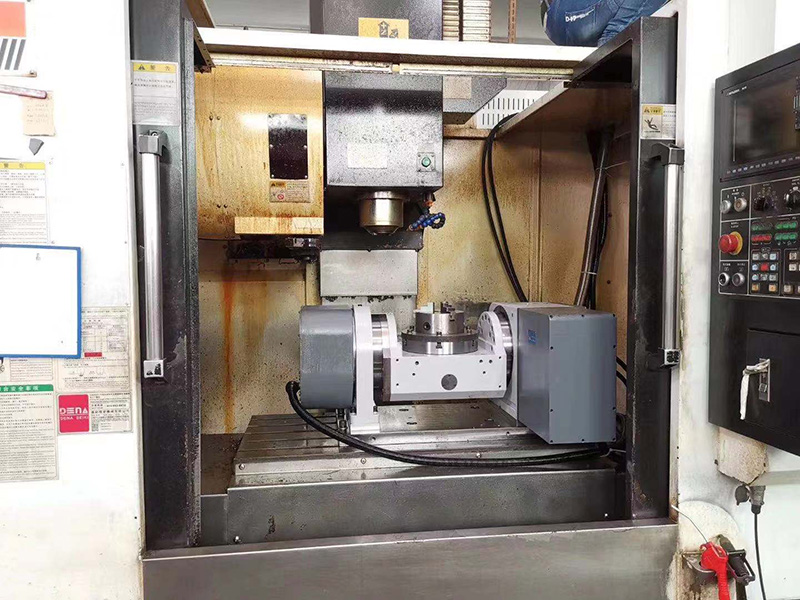
A CNC Rotary Table is a precision device used in CNC machining that allows the workpiece to rotate precisely around a horizontal or vertical axis. This rotation—typically in one additional axis (often referred to as the 4th axis)—enables your machine tool to access multiple sides of a part without the need for manual repositioning or additional setups.
The rotary table is often mounted on the bed of a machining center and connected to the controller, providing synchronized movement with linear axes (X, Y, and Z). This added versatility transforms traditional 3-axis machines into multi-axis powerhouses capable of machining complex contours, cylindrical surfaces, gears, polygonal profiles, and helical cuts with ease.
At SilverCNC, our rotary tables are built with high-torque motors, hardened worm gears, and precision bearings to ensure high repeatability and steadfast reliability—even under the most demanding machining conditions.

How Does a CNC Rotary Table Work?
Technically speaking, the CNC Rotary Table adds rotary motion (A-axis on vertical mills or B-axis on horizontal mills) to your CNC machine. Instead of removing the part between setups to machine another side, the rotary table can automatically rotate the part to allow the cutting tool to access different angles.
When programmed correctly, it can:
- Rotate to specified angles for angular or radial cutting
- Enable continuous 4-axis contouring
- Position the workpiece for precise hole drilling, pockets, and profiles
- Facilitate indexing for multi-sided machining operations
This ability to manipulate the workpiece in more than three orientations improves precision, lowers cycle time, and often eliminates the need for custom fixtures.
Types of CNC Rotary Tables
There are several types of CNC Rotary Tables available to suit varying needs:
1. 4th Axis Rotary Table
-Adds a single rotational movement.
-Common in vertical milling machines.
-Ideal for indexing and complex surface machining.
Also Read: Unlock Precision Machining: How a 4th Axis Rotary Table Transforms CNC Capabilities!
2. 5th Axis Tilting Rotary Table
-Adds a tilting movement as well as rotation.
-Allows full 5-axis capabilities for producing complex parts.
-Often used in aerospace, medical, and moldmaking industries.
Also Read: Maximize Versatility and Efficiency with a 5 Axis Rotary Table Upgrade!
3. Horizontal vs Vertical Mounting
-Vertical rotary tables are mounted vertically on the machine bed.
-Horizontal rotary tables lay flat and allow vertical axes to reach the work.
-SilverCNC offers all of these types in modular configurations that fit seamlessly into most CNC systems.
Key Benefits of Upgrading with a CNC Rotary Table
Investing in a CNC Rotary Table yields both immediate and long-term gains in operational efficiency and machining capabilities. Here are the key benefits:
Increased Machining Flexibility
Achieve 360-degree workpiece access without fixture changes, allowing for multi-face operations in one cycle.
Reduced Setup Time
Minimize manual repositioning, realignments, and refixturing between machining steps.
Higher Precision and Repeatability
Eliminate human error in repositioning. CNC-coordinated rotation ensures consistent results.
Expanded Geometry Capabilities
Machine curved surfaces, complex contours, gears, splines, and helical operations not possible with 3-axis setups.
Faster Production Cycles
By reducing tool changes and setups, you increase throughput and maximize your spindle time.
Boosted ROI
Quick returns on investment through increased efficiency, reduced scrap, and new job opportunities with complex parts.
Also Read: The Benefits of Using Industrial CNC Rotary Table From China [Infographic]
Common Applications in Industry
Because of its versatility, a CNC Rotary Table is used across numerous applications and industries:
Aerospace
-Turbine blades
-Airframe brackets
-Satellite components
Automotive
-Engine blocks
-Transmission components
-Brake system parts
Medical Devices
-Prosthetics
-Surgical tools
-Implants
Tool & Die
-Mold cavities
-EDM electrodes
-Precision inserts
Utilizing a CNC Rotary Table from SilverCNC allows manufacturers in these fields to reduce part handling, improve cycle times, and meet tighter tolerances.
Also Read: Applications of CNC Rotary Tables in Various Industries [Infographic]
Compatibility with Existing CNC Machines
A key advantage of our SilverCNC Rotary Tables is that they’re designed for seamless integration into both modern and legacy CNC systems:
-Compatible with popular CNC brands like FANUC, Siemens, Mitsubishi, HEIDENHAIN, and more.
-Available interfaces include RS-232C, Ethernet, USB, and proprietary controller protocols.
-Custom adapter plates and brackets are available for various machine models.
Integration typically involves mechanical mounting, encoder calibration, and controller sync, all of which SilverCNC provides support for, whether you’re operating a VMC, HMC, or gantry mill.
How to Choose the Right CNC Rotary Table
When selecting a CNC Rotary Table, consider the following:
-Table Size and Load Capacity
Match to your CNC machine size and workpiece dimensions.
-Rotational Torque Requirements
Ensure the model can handle the angular cutting force necessary for your operations.
-Accuracy and Repeatability
Higher-grade models offer repeatability of ±5 arc seconds or better.
-Control System Compatibility
Verify communication protocols with your CNC controller for full integration.
-Sealing and Durability
Choose sealed tables for coolant exposure and chip resistance in harsh environments.
SilverCNC’s knowledgeable advisors help every customer choose the right rotary table based on machine specs, type of parts, and business goals.
Installation and Integration Tips from SilverCNC
Installing a CNC Rotary Table may sound complex, but with the right planning and support, it’s a smooth process:
-Pre-Check Machine Requirements
Ensure your machine has 4-axis compatibility or an open channel on your controller.
-Secure Mounting
Use provided brackets, torque evenly, and align with machine centerlines.
-Electrical Integration
Follow controller setup manuals or use pre-configured plug-and-play kits from SilverCNC.
-Calibration
Use probes, indicators, and test cycles to zero in your rotary axis with high accuracy.
-Training Your Team
Train operators on multi-axis programming and safe operation of the new device.
Customer Success Stories
“We added a SilverCNC 4th Axis Rotary Table to our 3-axis mill, and within weeks we opened up new business in the aerospace sector. Setup time dropped by 30%, and multi-face operations are now a breeze.”
— Joseph Kim, Plant Manager, AeroFast Precision“The rotary table helped us achieve surface finishes that impressed our automotive client. Now we’re considering their 5-axis combo for more complex mold work. Highly recommend SilverCNC’s service and support.”
— Rachel Lin, CNC Programmer, ProMold Machining Co.

Upgrading your CNC machine with a CNC Rotary Table from SilverCNC is one of the smartest moves you can make to enhance productivity, reduce time to market, and expand the scope of your machining capabilities. With precision machining becoming more complex and quality standards rising across industries, your ability to quickly and accurately produce multi-sided, contoured, or indexed parts could be the difference between winning and losing contracts.
From improving machining efficiency to embracing Industry 4.0 capabilities, a CNC Rotary Table is no longer just an add-on—it’s an essential.
Frequently Asked Questions (FAQ)
Q1: Can I use a CNC Rotary Table on a 3-axis machine?
A: Yes. A CNC Rotary Table adds a 4th axis to a standard 3-axis CNC machine, significantly increasing its capabilities for complex parts.
Q2: How hard is it to program a 4th axis operation?
A: Most modern CAM software supports 4-axis programming. With some training, your team can adapt quickly and use the rotary axis effectively.
Q3: What maintenance does a rotary table require?
A: Routine tasks include cleaning, lubrication, checking backlash, and confirming encoder performance. SilverCNC units are sealed for durability and simplified upkeep.
Q4: Will the rotary table affect my existing machine calibration?
A: Not if installed correctly. Precise alignment and post-install calibration ensure integration doesn’t affect existing XY plane operations.
Q5: Is a rotary table worth the investment for small shops?
A: Absolutely. Even small shops can benefit by offering more services, reducing job turnarounds, and competing for higher-value work.