Inside the Tech: What Makes a GPU Vapor Chamber So Effective?
In the age of high-performance computing, thermal design has become as critical as computational power itself. As modern graphics processing units (GPUs) continue to evolve—bringing more transistors, higher wattage, and increased workloads—they also produce significantly more heat. One innovation that has revolutionized heat management is the GPU vapor chamber. This component is rapidly becoming an industry-standard method for cooling high-end graphics cards, thanks to its unparalleled efficiency in spreading and dissipating heat.
At Tone Cooling Technology Co., Ltd., we specialize in advanced thermal solutions tailored for next-generation computing hardware. As heat density and GPU performance scale upward, our engineers focus on pushing the boundaries of passive and active cooling systems. Among our most in-demand solutions is the GPU vapor chamber—a thin, flat, and highly efficient heat spreader that’s quietly solving major thermal challenges for gamers, engineers, data centers, and AI developers alike.
What is a GPU Vapor Chamber?
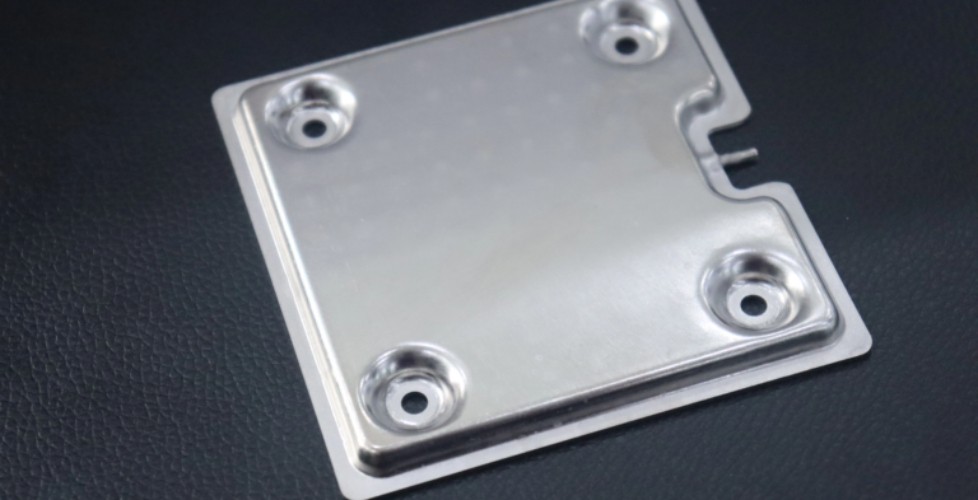
A GPU vapor chamber is a type of advanced thermal solution designed to transfer heat quickly and efficiently away from the GPU die to cooling components like heatsinks and fans. Structurally, it looks like a flat, sealed metal chamber—typically made of copper—with an internal structure engineered for phase-change cooling.
How It Works: The Science of Phase Change
The secret behind a vapor chamber’s performance lies in phase-change heat transfer, which works similarly to heat pipes but with higher efficiency due to a two-dimensional heat spread.
-Evaporation:
Inside the vapor chamber is a small amount of working fluid (often distilled water) and a porous wick structure lining the inner walls. As the GPU generates heat, it causes the working fluid at the heat source to evaporate.
-Vapor Spreading:
The vapor rapidly expands outward across the chamber, carrying the heat over a large surface area.
-Condensation:
The vapor hits the cooler parts of the chamber, usually connected to thermal fins or a heatsink, where it condenses back into liquid form.
-Wicking Return:
Through capillary action, the liquid is pulled back via the wick to the heat source to repeat the cycle continuously, as long as the GPU is active.
This continuous loop of evaporation and condensation allows the vapor chamber to maintain thermal equilibrium, resulting in effective, passive heat dissipation.
Why Are GPU Vapor Chambers So Effective?
Now that we understand the mechanics, let’s explore the specific factors that make a GPU vapor chamber stand out among other thermal management solutions.
1. Rapid Heat Spreading
Unlike traditional heatsinks or copper baseplates, vapor chambers spread heat in two dimensions. This allows them to distribute the heat evenly across the entire contact surface, reducing hot spots and enhancing the thermal contact with cooler components like heat pipes or radiators.
2. Higher Thermal Conductivity
Due to the phase-change mechanism and capillary action, vapor chambers exhibit equivalent thermal conductivity levels several times higher than solid metal (such as copper or aluminum).
3. Thin Yet Powerful
One of the most advantageous characteristics of a GPU vapor chamber is its compact form factor. A vapor chamber usually adds just a few millimeters in thickness, enabling manufacturers to craft slimmer, more space-efficient GPU designs with no sacrifice in performance.
4. Superior Performance at Lower Noise
Because of the vapor chamber’s ability to reduce heat rapidly and evenly, the cooling fans don’t need to work as hard. This leads to quieter GPU operation, which is ideal for both gamers and professional environments.
5. Excellent Integration with Other Cooling Technologies
Vapor chambers pair effortlessly with heat pipes, fins, and fan-based systems, making them a sound addition to hybrid and custom cooling loops.
Anatomy of a GPU Vapor Chamber
Tone Cooling Technology Co., Ltd. engineers its vapor chambers with the following layers and materials:
- Outer Shell: Typically made of copper for high thermal conductivity and corrosion resistance.
- Wick Material: Often a sintered metal or mesh design, facilitating fluid movement via capillary action.
- Vacuum Chamber: The space inside houses the working fluid under low pressure, enabling rapid boiling and condensation.
- Working Fluid: Usually distilled water due to its high latent heat capacity and environmental safety.
Each component is precision-engineered to avoid leakage, corrosion, or thermal bottlenecks, ensuring years of seamless operation.
Applications of GPU Vapor Chambers
The use of GPU vapor chambers isn’t limited to gaming cards. Their effectiveness lends them to a wide range of applications across industries:
1. Gaming & Esports
Modern AAA games put tremendous stress on GPUs, often pushing them to 100% load for extended periods. Vapor chambers maintain peak performance without throttling, giving gamers smooth and stable frame rates.
2. Professional Workstations
Designers and 3D artists working with applications like Blender, AutoCAD, and Adobe Suite benefit from quieter operation and sustained performance, especially during rendering or animation sequences.
3. AI and Machine Learning
Deep learning and neural networks heavily utilize the GPU’s tensor and core infrastructure. For data centers and AI servers, Tone Cooling’s vapor chambers stabilize thermal variance and reduce downtime caused by overheating.
4. Industrial & Defense Systems
Industrial environments require high-performance GPUs with fail-proof cooling systems. Vapor chambers, due to their reliability and lack of moving parts, are ideal for maintenance-free operation in demanding ecosystems.
5. Consumer Electronics
Smaller-form-factor GPUs in mini PCs, laptops, and edge devices often use vapor chambers in place of bulkier alternatives. They provide high-power performance within restricted thermal envelopes.

Benefits of Choosing Tone Cooling Technology Co., Ltd
At Tone Cooling Technology Co., Ltd., we bring decades of experience in custom cooling design and thermal optimization for high-end electronics. Our GPU vapor chamber products stand out due to:
- Precision copper welding and sealing.
- Tailored wick structures optimized for specific GPU profiles.
- Ultra-flat surface finishing for superior contact and minimal resistance.
- Scalable vapor chamber sizes for all GPU classes (from mobile to data center).
- OEM customization options with integration support.
Whether you’re designing a flagship gaming card or a rack-mounted data accelerator, our vapor chambers significantly improve thermal performance while maintaining maximum hardware reliability.
Key Considerations Before Choosing a Vapor Chamber
If you’re planning to upgrade your GPU cooling or to integrate vapor chambers into your product design, keep in mind these considerations:
1. Contact Flatness and Pressure
To ensure optimal heat transfer, the chamber must make full, even contact with the GPU die. Poor flatness can cause thermal resistance and reduce efficiency.
2. Compatibility With Heatsink Design
Ensure the vapor chamber sits beneath a properly-finned heatsink structure that can dissipate the heat effectively, whether through fans, ambient airflow, or liquid cooling.
3. Thermal Load Estimation
Our engineers at Tone Cooling Technology Co., Ltd. can help assess your thermal profile and recommend the right size and structure of vapor chamber suited to your GPU workload.
Maintenance and Longevity
Vapor chambers are sealed systems, which means they require zero maintenance once integrated. Made with high-purity copper and leak-proof seals, they are built to last 5-10 years, depending on operating conditions.
To maximize lifespan:
- Avoid exposure to excessive mechanical stress.
- Ensure correct mounting pressure and thermal paste application.
- Keep surrounding components dust-free to maintain good airflow.
When every degree counts, choosing the right cooling solution can unlock the full potential of your GPU. The GPU vapor chamber remains one of the most effective, efficient, and elegant ways to manage heat at the chip level. Through phase-change technology, compact size, and high performance, vapor chambers have distinguished themselves as essential to modern thermal ecosystems.
FAQs:
Q1: Are vapor chambers better than traditional heatsinks?
Yes, especially for high-performance GPUs. Vapor chambers spread heat more uniformly and efficiently than basic metal heatsinks, allowing better thermal regulation at high loads.
Q2: Do all GPUs use vapor chambers now?
Not all. Entry-level and mid-range GPUs often use simpler air coolers. High-end and flagship GPUs—as well as many laptops—integrate vapor chambers for more robust cooling solutions.
Q3: Can I add a vapor chamber to my existing GPU?
Typically no, as they are custom-fit during the design process of the GPU. However, some enthusiast modders retrofit GPUs with vapor cooling using template kits, but this requires deep technical knowledge.
Q4: How does a vapor chamber differ from a liquid cold plate?
While both use phase change, vapor chambers are passive and require no external plumbing or coolant. Cold plates are part of active liquid cooling loops and include pumps and radiators.
Q5: Can Tone Cooling customize vapor chambers for OEMs or industry?
Absolutely. We specialize in developing tailored thermal solutions, including size modification, wick structure control, and GPU interface integration for partners across industries.
Q6: Are vapor chambers eco-friendly?
Yes. Most chambers use distilled water in low quantities and are made from recyclable metals like copper and stainless steel. Their long lifespan and efficiency also reduce e-waste.