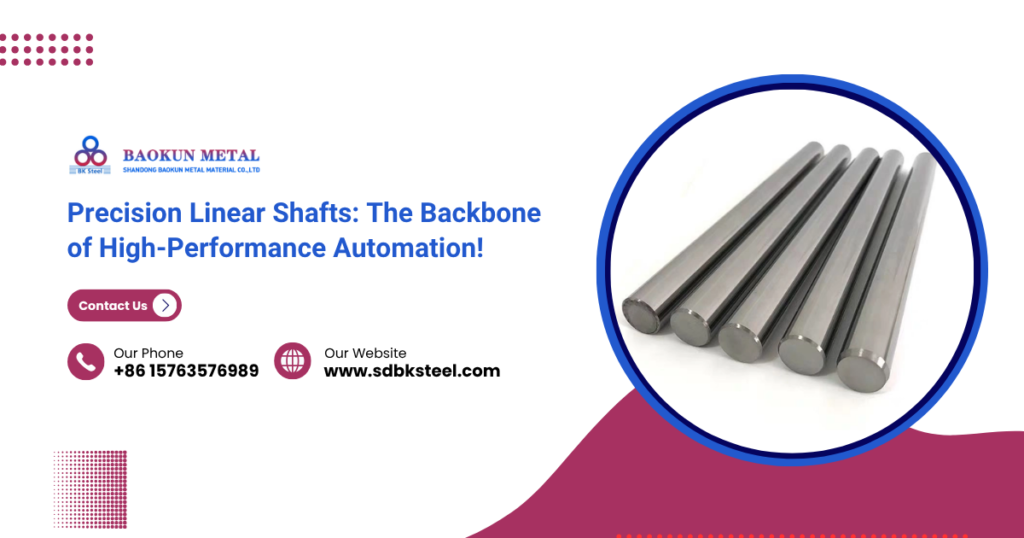
Precision Linear Shafts: The Backbone of High-Performance Automation!
The world of industrial automation is shifting rapidly. Today’s automated environments require components that not only promise accuracy and reliability, but also withstand demanding loads, repetitive motion, and often harsh operating environments. At the heart of these advanced systems, facilitating smooth and precise linear motion, lies a component often overlooked yet indispensable: the Precision Linear Shaft.
Known for their unparalleled dimensional accuracy and robust mechanical properties, Precision Linear Shafts stand quietly at the core of robotics, CNC machinery, packaging equipment, medical devices, semiconductor manufacturing, and countless other applications. Their contribution to frictionless motion, precise positioning, and overall automation efficiency is indispensable—a fact that’s recognized by engineers and OEMs worldwide.
1. What Are Precision Linear Shafts?
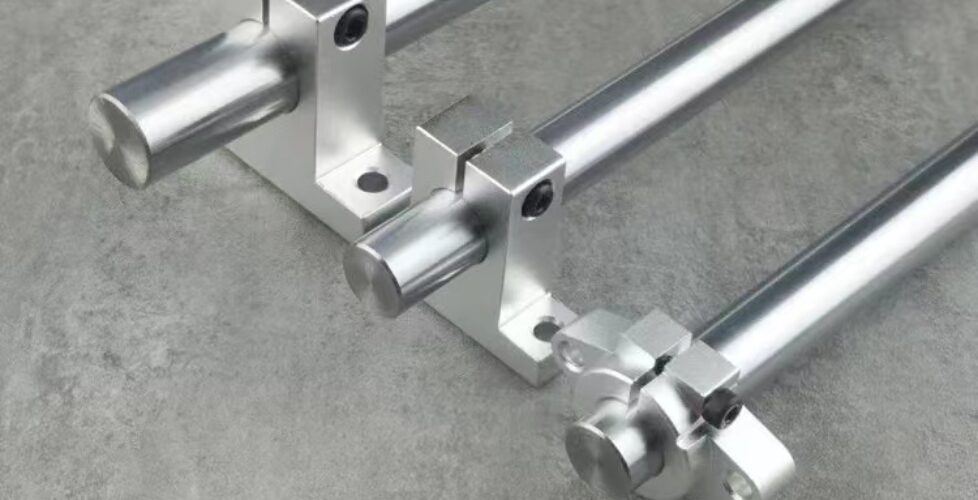
At its core, Precision Linear Shafts are a cylindrical bar—typically made from high-grade steel, stainless steel, or specialized alloys—that features ultra-fine straightness, exceptional roundness, and a high-quality surface finish. These shafts are designed specifically for linear motion systems, acting as the guide or running surface for linear bearings, bushings, balls, or rollers.
Precision Linear Shafts are engineered with the following characteristics:
- Tight Diameter Tolerances: Precise manufacturing keeps diameter deviations to microns.
- Straightness: Shafts are straightened to extremely fine tolerances, usually below 0.03 mm per meter.
- Superior Surface Finish: Mirror-smooth, typically Ra ≤ 0.2μm, to ensure minimal friction and extended bearing life.
- Hardness: Hardened (often induction-hardened) surfaces to resist wear and withstand dynamic loads.
The result? Shafts that can support high speeds, repetitive movement, and significant loads—without compromising on accuracy or service life. In short, Precision Linear Shafts are the literal backbone of any system where linear movement and positioning are mission-critical.
2. The Role of Precision Linear Shafts in Automation Systems
In modern automation, motion control is everything. Systems must:
- Move rapidly and repeatedly with minimal error
- Position loads precisely, often down to microns
- Operate reliably for thousands—even millions—of cycles
- Minimize maintenance and downtime
Precision Linear Shafts enable all of this by serving as the foundation for linear motion assemblies. As the running surface for ball bushings or linear bearings, they:
- Guide and Support: Provide rigidity and consistency, holding loads steady along a defined axis
- Reduce Friction: When paired with advanced bearing technologies, the polished surface ensures minimal effort is required to move loads
- Enable Repeatable Accuracy: Micron-level diameter and straightness minimize deviation and cumulative error
- Protect System Integrity: High hardness and superior surface treatment prevent abrasive wear, pitting, or deformation
- Increase System Longevity: Longer lifespan of both the shaft and associated bearings minimize the need for frequent replacements
Transitioning from manually-guided processes or legacy technology to automated, high-performance motion systems is virtually impossible without integrating Precision Linear Shafts.
3. Manufacturing Precision Linear Shafts: The Pursuit of Perfection
Achieving the geometrical and surface quality essential for true precision isn’t accidental—it is the result of meticulous manufacturing:
A. Material Selection
Quality starts with raw material. Micro-alloyed carbon steel, high-carbon chromium steel, and high-grade stainless steel are the most common substrates. For demanding applications, special corrosion-resistant or high-toughness alloys can be used.
B. Centerless Grinding
After pre-machining, shafts undergo centerless grinding—a highly controlled process that ensures accurate diameter and concentricity. Accuracy at this stage dictates the shaft’s ultimate performance in the field.
C. Induction Hardening and Tempering
For wear and fatigue resistance, most Precision Linear Shafts are induction hardened. A rapid-heating process hardens only the outer layer, leaving a tough, resilient core to absorb shock and vibration.
D. Precision Straightening
Shafts are repeatedly straightened using advanced hydraulic presses and laser measurement systems until they achieve exceptional straightness—an absolutely crucial property for high-speed linear guidance.
E. Superfinishing and Polishing
Ultra-fine surface roughness is achieved by multiple passes of polishing and superfinishing. The resulting mirror-like surface vastly improves bearing life and reduces noise during operation.
F. Protective Coatings
Depending on the application, shafts can receive additional treatments: hard chrome plating for corrosion resistance, black oxide for basic protection, or passivation for stainless varieties.
G. Advanced Quality Control
Each shaft is inspected for diameter, straightness, hardness, surface finish, and sometimes microstructural integrity—guaranteeing that only flawless products reach the customer.
At Shandong Baokun Metal Material Co. Ltd, these steps are followed rigorously, combining advanced automation with careful human oversight for unmatched consistency.

4. Why Precision REALLY Matters
It’s tempting to think any round bar stock could suffice for linear motion. Experience proves otherwise—here’s why precision is mission-critical:
- Reduced Vibration: Even tiny out-of-roundness or unevenness can introduce vibrations, leading to poor part quality and rapid bearing wear.
- Minimized Play: Precision tolerances ensure a snug but smooth fit with linear bearings, reducing clearance and maintaining positioning accuracy.
- Long-Term Stability: Shafts that deviate from nominal diameter or straightness, even slightly, can cause cumulative error in automated systems, impacting overall machine accuracy.
- Consistent Performance: Batch-to-batch consistency in diameter, straightness, and hardness means systems perform identically every time, streamlining commissioning and future maintenance.
For applications like robotics, medical imaging, 3D printing, industrial packaging, or laboratory automation, even microns of deviation can compromise entire systems. This is why Precision Linear Shafts from a reputable supplier like Shandong Baokun Metal Material Co. Ltd are so highly valued.
5. Exploring the Technical Specifications of Precision Linear Shafts
When evaluating or specifying shafts, key parameters include:
- Diameter: Common sizes range from 3 mm up to 100 mm, with bespoke diameters available on request.
- Length: Supplied as standard (e.g., 1, 2, or 3 meters) or cut-to-length based on project needs.
- Tolerances: ISO h6, h7, or even tighter—mean diameter variation is measured in microns.
- Hardness: Surface hardness after induction treatment typically reaches HRC 58-64, greatly improving wear life.
- Surface Roughness: Ra ≤ 0.2μm is standard for precision shafts, supporting smooth, frictionless motion.
- Material Grade: Determined by environment (carbon, alloy, stainless, or plated varieties).
- Corrosion Protection: Chrome plated, nickel plated, or rust-inhibiting surface finishes as required.
Every parameter influences system performance—so collaboration with your shaft supplier yields the best outcomes.
6. Applications: Where Precision Linear Shafts Shine
Precision Linear Shafts are a backbone technology, critical to wide-ranging industries:
- Robotics: Guide rails and actuator rods facilitate controlled, repeatable arm movements—requiring micron-level shaft accuracy.
- CNC Machinery: High-speed movement of tool heads and workpieces relies on ultra-straight shafts supported by linear bearings.
- 3D Printing: Seamless, backlash-free movement during layer deposition depends on shaft precision and smoothness.
- Medical Equipment: Imaging tables, robotic surgical arms, and automated laboratory analyzers demand accuracy, cleanliness, and reliability.
- Packaging & Food Processing: Continuous operation and washdown resistance are vital in these sectors.
- Semiconductor Manufacturing: Ultra-clean, precise environments exploit stainless or coated shafts resistant to corrosion and contamination.
- Automotive Production: Assembly robots, testing rigs, and conveyor systems harness the benefits of durability and low-maintenance linear motion.
- Material Handling and Warehousing: Automated shuttles, pick-and-place robots, and sortation systems all depend on enduring shaft quality.
7. Advantages of Baokun’s Precision Linear Shafts
Choosing Precision Linear Shafts from Shandong Baokun Metal Material Co. Ltd means you benefit from:
- Consistent Quality: State-of-the-art production lines and ISO/QS-certified processes minimize batch variation.
- High Customizability: Bespoke dimensions, surface treatments, and packaging options available to suit your precise needs.
- Exceptional Surface Durability: Hardening and advanced finishing maximize component longevity—even in non-stop operations.
- Reliable Supply Chain: Rapid production cycles and international logistics ensure your shafts arrive on time, every time.
- Expert Technical Support: Baokun’s engineers help you specify and deploy the optimal shaft for your application.
Such advantages translate directly into improved performance, reduced downtime, and measurable cost savings for users.
8. How to Specify the Right Precision Linear Shaft
Choosing your shaft involves several key steps:
1. Define Load and Motion Parameters: Consider static load, dynamic cycling, required speed, and travel distance.
2. Select Diameter and Material: Larger diameters for heavier loads, stainless for corrosion-prone environments, alloy combinations for special conditions.
3. Determine Needed Tolerances & Finish: Tighter tolerances and smoother finishes for higher-precision or high-speed uses.
4. Specify Length and Custom Features: Will the shaft be supported along its length? Are customized ends, holes, or keyways needed?
5. Choose Surface Protection: Chrome plating, black oxide, or passivation—based on application environment.
6. Review Supplier Capability: Confirm that your supplier (e.g., Baokun) can deliver batch consistency, documentation, and global logistics.
Your component supplier can advise on the best fit—saving you time, money, and future headaches.
9. Future Trends: The Expanding Role of Precision Linear Shafts
With automation, robotics, and digital factories evolving, the need for motion components that go beyond “good enough” continues to rise. Key trends include:
- Higher Speeds and Accelerations: Demanding even greater straightness, hardness, and surface quality.
- Smart Shafts: Integration of sensors for real-time monitoring of movement, load, and wear.
- Advanced Coatings: Nano-coatings, hybrid ceramics for extreme lifespans and minimal maintenance.
- Sustainability: Eco-friendly manufacturing and increased recyclability.
Baokun is actively investing in R&D to lead the market through these changes, positioning our Precision Linear Shafts as future-proof solutions.
The Essential Role of Precision Linear Shafts in Tomorrow’s Automation
Automation now defines industrial innovation. Every high-performance solution—whether in a factory, laboratory, or healthcare setting—relies on components that fuse accuracy with durability. Precision Linear Shafts are the silent enablers behind flawless linear motion, ensuring every robot, actuator, or mechanism performs with confidence, cycle after cycle.
Frequently Asked Questions (FAQ)
Q1: What’s the difference between a precision linear shaft and a regular steel rod?
A: A regular rod is not ground to fine tolerances, may not be straightened or surface-hardened, and is unsuitable for reliable, accurate motion. Precision Linear Shafts are centerless ground, hardened, straightened, and superfinished—perfect for supporting linear bearings in automation.
Q2: Which material should I select for my shaft?
A: The choice depends on the environment. Carbon or alloy steel works in dry settings, chrome plating adds corrosion protection, while stainless steel—like SUS304/SUS316—is used in washdown, food, or medical applications.
Q3: Can precision linear shafts be customized?
A: Absolutely. Baokun offers custom diameters, lengths, end machining (threads, holes, flats), coatings, and laser marking upon request.
Q4: How is shaft straightness important?
A: Straightness determines how smoothly a linear bearing—or the load it carries—can move. Even minor bends can cause binding, high friction, or premature bearing failure.
Q5: What is the typical hardness of a precision linear shaft?
A: Induction-hardened shafts typically offer surface hardness of HRC 58-64, providing excellent wear resistance and long service life.
Q6: Are there maintenance requirements for linear shafts?
A: Minimal. Periodic cleaning and lubrication suffice, but in abrasive or corrosive environments, additional maintenance or special shaft materials/coatings may be needed.
Q7: How long do precision linear shafts last?
A: Lifespan depends on load, speed, environment, and maintenance, but precisely manufactured shafts can perform reliably for millions of cycles in standard automation.
Q8: Are solid and hollow shafts equally suitable for all applications?
A: Solid shafts offer maximum rigidity, while hollow shafts are lighter, reduce moment of inertia, and may house cabling. Your application determines the best fit.
Q9: What tolerances can Baokun achieve?
A: Our standard is h6 or h7 tolerances on diameter, with custom tighter specs available. Straightness is typically ≤0.03mm/m.
Q10: Is Baokun’s supply chain reliable globally?
A: Yes! We have robust international logistics and can provide traceability, inspection certificates, and consistent on-time delivery worldwide.