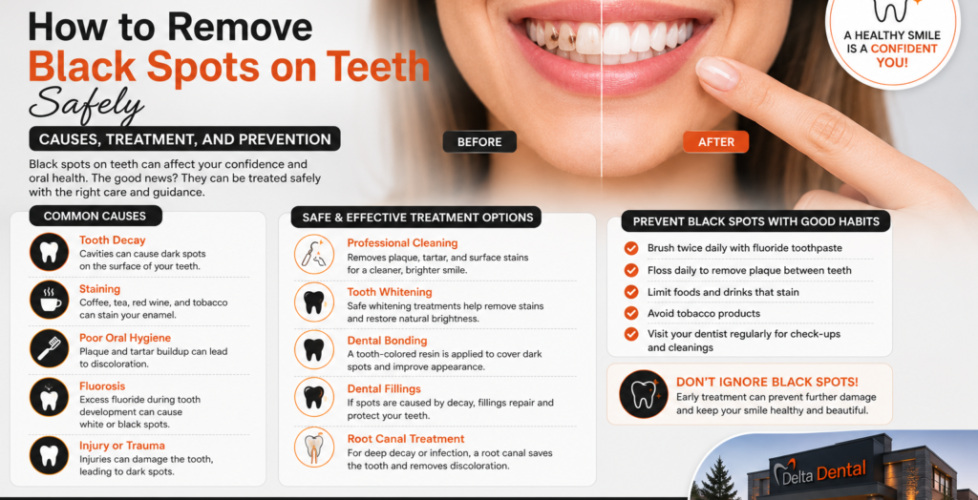
How to Remove Black Spots on Teeth Safely: Causes, Treatment, and Prevention
Black spots on your teeth can be concerning, especially if they appear suddenly or become more noticeable over time. While some black spots are harmless surface stains, others may be an early sign of tooth decay or another dental condition that requires professional care. Understanding the cause is the first step toward choosing the safest and most effective treatment.
If you’ve noticed dark spots on one or more teeth, scheduling an examination at a dental clinic in Red Deer can help determine whether the discoloration is a simple stain or a problem that needs treatment. Early diagnosis often prevents minor concerns from developing into more serious dental issues.
What Causes Black Spots on Teeth?
Black spots can develop for several reasons. Some affect only the outer surface of the tooth, while others involve the tooth’s inner structure.
1. Surface Stains
One of the most common causes is staining from foods, drinks, or tobacco products. Coffee, tea, red wine, berries, and smoking can gradually darken the enamel, creating black or dark brown spots.
2. Tooth Decay
A cavity may first appear as a small brown or black spot. As decay progresses, the spot can become darker and may eventually lead to pain or sensitivity if left untreated.
3. Tartar Buildup
Plaque that is not removed through brushing and flossing can harden into tartar. Over time, tartar may become dark or black, particularly near the gumline.
4. Dental Injuries
A tooth that has experienced trauma may darken if the inner tissue has been affected. This type of discoloration usually involves the entire tooth rather than a small spot.
5. Certain Medications or Dental Materials
Some medications and older metal dental fillings may contribute to dark discoloration over time. Your dentist can determine whether the spot is related to a previous dental restoration.
Can Black Spots Be Removed at Home?
It depends on the cause. Surface stains may improve with good oral hygiene, but black spots caused by cavities, tartar, or dental injuries cannot be safely removed at home.
Avoid attempting to scrape or scrub the spots aggressively, as this may damage the enamel and make the problem worse.
Safe Ways to Remove Black Spots on Teeth
Professional Dental Cleaning
If black spots are caused by plaque or tartar buildup, a professional dental cleaning can often remove the deposits safely without damaging your teeth.
Polishing
After cleaning, your dental hygienist may polish the teeth to remove surface stains and improve their appearance.
Dental Fillings
If a black spot is caused by tooth decay, your dentist may remove the damaged portion of the tooth and restore it with a tooth-colored filling.
Professional Teeth Whitening
For discoloration caused by surface stains, professional whitening may improve the appearance of your smile. However, whitening treatments will not remove decay or tartar.
Dental Crowns or Veneers
If discoloration is severe or caused by structural damage, your dentist may recommend a crown or veneer to restore both the appearance and function of the tooth.
Home Care Tips to Help Prevent Black Spots
Good oral hygiene can help reduce the risk of stains and tooth decay.
- Brush twice daily using fluoride toothpaste.
- Floss once every day.
- Rinse your mouth with water after drinking coffee, tea, or soft drinks.
- Limit sugary foods and beverages.
- Avoid tobacco products.
- Replace your toothbrush every three to four months.
Foods and Drinks That May Cause Staining
Some foods and beverages are more likely to stain your teeth over time.
- Coffee.
- Black tea.
- Red wine.
- Dark-colored soft drinks.
- Soy sauce.
- Berries.
- Balsamic vinegar.
Drinking water after consuming these items can help reduce staining.
When Should You See a Dentist?
You should schedule a dental examination if:
- A black spot does not brush away.
- The spot becomes larger over time.
- You experience tooth pain or sensitivity.
- Your gums become swollen or bleed.
- The tooth changes color after an injury.
Prompt treatment often prevents more extensive dental procedures and helps preserve your natural tooth.
Can Black Spots Always Be Prevented?
Not every black spot can be prevented, especially if it results from an injury or certain medical conditions. However, maintaining consistent oral hygiene, eating a balanced diet, limiting stain-causing foods, and attending routine dental checkups greatly reduce your risk.
Routine dental care in Red Deer also allows dental professionals to identify early signs of decay or staining before they become more difficult to treat.
Why Professional Evaluation Is Important
Although many black spots are harmless stains, others may indicate cavities or underlying dental problems. Because it is difficult to determine the exact cause at home, a professional examination is the safest way to receive an accurate diagnosis and appropriate treatment.
If you’re unsure about changes in the appearance of your teeth, visiting a dentist near you allows potential concerns to be addressed before they become more serious.
Conclusion
Black spots on your teeth may be caused by staining, tartar buildup, tooth decay, or other dental conditions. The right treatment depends on the underlying cause, which is why professional evaluation is important. Maintaining good oral hygiene and attending routine dental visits can help keep your smile healthy and bright. If you’re concerned about black spots on your teeth, the experienced team at Delta Dental is here to help. Request an Appointment to receive a personalized evaluation and appropriate treatment for your smile.
Frequently Asked Questions
Are black spots on teeth always cavities?
No. Black spots can be caused by surface stains, tartar buildup, older dental restorations, or tooth decay. Because different conditions can appear similar, a dental examination is the best way to determine the exact cause.
Can brushing remove black spots on teeth?
Brushing may remove some surface stains if they are mild. However, black spots caused by tartar, cavities, or deeper discoloration usually require professional dental treatment for safe and effective removal.
Is it safe to remove black spots at home?
No. Avoid scraping or using abrasive products to remove black spots yourself, as this may damage your enamel. If a spot does not disappear with normal brushing, schedule a dental examination instead.
Can teeth whitening remove black spots?
Professional whitening can improve stains on the tooth surface but will not remove cavities, tartar, or internal discoloration. Your dentist will determine whether whitening is appropriate based on the cause of the spot.
When should I worry about a black spot on my tooth?
You should see a dentist if the spot becomes larger, causes pain or sensitivity, does not brush away, or appears after a dental injury. Early treatment often prevents more serious dental problems.
How can I prevent black stains on my teeth?
Brush and floss daily, limit coffee, tea, and tobacco use, rinse your mouth with water after consuming stain-causing foods or drinks, and attend regular professional dental cleanings to help reduce staining.
How often should I have my teeth professionally cleaned?
Most people benefit from professional dental cleanings every six months. However, your dentist may recommend more frequent visits depending on your oral health, plaque buildup, or risk of gum disease.