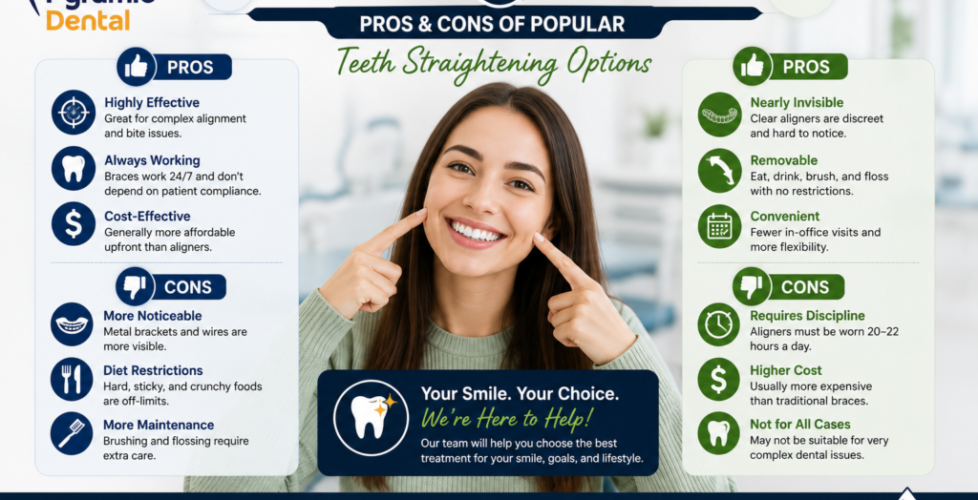
Braces vs. Aligners: Pros and Cons of Popular Teeth Straightening Options
Straight teeth can improve more than your smile. Properly aligned teeth are often easier to clean, can reduce uneven wear, and may support better oral health over time. If you’re thinking about orthodontic treatment, you may be wondering whether traditional braces or clear aligners are the better choice. Each option offers unique advantages, and the right treatment depends on your dental needs, lifestyle, and treatment goals.
Speaking with a dentist in Fort McMurray is the best way to determine which solution is appropriate for your smile. A professional evaluation can help you understand the benefits, limitations, and expected treatment timeline for each option.
Why Straightening Your Teeth Matters
Orthodontic treatment is about more than appearance. Properly aligned teeth can make brushing and flossing easier, improve your bite, and reduce pressure on certain teeth. In some cases, correcting alignment may also help reduce jaw discomfort and uneven tooth wear.
Common reasons people choose teeth straightening include:
- Crooked or crowded teeth.
- Spaces between teeth.
- Overbite or underbite.
- Crossbite.
- Difficulty cleaning between teeth.
What Are Traditional Braces?
Traditional braces use metal or ceramic brackets attached to the teeth and connected by wires. These components gradually move teeth into better positions through carefully controlled pressure over time. Braces remain one of the most effective treatments for correcting mild to complex orthodontic concerns.
Advantages of Braces
- Suitable for simple and complex alignment problems.
- Always working because they remain attached to the teeth.
- No need to remember to wear them.
- Can effectively correct significant bite issues.
Disadvantages of Braces
- More noticeable than clear aligners.
- Food can become trapped around brackets.
- Extra care is needed during brushing and flossing.
- Some foods should be avoided to prevent damage.
Patients considering dental braces in Fort McMurray should discuss the available orthodontic options with their dental provider to determine which treatment best suits their needs.
What Are Clear Aligners?
Clear aligners are custom-made, removable trays that gradually move teeth into their desired positions. Patients wear each set of aligners for a specific period before progressing to the next set in the series.
Because they are nearly invisible, clear aligners have become a popular option for teens and adults seeking a more discreet orthodontic solution.
Advantages of Clear Aligners
- Nearly invisible when worn.
- Removable for eating and brushing.
- No food restrictions.
- Smooth plastic trays are generally comfortable.
- Easy to maintain good oral hygiene.
Disadvantages of Clear Aligners
- Must be worn 20 to 22 hours each day.
- Require strong patient commitment.
- Can be misplaced if removed frequently.
- May not be suitable for every complex orthodontic case.
Braces vs. Aligners: A Quick Comparison
Appearance
Clear aligners are much less noticeable than traditional braces, making them a popular choice for adults and older teens.
Comfort
Both treatments involve pressure as teeth move. However, aligners generally have smooth edges that may cause less irritation to the cheeks and lips than brackets and wires.
Eating
Braces require avoiding sticky, hard, and chewy foods that can damage brackets. Clear aligners are removed during meals, allowing patients to continue enjoying most foods.
Cleaning
Brushing and flossing are often easier with removable aligners. Braces require extra attention to clean around brackets and wires thoroughly.
Treatment Time
The length of treatment depends on the complexity of each case rather than the appliance itself. Mild cases may finish more quickly, while complex bite corrections often require longer treatment.
Which Option Is Right for You?
The best orthodontic treatment depends on several factors, including:
- The severity of your alignment concerns.
- Your age.
- Your daily routine.
- Your willingness to wear removable aligners consistently.
- Your overall oral health.
An examination allows your dental provider to recommend the most appropriate treatment based on your individual needs.
How to Care for Your Teeth During Orthodontic Treatment
Regardless of which treatment you choose, maintaining excellent oral hygiene is essential.
- Brush thoroughly after meals.
- Floss every day.
- Attend regular dental checkups.
- Avoid chewing hard objects.
- Follow your dentist’s treatment instructions carefully.
If you’re considering Invisalign near you, following the recommended daily wear time is essential for keeping your treatment on schedule and achieving the desired results.
When Should You Schedule an Orthodontic Consultation?
You may benefit from an orthodontic evaluation if you notice crowded teeth, spacing, bite problems, difficulty cleaning between teeth, or concerns about your smile’s appearance. Early assessment allows treatment to begin at the most appropriate time and may help prevent future complications.
If you’re unsure which treatment option is best, visiting a dentist near you can provide personalized recommendations based on your oral health, smile goals, and lifestyle.
Conclusion
Both braces and clear aligners are effective ways to straighten teeth and improve oral health. The right choice depends on your dental needs, treatment goals, and personal preferences. A professional evaluation can help you make an informed decision and create a treatment plan that’s right for you. If you’re considering orthodontic treatment, the experienced team at Pyramid Dental can assess your smile and recommend the most suitable option. Request an Appointment to learn more about your teeth straightening options.
Frequently Asked Questions
Are clear aligners as effective as braces?
Clear aligners are highly effective for many mild to moderate alignment concerns. However, traditional braces may be a better choice for more complex orthodontic cases involving significant bite corrections or severe tooth movement.
How long does teeth straightening usually take?
Treatment time varies depending on the complexity of each case. Many patients complete treatment within 12 to 24 months, although some mild cases may finish sooner and more complex cases may require additional time.
Do braces hurt more than clear aligners?
Both treatments may cause temporary discomfort when teeth begin moving or after adjustments. Braces may occasionally irritate the cheeks or lips, while clear aligners generally have smoother surfaces that many patients find more comfortable.
Can I eat normally with clear aligners?
Yes. Clear aligners are removed before eating and drinking anything except water. This allows you to continue enjoying most foods without the dietary restrictions often associated with traditional braces.
Which option is easier to keep clean?
Clear aligners are generally easier to clean because they can be removed before brushing and flossing. Braces require extra care to clean around brackets and wires to prevent plaque buildup and tooth decay.
Are braces or aligners better for teenagers?
Both treatments can be excellent options for teenagers. The best choice depends on the child’s orthodontic needs and whether they are likely to wear removable aligners consistently throughout the day.
Can adults straighten their teeth?
Yes. Adults of all ages can benefit from orthodontic treatment if their teeth and gums are healthy. Both braces and clear aligners are commonly used to improve alignment, function, and overall smile appearance.