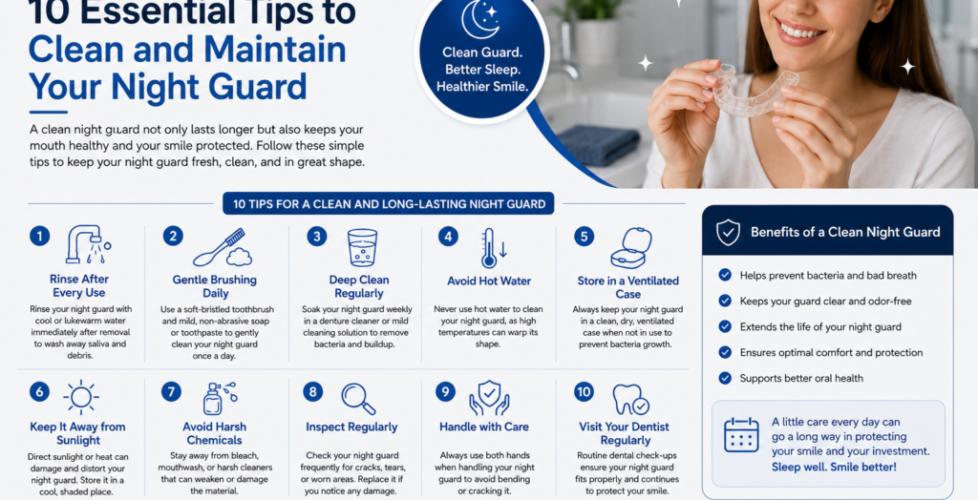
10 Essential Tips to Clean and Maintain Your Night Guard
A night guard is an excellent investment in your oral health, especially if you grind or clench your teeth while sleeping. It helps protect your teeth from excessive wear, reduces pressure on your jaw, and may even minimize morning headaches caused by teeth grinding. However, simply wearing a night guard isn’t enough. Proper cleaning and maintenance are essential to keep it free from bacteria, prevent unpleasant odors, and extend its lifespan.
If you’ve received a custom appliance from a dentist in Vancouver, following the right care routine will help ensure it continues to fit comfortably and protect your smile. Here are ten practical tips that can help you keep your night guard clean, safe, and in excellent condition.
Why Is Night Guard Care Important?
Your night guard spends several hours inside your mouth every night. During that time, it comes into contact with saliva, bacteria, and plaque. Without proper cleaning, these substances can build up, leading to bad odors, discoloration, and even oral health concerns.
Good maintenance also helps preserve the fit of your appliance and reduces the likelihood of needing an early replacement.
1. Rinse Your Night Guard After Every Use
As soon as you remove your night guard each morning, rinse it under cool or lukewarm water. This helps remove saliva and loose debris before it dries on the surface.
Avoid using hot water because it may warp the material and affect the fit.
2. Clean It Daily with a Soft Toothbrush
Use a soft-bristled toothbrush to gently clean all surfaces of your night guard. Brush carefully without using excessive force that could scratch the appliance.
Many dentists recommend avoiding abrasive toothpaste because it may leave tiny scratches where bacteria can collect.
3. Use a Recommended Cleaning Solution
Occasionally soaking your night guard in a cleaning solution recommended by your dentist helps remove bacteria and stains that daily brushing may miss.
Always follow the instructions provided for the cleaning product and rinse the appliance thoroughly before wearing it again.
4. Allow It to Dry Completely
Moisture encourages bacterial growth. After cleaning your night guard, allow it to air dry completely before placing it in its storage case.
This simple step helps keep your appliance cleaner between uses.
5. Store It in a Protective Case
Always keep your night guard in its ventilated storage case when it is not being worn.
A storage case helps:
- Protect the appliance from damage.
- Reduce exposure to dirt and bacteria.
- Prevent accidental loss.
- Keep pets from chewing on it.
6. Keep It Away from Heat
High temperatures can distort the shape of your night guard.
Avoid:
- Hot water.
- Dishwashers.
- Microwaves.
- Leaving it inside a hot vehicle.
Proper storage helps maintain a comfortable and accurate fit.
7. Never Share Your Night Guard
Night guards are custom-made to fit one person’s teeth. Sharing them is unhygienic and may expose others to bacteria while also preventing the appliance from fitting properly.
8. Inspect Your Night Guard Regularly
Take a close look at your night guard every few weeks.
Watch for:
- Cracks.
- Rough edges.
- Holes.
- Discoloration.
- Changes in fit.
If you notice any of these problems, schedule a dental appointment.
9. Maintain Good Oral Hygiene
Cleaning your teeth before wearing your night guard is just as important as cleaning the appliance itself. Brushing and flossing before bed helps reduce plaque and bacteria that could become trapped between your teeth and the guard.
Maintaining consistent dental care in Vancouver supports both your oral health and the condition of your night guard.
10. Bring Your Night Guard to Dental Checkups
Your dentist should examine your night guard during routine dental visits. Regular inspections help identify signs of wear and confirm that the appliance still fits correctly.
If you’re using a custom Night Guard in Vancouver, these routine evaluations help ensure it continues providing effective protection against teeth grinding.
When Should You Replace Your Night Guard?
Even well-maintained night guards eventually wear out. Depending on the severity of your teeth grinding and how well you care for the appliance, it may need replacement after several years.
You should contact your dentist if your night guard:
- Feels loose.
- Causes discomfort.
- Develops cracks or holes.
- Shows significant wear.
- No longer fits properly.
When Should You See a Dentist?
If your night guard becomes uncomfortable, develops an odor that doesn’t improve with cleaning, or no longer fits properly, schedule a dental evaluation. A poorly fitting appliance may not protect your teeth effectively and could contribute to jaw discomfort.
Visiting a dentist near you also allows your appliance to be professionally examined and adjusted if necessary.
Conclusion
Proper cleaning and maintenance help your night guard stay comfortable, hygienic, and effective for years. Simple daily habits such as rinsing, brushing, proper storage, and regular dental checkups can significantly extend its lifespan while protecting your oral health. If you have questions about caring for your night guard or believe it may need adjustment or replacement, the experienced team at City Square Dental Centre is here to help. Request an Appointment to keep your smile protected and your night guard performing at its best.
Frequently Asked Questions
How often should I clean my night guard?
You should rinse your night guard every morning after removing it and clean it daily using a soft toothbrush. Regular cleaning helps remove bacteria, plaque, and saliva while preventing unpleasant odors and buildup.
Can I use toothpaste to clean my night guard?
Many toothpastes contain abrasive ingredients that may scratch the surface of the appliance. A soft toothbrush with water or a dentist-recommended cleaning solution is generally the safer option.
How often should I soak my night guard?
Most patients benefit from soaking their night guard periodically using a cleaning solution recommended by their dentist. The exact frequency depends on how often the appliance is worn and your dentist’s instructions.
Why does my night guard smell bad?
Odors usually develop when bacteria and plaque accumulate on the appliance. Daily cleaning, allowing it to dry completely, and storing it in a ventilated case can help prevent unpleasant smells.
How long does a custom night guard last?
With proper care, many custom night guards last several years. The lifespan depends on the severity of teeth grinding, how often the appliance is worn, and how well it is maintained.
Can I wear a cracked night guard?
No. A cracked night guard may not protect your teeth properly and could become uncomfortable. If you notice damage, schedule a dental appointment to have it evaluated and replaced if necessary.
Should I bring my night guard to dental appointments?
Yes. Bringing your night guard to routine checkups allows your dentist to inspect it for wear, confirm it still fits correctly, and recommend adjustments or replacement if needed.