How We Avoided Common Pitfalls in Ludo Game Development With Expert Guidance
The online gaming industry has evolved rapidly over the last decade, but few games have enjoyed the consistent popularity of Ludo. What started as a simple board game played among friends and family has transformed into a highly competitive digital gaming category with millions of users worldwide.
When our team decided to build a Ludo platform, we assumed the journey would be straightforward. After all, the rules are simple, the gameplay is familiar, and there are already numerous Ludo apps in the market. However, once development began, we quickly discovered that creating a successful Ludo platform involves much more than digitizing a board game.
From multiplayer synchronization issues and user retention challenges to scalability concerns and cross-platform compatibility, we encountered several obstacles that could have delayed our launch or affected player experience. Fortunately, working alongside experienced professionals helped us avoid costly mistakes and accelerate our development timeline.
This article shares the practical lessons we learned, the common pitfalls we avoided, and why partnering with an experienced ludo game development company can dramatically improve project outcomes.
The Growing Complexity Behind Modern Ludo Games
Many businesses entering the gaming space underestimate the technical complexity of Ludo game development.
Today’s players expect far more than basic gameplay. They want:
- Real-time multiplayer experiences
- Seamless matchmaking
- Cross-platform support
- Social interactions
- Voice and chat features
- Competitive leaderboards
- Play-with-friends functionality
- Secure payment systems
- Smooth performance across devices
Meeting these expectations requires strong technical architecture and deep industry expertise.
Initially, we considered building everything internally. However, after evaluating the requirements and potential risks, it became clear that experienced guidance would save significant time and resources.
That’s when we collaborated with Yudiz Solutions, a team with more than 16 years of experience in Ludo game development and an extensive portfolio in the gaming industry.
Pitfall #1: Underestimating Development Timelines
One of the most common mistakes in game development is assuming that development will move faster than reality allows.
Our original estimates suggested several months of work before reaching a launch-ready version. Every additional feature seemed to increase the timeline.
However, experienced teams often rely on proven frameworks, reusable modules, and established development processes that dramatically reduce delivery time.
What surprised us most was how efficiently the project moved forward.
The platform was developed and launched in just 15 days.
At first, that timeline seemed unrealistic. Yet because the team had already solved similar challenges hundreds of times before, development moved with remarkable speed without compromising quality.
This experience taught us that choosing the right game development company can significantly impact time-to-market.
In highly competitive gaming markets, launching weeks or months earlier can create a substantial business advantage.
Pitfall #2: Ignoring Multiplayer Infrastructure Challenges
Multiplayer functionality appears simple from a user’s perspective.
A player joins a room, rolls the dice, and competes with others.
Behind the scenes, however, multiplayer systems are among the most technically demanding components of game development.
Common challenges include:
- Real-time synchronization
- Latency management
- Matchmaking logic
- Server scalability
- Session recovery
- Fraud prevention
- Fair gameplay mechanics
During planning, we realized that poor multiplayer performance could instantly damage player trust.
Rather than experimenting through trial and error, we leveraged proven multiplayer systems and best practices developed through years of industry experience.
The result was a smoother launch experience with significantly fewer technical issues than we originally anticipated.
This became particularly important as user activity increased and concurrent gameplay sessions multiplied.
Pitfall #3: Building for One Platform Instead of Multiple Platforms
Many gaming startups begin by focusing on a single operating system.
While this approach appears cost-effective initially, it often creates future expansion challenges.
Player expectations have changed dramatically. Users want the flexibility to play across different devices without compromising their experience.
One of the smartest decisions we made was prioritizing cross-platform compatibility from the beginning.
Custom features were implemented to support:
- Android devices
- iOS devices
- Web platforms
- Multiple screen resolutions
- Consistent gameplay experiences
This eliminated the need for expensive redevelopment later and expanded potential user reach from day one.
Looking back, this decision saved substantial development costs while improving player accessibility.
Pitfall #4: Treating Social Features as Optional
We initially viewed social features as secondary enhancements.
What we learned was that social engagement often determines whether players stay active or abandon the platform.
Players don’t simply want to play Ludo.
They want to challenge friends, interact with opponents, celebrate victories, and build communities around gameplay.
To support these expectations, several social-focused features were integrated:
- Play with friends
- Multiplayer rooms
- Live chat functionality
- Social interaction systems
- Community engagement tools
The impact was immediate.
User sessions became longer, friend invitations increased, and overall engagement improved substantially.
Modern gaming success is no longer driven solely by gameplay mechanics. Community engagement has become equally important.
Pitfall #5: Overlooking User Retention Mechanics
Attracting users is difficult.
Retaining them is even harder.
Many game owners focus heavily on downloads while paying insufficient attention to engagement metrics.
During planning discussions, we repeatedly encountered one critical question:
“What will motivate users to keep coming back?”
The answer involved creating systems that encourage competition, progression, and achievement.
This led to the integration of advanced leaderboard systems and competitive ranking structures.
Leaderboards transformed casual gameplay into ongoing competition.
Players became invested in improving rankings, outperforming friends, and maintaining their positions.
As a result, retention rates improved significantly.
This lesson reinforced an important reality: sustainable growth depends on keeping existing players engaged, not just acquiring new ones.
Pitfall #6: Failing to Plan for Scale
One of the most dangerous assumptions in gaming is believing that growth problems can be solved later.
Successful games often experience sudden spikes in user activity.
If infrastructure is not prepared, performance issues can quickly emerge.
What gave us confidence during development was the team’s experience operating large-scale gaming ecosystems.
The numbers spoke for themselves:
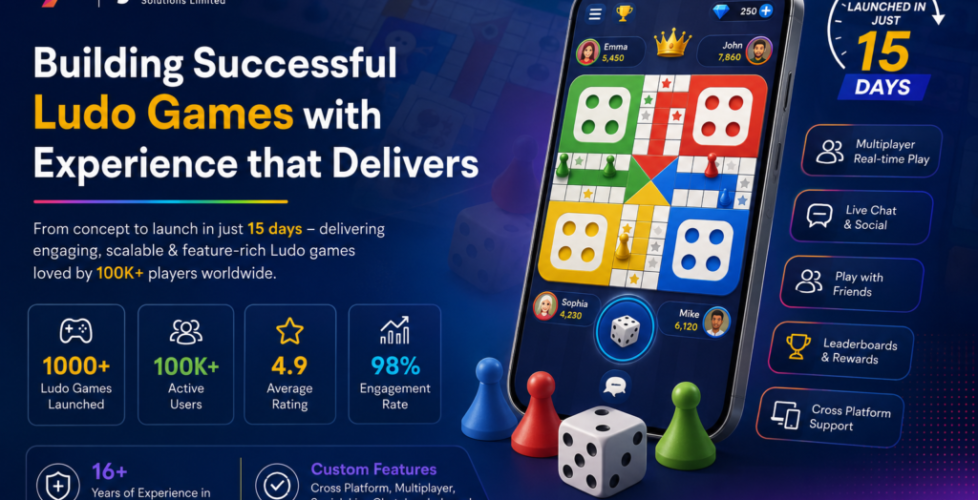
- More than 1,000 Ludo games launched
- Over 100,000 active users
- Average 4.9-star ratings
- Approximately 98% engagement rates
These metrics demonstrated practical experience with real-world gaming environments rather than theoretical expertise.
Instead of designing solely for launch-day requirements, infrastructure decisions considered future growth scenarios from the beginning.
That proactive approach reduced risks associated with scaling.
Pitfall #7: Reinventing Features That Already Work
One mistake many businesses make is attempting to build every feature from scratch.
While customization is important, rebuilding proven systems often consumes valuable resources.
Throughout the project, we focused on customizing areas that created competitive differentiation while leveraging established solutions for core functionality.
This balanced approach delivered several advantages:
- Faster development cycles
- Lower technical risk
- Reduced testing requirements
- More predictable launch schedules
- Better budget utilization
The goal was not simply to build a Ludo game.
The goal was to build a successful Ludo business.
Understanding that distinction helped prioritize investments more effectively.
The Numbers That Changed Our Perspective
Before beginning development, we evaluated multiple vendors and service providers.
Many claimed expertise.
Few could demonstrate measurable outcomes.
What stood out during our evaluation process was the combination of experience and performance metrics.
Key indicators included:
- 16+ years of game development experience
- 1,000+ Ludo game launches
- 100,000+ active users across projects
- 4.9-star average user ratings
- 98% engagement rates
- Rapid 15-day deployment capabilities
These weren’t simply marketing claims.
They represented patterns established through years of delivering gaming solutions across different markets and business models.
For organizations considering game development investments, measurable track records often reveal more than presentations or sales pitches.
Why Expert Guidance Matters More Than Ever
The Ludo gaming market has become increasingly competitive.
Players now compare every new platform against industry-leading experiences.
As expectations continue to rise, development mistakes become more expensive.
Looking back, expert guidance helped us avoid:
- Costly development delays
- Multiplayer architecture failures
- Scalability issues
- Cross-platform limitations
- Weak engagement systems
- Poor retention strategies
- Infrastructure bottlenecks
More importantly, it allowed us to focus on business growth instead of constantly solving preventable technical problems.
The difference between a successful gaming platform and an unsuccessful one often comes down to decisions made long before launch.
Final Thoughts
Building a Ludo platform taught us that simplicity on the surface often hides significant technical complexity underneath.
From multiplayer architecture and cross-platform functionality to social engagement and long-term scalability, every decision influences user satisfaction and business outcomes.
The biggest lesson from our journey was understanding the value of experience.
Rather than learning every lesson through costly mistakes, we benefited from working with professionals who had already solved these challenges many times before.
For businesses evaluating their next gaming project, partnering with an experienced ludo game development company can dramatically reduce risk, shorten development timelines, and improve launch outcomes.
Our experience showed that the right game development company doesn’t simply build software—it helps navigate obstacles, avoid common pitfalls, and create a stronger foundation for long-term growth.
When a platform can move from concept to launch in just 15 days while incorporating multiplayer functionality, cross-platform support, live chat, leaderboards, and social engagement systems, it becomes clear how much value experienced guidance can bring to the development process.
Sometimes the fastest path to success is learning from those who have already built the road.