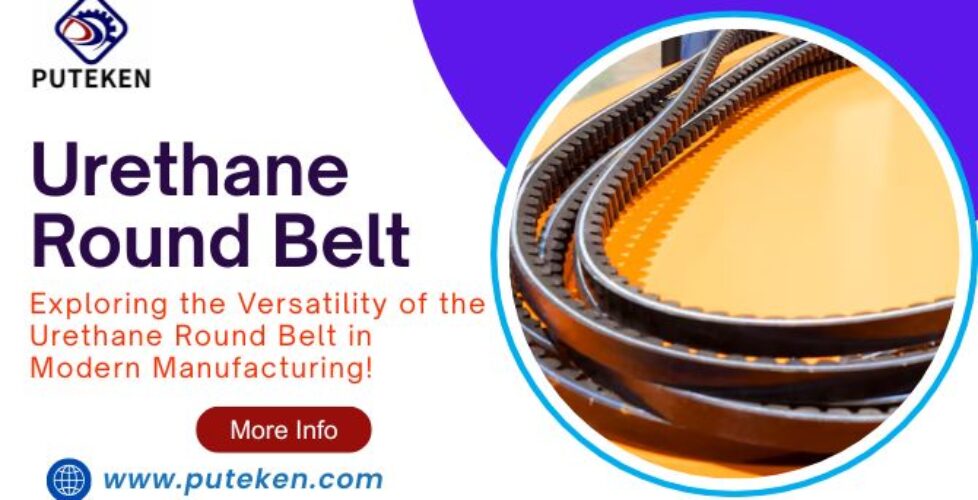
Exploring the Versatility of the Urethane Round Belt in Modern Manufacturing!
Modern manufacturing has evolved dramatically in recent decades, with the industry embracing automation, precision engineering, and lean operations. As production environments become faster, cleaner, and more specialized, the demand for resilient, versatile components that support efficient material handling and motion transfer has grown in tandem. Among the unsung heroes of today’s high-performing systems stands the Urethane Round Belt.
While often overlooked compared to flat belts or v-belts, the Urethane Round Belt (also referred to as polyurethane round belt) plays an integral role in various manufacturing processes. Its unique combination of flexibility, durability, chemical resistance, and stretchability makes it a top choice for conveying, power transmission, and product handling—especially where precision and cleanliness are critical.
At Shanghai Puteken Transmission System Co., Ltd., we specialize in manufacturing high-quality Urethane Round Belts engineered for industrial applications across multiple sectors, including packaging, logistics, electronics, textiles, food processing, and automation. With customizable sizes, shore hardness ratings, and joining options, our belts deliver optimal performance for clients who need smooth, dependable, and low-maintenance solutions.
What Is a Urethane Round Belt?
The Urethane Round Belt is a circular, continuous belt made from thermoplastic polyurethane (TPU). Its characteristic round cross-section gives it distinct mechanical advantages in transmitting motion and power in light to medium-load systems.
Key Features:
- Round cross-sectional shape (usually 2–12 mm in diameter)
- Manufactured from high-quality TPU
- Offers elasticity and resilience for applications with variable center distances
- Available in endless/molded loops or cut-to-length with heat-welded joints
Unlike conventional belts, its unique composition allows the Urethane Round Belt to maintain traction, tension, and flexibility, making it ideal for systems that demand gentle product handling or high repeatability.
Why Choose a Urethane Round Belt? Core Advantages?
1. High Elasticity and Self-Tensioning
Urethane round belts stretch under tension, enabling them to maintain grip and alignment without requiring tensioners—ideal for systems where constant tension is needed.
2. Wear and Abrasion Resistance
Polyurethane exhibits exceptional resistance to wear and surface damage, even in 24/7 operations with frequent starts, stops, and product friction.
3. Chemical and Oil Resistance
The material easily withstands exposure to oils, greases, fuels, cutting fluids, and mild acids—making it highly durable in diverse chemical environments.
4. Food-Safe and Non-Marking Options
Available in FDA-compliant, non-toxic grades that are safe for direct contact with food items. Non-marking belts are essential in industries where surface integrity is vital.
5. Easy to Install with Weldable Joints
Belts can be installed or replaced quickly using heat welding tools—eliminating machine tear-down or pulley disassembly, reducing downtime.
6. Quiet and Vibration-Dampening Operation
Urethane belts run smoothly and quietly, making them ideal for applications in laboratories, electronics, or temperature-sensitive factories.
Common Applications of Urethane Round Belts in Manufacturing
Considered a go-to component in modern manufacturing systems, Urethane Round Belts are widely used in:
1. Packaging & Sorting Systems
- High-speed sorting conveyors
- Merge/divert systems
- Case or bottle handling lines
2. Material Handling
- Lightweight conveyor systems
- Roller diverters and indexing stations
- Product accumulation or spacing belts
3. Food & Beverage Processing
- Chocolate, candy, and baked goods conveyors
- Bottle cap handling
- Portioning and packaging systems
4. Electronics and Cleanroom Assembly
- Transfer of circuit boards or delicate parts
- Silent belt drives in medical or lab automation
5. Textile and Garment Machines
- Knitting, spinning, and sewing system drives
- Thread handling and fabric feeding belts
6. Printing and Binding Equipment
- Paper path and feeder belts
- Alignment systems for paper and media
Whether for continuous or intermittent motion, the Urethane Round Belt continues to offer a dependable solution across sectors that value performance with minimal maintenance.
Customization Options at Shanghai Puteken
At Shanghai Puteken Transmission System Co., Ltd., we understand that customization is key for modern manufacturers looking to optimize machinery and increase throughput. That’s why we offer a wide variety of Urethane Round Belt customization services:
- Available Options:
- Diameters: 2mm to 20mm (custom on request)
- Hardness Grades (Shore A): 70A, 85A, 90A, etc.
- Colors: Green, orange, red, clear (custom RAL colors available)
- FDA-compliant materials for food processing belts
- Anti-static and flame-retardant grades for specialized environments
- Endless loops or weldable rolls (with hot-press splicing kits available)
Our engineering team can help you choose the right specifications based on:
- Load capacity
- Speed
- Environment
- Thermal and chemical exposure
- Misalignment tolerance
Installation and Maintenance Tips
Urethane round belts are user-friendly and require minimal maintenance, but best practices will help extend their service life.
- Proper Installation:
- Use the right pulley diameter. Avoid excessively small pulleys, which can over-stress the belt.
- Apply correct tension. Stretch belts 7–10% over relaxed length for ideal performance.
- Use crowned or grooved pulleys to maintain alignment.
- Weld properly if using open-ended belts. Utilize a heat welder or splicing tool for strong, uniform welds.
- Routine Maintenance:
- Inspect for cuts, wear, or stiffness during regular machine checks
- Clean belts with neutral cleaners—avoid aggressive solvents unless approved
- Watch for material hardening or softening, which may indicate chemical compatibility issues
A Modern Belt for Modern Manufacturing
As industrial systems grow more advanced and demand higher throughput with less downtime, choosing the right belt becomes more than a matter of compatibility—it becomes a strategic advantage. The Urethane Round Belt, with its balance of flexibility, durability, and adaptability, has proven to be one of the most versatile and cost-effective transmission solutions in today’s manufacturing sector.
FAQs – Urethane Round Belt
Q1: What is a Urethane Round Belt used for?
It is used for power transmission and conveying in a wide range of applications, including packaging, sorting, food handling, printing machines, and conveyor systems where flexibility and lightweight efficiency are needed.
Q2: Can I weld a urethane round belt myself?
Yes. PU belts are thermoplastic and can be heat welded using a special splicing tool. We offer both the belts and the tools for industrial use.
Q3: What is the difference between urethane and rubber belts?
Urethane belts typically offer better wear resistance, elasticity, and chemical resistance, whereas rubber belts may provide more damping and flexibility at lower cost—but often degrade faster.
Q4: Are your belts food-safe?
Yes. We provide FDA-approved urethane round belts for food contact applications, suitable for use in processing, packaging, and high-hygiene environments.
Q5: How do I determine the right belt size for my application?
Measure pulley center distance, pulley diameter, and desired tension. Our technical team can assist you with specifications and offer a fully customized solution.
Q6: What is the lifespan of a urethane round belt?
With proper installation and operating conditions, a urethane round belt can last 12 to 36 months or more, depending on use frequency, exposure, and mechanical stress.
Q7: Do you offer anti-static or flame-retardant belts?
Yes. We offer specially formulated materials for use in electronics, cleanrooms, packaging, and high-safety zones where static or fire hazards must be minimized.